Building Blocks
This section contains fundamental products for the synthesis of organic and biological compounds. Building blocks are the essential starting materials used to construct complex molecules through various chemical reactions. They play a critical role in drug discovery, material science, and chemical research. At CymitQuimica, we offer a diverse range of high-quality building blocks to support your innovative research and industrial projects, ensuring you have the essential components for successful synthesis.
Subcategories of "Building Blocks"
- Boronic Acids & Boronic Acid Derivatives(5,756 products)
- Chiral Building Blocks(1,242 products)
- Hydrocarbon Building Blocks(6,095 products)
- Organic Building Blocks(61,055 products)
Found 199650 products of "Building Blocks"
Sort by
Purity (%)
0
100
|
0
|
50
|
90
|
95
|
100
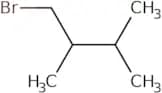
1-Bromo-2,3-dimethylbutane
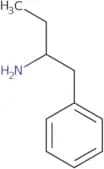
CAS:<p>Versatile small molecule scaffold</p>Formula:C6H13BrPurity:Min. 95%Molecular weight:165.07 g/mol1-Phenyl-2-butanamine
CAS:Controlled Product<p>1-Phenyl-2-butanamine is a dietary supplement that is used as a stimulant. It has been shown to increase the uptake of glucose and glycogen in the liver, which may be due to its ability to stimulate insulin secretion. 1-Phenyl-2-butanamine was also found to inhibit the growth of human pathogens such as Helicobacter pylori and Mycoplasma pneumoniae. This compound has also been shown to have conformational properties in urine samples.</p>Formula:C10H15NPurity:Min. 95%Molecular weight:149.23 g/mol(2R)-1-Phenylbutan-2-amine
CAS:Controlled Product<p>Versatile small molecule scaffold</p>Formula:C10H15NPurity:Min. 95%Molecular weight:149.23 g/mol3,3-dimethylbutan-1-amine hydrochloride
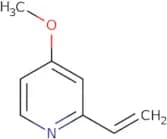
CAS:Versatile small molecule scaffoldFormula:C6H16ClNPurity:Min. 95%Molecular weight:137.65 g/mol4-Methoxy-2-vinylpyridine
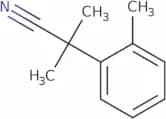
CAS:<p>4-Methoxy-2-vinylpyridine is an electrophilic compound that is used as a ligand in industrial applications. It has been shown to form complexes with copper and other elements, such as silver and gold. This compound is also used to study the thermodynamic and kinetic interactions between arenes and substituents. 4-Methoxy-2-vinylpyridine can be synthesized by reacting 2-methylpyridine with methyl acetate in the presence of a base. The reaction produces an unsymmetrical molecule because the methyl group on the pyridine ring cannot be substituted. The phenol group is also hydroxylated during this process.</p>Formula:C8H9NOPurity:Min. 95%Molecular weight:135.17 g/mol2-Methyl-2-(2-methylphenyl)propanenitrile
CAS:<p>Versatile small molecule scaffold</p>Formula:C11H13NPurity:Min. 95%Molecular weight:159.23 g/mol2-(4-Chlorophenyl)-2-methylpropanenitrile
CAS:<p>Versatile small molecule scaffold</p>Formula:C10H10ClNPurity:Min. 95%Molecular weight:179.64 g/mol1-(4-Methoxy-phenyl)-1-methyl-ethylamine
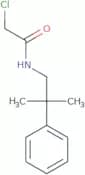
CAS:<p>Dihydrotestosterone (DHT) is a steroid hormone that is produced in the body. It is converted from testosterone by the enzyme 5-alpha reductase. DHT has been shown to have an important role in prostate cancer, as well as other types of cancer such as breast cancer and hirsutism. DHT can also be used to treat certain types of hair loss, such as male pattern baldness or female pattern baldness. The drug 1-(4-methoxy-phenyl)-1-methyl-ethylamine has been shown to block the synthesis of DHT by inhibiting 5-alpha reductase, which prevents the conversion of testosterone into DHT.</p>Formula:C10H15NOPurity:Min. 95%Molecular weight:165.23 g/mol2-Chloro-N-(2-methyl-2-phenylpropyl)acetamide
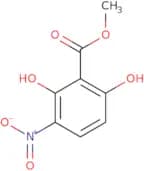
CAS:<p>Versatile small molecule scaffold</p>Formula:C12H16ClNOPurity:Min. 95%Molecular weight:225.71 g/molmethyl 2,6-dihydroxy-3-nitrobenzoate
CAS:<p>Versatile small molecule scaffold</p>Formula:C8H7NO6Purity:Min. 95%Molecular weight:213.14 g/molethyl 3-oxo-2-phenyl-2,3-dihydro-1H-pyrazole-4-carboxylate
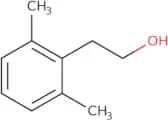
CAS:<p>Ethyl 3-oxo-2-phenyl-2,3-dihydro-1H-pyrazole-4-carboxylate is an aliphatic amine that has been shown to be a piperidine and pyrrolidine analog. This compound has been shown to produce yields of up to 98% with the use of a simple procedure and it has been used as a starting material for the synthesis of other compounds. In addition, this compound behaves like an aliphatic amine because it can undergo reductive amination with nitrites and carboxamides.</p>Formula:C12H12N2O3Purity:Min. 95%Molecular weight:232.24 g/mol2-(2,6-Dimethylphenyl)ethan-1-ol
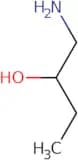
CAS:<p>2-(2,6-Dimethylphenyl)ethan-1-ol is a racemic mixture of two compounds with the same molecular formula. The two enantiomers have different chemical properties and can be separated by specific techniques such as chromatography. 2-(2,6-Dimethylphenyl)ethan-1-ol is an ether that is made from methylmalonic acid and ethylene oxide. It is hydrolysed to release methylmalonyl chloride or demethylated to produce methyl ether acetate. This compound has been used in the synthesis of various esters and sesquiterpenoids.</p>Formula:C10H14OPurity:Min. 95%Molecular weight:150.22 g/mol(S)-1-Aminobutan-2-ol
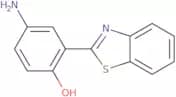
CAS:<p>Versatile small molecule scaffold</p>Formula:C4H11NOPurity:Min. 95%Molecular weight:89.14 g/mol2-(5-Amino-2-hydroxyphenyl)benzothiazole
CAS:<p>2-(5-Amino-2-hydroxyphenyl)benzothiazole is a hydrophobic, organic molecule that has been used in the synthesis of magnetic materials. This compound is synthesized by trimethylation of 2-(5-amino-2-hydroxyphenyl)benzothiazole followed by chlorination with trichloroacetic acid. The synthesized substance exhibits fluorescence and has been used in microscopy studies. The photophysical properties and the transfer dynamics of this compound have also been studied using absorption spectroscopy and fluorescence microscopy techniques. It has also been shown to have chloride ion binding properties. In addition, this organic molecule has been found to have functional groups that are mesoporous in nature.</p>Formula:C13H10N2OSPurity:Min. 95%Molecular weight:242.3 g/molrac-1-[(1R,2R)-2-(4-Methoxyphenyl)cyclopropyl]ethan-1-one
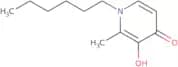
CAS:<p>Versatile small molecule scaffold</p>Formula:C12H14O2Purity:Min. 95%Molecular weight:190.24 g/mol1-Hexyl-3-hydroxy-2-methyl-1,4-dihydropyridin-4-one
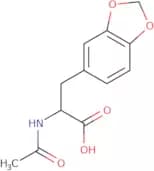
CAS:<p>Versatile small molecule scaffold</p>Formula:C12H19NO2Purity:Min. 95%Molecular weight:209.28 g/mol3-(1,3-Dioxaindan-5-yl)-2-acetamidopropanoic acid
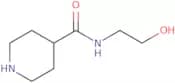
CAS:Versatile small molecule scaffoldFormula:C12H13NO5Purity:Min. 95%Molecular weight:251.23 g/molN-(2-Hydroxyethyl)-4-piperidinecarboxamide hydrochloride
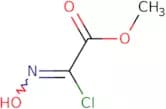
CAS:<p>Versatile small molecule scaffold</p>Formula:C8H17ClN2O2Purity:Min. 95%Molecular weight:208.69 g/molMethyl 2-chloro-2-(hydroxyimino)acetate
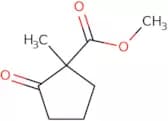
CAS:<p>Methyl 2-chloro-2-(hydroxyimino)acetate is a benzyl derivative of nikkomycin. It is the diastereomer of ethylene benzyl chloride and has been shown to inhibit the growth of bacteria by inhibiting dehydrogenase, which is an enzyme involved in amino acid metabolism. Methyl 2-chloro-2-(hydroxyimino)acetate has been shown to be enantiopure, with only one of its two possible stereoisomers present. This product also inhibits the growth of bacteria by binding to lysine residues on their cell surface and preventing them from synthesizing proteins.</p>Formula:C3H4ClNO3Purity:Min. 95%Molecular weight:137.52 g/molMethyl 1-methyl-2-oxocyclopentane-1-carboxylate
CAS:<p>Methyl 1-methyl-2-oxocyclopentane-1-carboxylate is an enantiomer of methyl 1-methylcyclohexane carboxylate. This compound is prepared by reduction of the corresponding aldehyde with lithium aluminum hydride, followed by cyclization with hydrochloric acid. The product is then converted to the corresponding alcohol by reaction with dimethylformamide and sodium methoxide. Methyl 1-methyl-2-oxocyclopentane-1-carboxylate has been used in the synthesis of a number of chiral secondary alcohols. The resulting diastereomers are separated using column chromatography or recrystallization to provide pure enantiomers. Voltammetry may also be used to determine the chiral purity of these compounds.</p>Formula:C8H12O3Purity:Min. 95%Molecular weight:156.18 g/mol






![rac-1-[(1R,2R)-2-(4-Methoxyphenyl)cyclopropyl]ethan-1-one](/_next/image/?url=https%3A%2Fstatic.cymitquimica.com%2Fproducts%2F3D%2Fthumb-webp%2FFBA62568.webp&w=3840&q=75)