Building Blocks
This section contains fundamental products for the synthesis of organic and biological compounds. Building blocks are the essential starting materials used to construct complex molecules through various chemical reactions. They play a critical role in drug discovery, material science, and chemical research. At CymitQuimica, we offer a diverse range of high-quality building blocks to support your innovative research and industrial projects, ensuring you have the essential components for successful synthesis.
Subcategories of "Building Blocks"
- Boronic Acids & Boronic Acid Derivatives(5,756 products)
- Chiral Building Blocks(1,242 products)
- Hydrocarbon Building Blocks(6,095 products)
- Organic Building Blocks(61,038 products)
Found 196817 products of "Building Blocks"
Sort by
Purity (%)
0
100
|
0
|
50
|
90
|
95
|
100
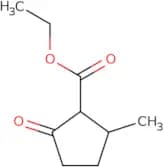
Ethyl 2-methyl-5-oxocyclopentane-1-carboxylate
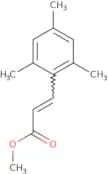
CAS:<p>Versatile small molecule scaffold</p>Formula:C9H14O3Purity:Min. 95%Molecular weight:170.21 g/molMethyl (2E)-3-(2,4,6-trimethylphenyl)prop-2-enoate
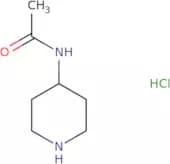
CAS:<p>Versatile small molecule scaffold</p>Formula:C13H16O2Purity:Min. 95%Molecular weight:204.26 g/molN-(4-Piperidinyl)acetamide HCl
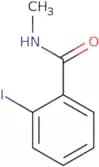
CAS:<p>Versatile small molecule scaffold</p>Formula:C7H14N2O·HClPurity:Min. 95%Molecular weight:178.66 g/mol2-Iodo-N-methylbenzamide
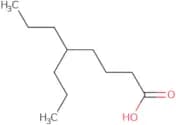
CAS:<p>2-Iodo-N-methylbenzamide (2IMB) is a compound that has been shown in preliminary studies to have a high nucleophilic attack rate. It reacts with palladium complexes to form a stereoselective reaction and, when coupled with amide, aminosulfonyl, or tnf-α, can be used as an excellent model system for inflammatory diseases. 2IMB has also been shown to have anti-inflammatory properties by inhibiting prostaglandin synthesis. The deuterium isotope effect is the most important factor in determining the reactivity of the molecule. This effect causes the substitution of hydrogen atoms by deuterium atoms at various points on the molecule and affects the reaction yield.</p>Formula:C8H8INOPurity:Min. 95%Molecular weight:261.06 g/mol5-Propyloctanoic acid
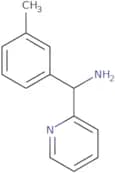
CAS:<p>5-Propyloctanoic acid is a fatty acid that is structurally related to octanoic acid. It has been shown to cause nerve demyelination in rats and mice, as well as sciatic nerve lesions in rabbits. 5-Propyloctanoic acid can be used as a potential antiepileptic drug, with anticonvulsant properties. This fatty acid also has the ability to inhibit lipoperoxide (LOOH) production by binding to LOOH and preventing its formation. The uptake of 5-propyloctanoic acid into cells is mediated by an uptake system, which may be inhibited by other chemicals.</p>Formula:C11H22O2Purity:Min. 95%Molecular weight:186.29 g/mol(3-Methylphenyl)(pyridin-2-yl)methanamine
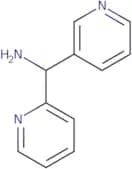
CAS:<p>Versatile small molecule scaffold</p>Formula:C13H14N2Purity:Min. 95%Molecular weight:198.26 g/mol1-(Pyridin-2-yl)-1-(pyridin-3-yl)methanamine
CAS:<p>Versatile small molecule scaffold</p>Formula:C11H11N3Purity:Min. 95%Molecular weight:185.22 g/mol1-(6-Methylpyridin-2-yl)ethanamine
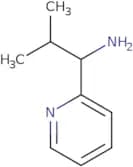
CAS:<p>Versatile small molecule scaffold</p>Formula:C8H12N2Purity:Min. 95%Molecular weight:136.19 g/mol2-Methyl-1-(2-pyridyl)-1-propylamine
CAS:<p>Versatile small molecule scaffold</p>Formula:C9H14N2Purity:Min. 95%Molecular weight:150.22 g/mol4-Isocyanato-4,5,6,7-tetrahydro-1-benzothiophene
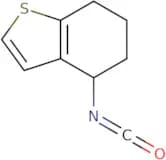
CAS:<p>4-Isocyanato-4,5,6,7-tetrahydro-1-benzothiophene is a urea derivative that is used as an herbicide. It is a member of the class of pesticides known as isothiocyanates and has been shown to be toxic to animals. 4-Isocyanato-4,5,6,7-tetrahydro-1-benzothiophene inhibits the production of urea in mammals by binding to the enzyme ornithine transcarbamylase (OTC). This binding prevents the formation of carbamoyl phosphate and argininosuccinate from ammonia and citrulline. The inhibition of this enzyme leads to decreased synthesis of arginine and eventually cell death.</p>Formula:C9H9NOSPurity:Min. 95%Molecular weight:179.24 g/mol4-Amino-4,5,6,7-tetrahydro-1-benzothiophene-2-carbonitrile hydrochloride
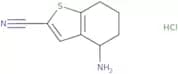
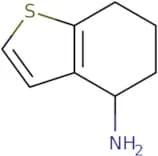
CAS:<p>Versatile small molecule scaffold</p>Formula:C9H11ClN2SPurity:Min. 95%Molecular weight:214.72 g/mol4,5,6,7-Tetrahydro-1-benzothiophen-4-amine
CAS:<p>Versatile small molecule scaffold</p>Formula:C8H11NSPurity:Min. 95%Molecular weight:153.25 g/mol(5-Chloro-3-phenyl-1-benzofuran-2-yl)methanamine hydrochloride
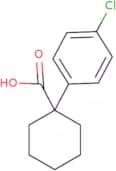
CAS:<p>Versatile small molecule scaffold</p>Formula:C15H13Cl2NOPurity:Min. 95%Molecular weight:294.2 g/mol1-(4-Chlorophenyl)cyclohexanecarboxylic acid
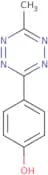
CAS:<p>1-(4-Chlorophenyl)cyclohexanecarboxylic acid is a piperidine that can be reacted with tetrahydrofuran to form a high yield of formaldehyde. It has been used as a reagent for the synthesis of biphenyl, and the Wittig reaction. 1-(4-Chlorophenyl)cyclohexanecarboxylic acid also catalyzes the conversion of bromoethane to cyclohexanecarboxylic acid in large-scale. This compound is highly reactive and reacts with sodium hypochlorite and benzene to produce chlorine gas and hydrogen chloride, respectively.</p>Formula:C13H15ClO2Purity:Min. 95%Molecular weight:238.71 g/mol4-(6-Methyl-1,2,4,5-tetrazin-3-yl)phenol
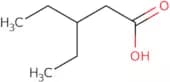
CAS:<p>4-(6-Methyl-1,2,4,5-tetrazin-3-yl)phenol is a product that is used in the fields of life science and pharmacology. It is an inhibitor for protein interactions with ion channels. The high purity of this product makes it suitable for research purposes. This product can be used as a reagent in cell biology and pharmacology. It also has many applications in the field of biochemistry and molecular biology, such as receptor activation and ligand binding studies. 4-(6-Methyl-1,2,4,5-tetrazin-3-yl)phenol has a CAS Number of 58884-35-8.</p>Formula:C9H8N4OPurity:Min. 95%Molecular weight:188.19 g/mol3-Ethylpentanoic acid
CAS:<p>3-Ethylpentanoic acid is a fatty acid that is naturally found in the human body and can be synthesized by the body from other fatty acids. 3-Ethylpentanoic acid has been shown to inhibit histone deacetylase (HDAC) activity, which may be a possible mechanism for its antitumor effects. HDAC inhibitors are being studied as potential anticancer drugs. 3-Ethylpentanoic acid also inhibits the enzymatic activity of fatty acid synthase, thereby preventing the production of branched-chain fatty acids that are toxic to the liver. In addition, 3-ethylpentanoic acid has been shown to have pharmacokinetic properties in rats and mice with high levels of enzymes that convert it into a more hydrophobic form, which may lead to better absorption from the gastrointestinal tract and decreased metabolism by enzymes in the liver.</p>Formula:C7H14O2Purity:Min. 95%Molecular weight:130.18 g/mol4-[(2-Oxo-1,2,3,4-tetrahydroquinolin-6-yl)oxy]butanoic acid
CAS:Controlled Product<p>Versatile small molecule scaffold</p>Formula:C13H15NO4Purity:Min. 95%Molecular weight:249.26 g/mol2-[(2-Oxo-1,2,3,4-tetrahydroquinolin-6-yl)oxy]acetic acid
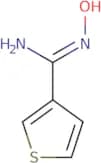
CAS:<p>Versatile small molecule scaffold</p>Formula:C11H11NO4Purity:Min. 95%Molecular weight:221.21 g/molThiophene-3-carboxamidoxime
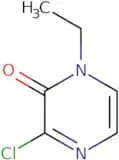
CAS:<p>Versatile small molecule scaffold</p>Formula:C5H6N2OSPurity:Min. 95%Molecular weight:142.18 g/mol3-Chloro-1-ethyl-1,2-dihydropyrazin-2-one
CAS:<p>Versatile small molecule scaffold</p>Formula:C6H7ClN2OPurity:Min. 95%Molecular weight:158.58 g/mol



![4-[(2-Oxo-1,2,3,4-tetrahydroquinolin-6-yl)oxy]butanoic acid](/_next/image/?url=https%3A%2Fstatic.cymitquimica.com%2Fproducts%2F3D%2Fthumb-webp%2FICA89849.webp&w=3840&q=75)
![2-[(2-Oxo-1,2,3,4-tetrahydroquinolin-6-yl)oxy]acetic acid](/_next/image/?url=https%3A%2Fstatic.cymitquimica.com%2Fproducts%2F3D%2Fthumb-webp%2FICA89854.webp&w=3840&q=75)