Building Blocks
This section contains fundamental products for the synthesis of organic and biological compounds. Building blocks are the essential starting materials used to construct complex molecules through various chemical reactions. They play a critical role in drug discovery, material science, and chemical research. At CymitQuimica, we offer a diverse range of high-quality building blocks to support your innovative research and industrial projects, ensuring you have the essential components for successful synthesis.
Subcategories of "Building Blocks"
- Boronic Acids & Boronic Acid Derivatives(5,778 products)
- Chiral Building Blocks(1,242 products)
- Hydrocarbon Building Blocks(6,098 products)
- Organic Building Blocks(61,098 products)
Found 199594 products of "Building Blocks"
Sort by
Purity (%)
0
100
|
0
|
50
|
90
|
95
|
100
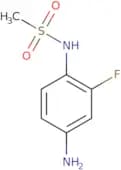
N-(4-Amino-2-fluorophenyl)methanesulfonamide
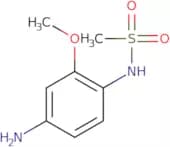
CAS:<p>Versatile small molecule scaffold</p>Formula:C7H9FN2O2SPurity:Min. 95%Molecular weight:204.22 g/molN-(4-Amino-2-methoxyphenyl)methanesulfonamide
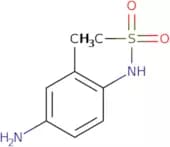
CAS:<p>Versatile small molecule scaffold</p>Formula:C8H12N2O3SPurity:Min. 95%Molecular weight:216.26 g/molN-(4-Amino-2-methylphenyl)methanesulfonamide
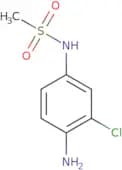
CAS:<p>Versatile small molecule scaffold</p>Formula:C8H12N2O2SPurity:Min. 95%Molecular weight:200.26 g/molN-(4-Amino-3-chlorophenyl)methanesulfonamide
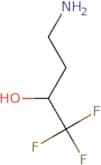
CAS:<p>Versatile small molecule scaffold</p>Formula:C7H9ClN2O2SPurity:Min. 95%Molecular weight:220.68 g/mol4-Amino-2-hydroxy-1,1,1-trifluorobutane
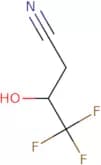
CAS:<p>Versatile small molecule scaffold</p>Formula:C4H8F3NOPurity:Min. 95%Molecular weight:143.11 g/mol4,4,4-Trifluoro-3-hydroxybutanenitrile
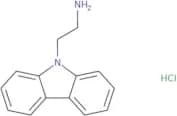
CAS:<p>Versatile small molecule scaffold</p>Formula:C4H4F3NOPurity:Min. 95%Molecular weight:139.08 g/mol2-(9H-Carbazol-9-yl)ethan-1-amine hydrochloride
CAS:<p>Versatile small molecule scaffold</p>Formula:C14H15ClN2Purity:Min. 95%Molecular weight:246.73 g/mol3H-Spiro[2-benzofuran-1,3'-pyrrolidine]
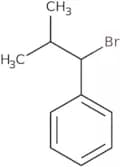
CAS:<p>Versatile small molecule scaffold</p>Formula:C11H13NOPurity:Min. 95%Molecular weight:175.23 g/mol(1-Bromo-2-methylpropyl)benzene
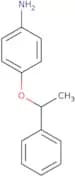
CAS:<p>Versatile small molecule scaffold</p>Formula:C10H13BrPurity:Min. 95%Molecular weight:213.11 g/mol4-(1-Phenylethoxy)aniline
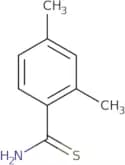
CAS:<p>Versatile small molecule scaffold</p>Formula:C14H15NOPurity:Min. 95%Molecular weight:213.27 g/mol2,4-Dimethylbenzene-1-carbothioamide
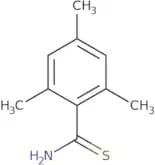
CAS:<p>Versatile small molecule scaffold</p>Formula:C9H11NSPurity:Min. 95%Molecular weight:165.26 g/mol2,4,6-Trimethylbenzene-1-carbothioamide
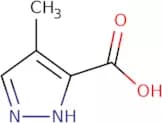
CAS:<p>Versatile small molecule scaffold</p>Formula:C10H13NSPurity:Min. 95%Molecular weight:179.28 g/mol4-Methylpyrazole-3-carboxylic acid
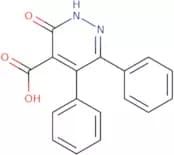
CAS:<p>4-Methylpyrazole-3-carboxylic acid is a monocarboxylic acid. It is a byproduct of the reaction between chloride and hydrogen chloride. 4-Methylpyrazole-3-carboxylic acid has been shown to have carcinogenic properties in animals, but not in humans. The mechanism for this effect is thought to be due to its ability to inhibit IL-17a production, which may lead to an increase in tumor growth. 4-Methylpyrazole-3-carboxylic acid has been shown to inhibit muscle glycogen synthesis and focus formation. It also inhibits the oxidation of fatty acids by binding with the enzyme acyl CoA oxidase. This compound can be used as an agrochemical and dechlorinated organic solvent for the extraction of phenylephrine from plants like tobacco leaves.</p>Formula:C5H6N2O2Purity:Min. 95%Color and Shape:PowderMolecular weight:126.11 g/mol3-Oxo-5,6-diphenyl-2,3-dihydropyridazine-4-carboxylic acid
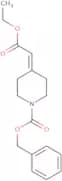
CAS:<p>Versatile small molecule scaffold</p>Formula:C17H12N2O3Purity:Min. 95%Molecular weight:292.29 g/molBenzyl 4-(2-ethoxy-2-oxoethylidene)piperidine-1-carboxylate
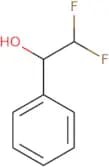
CAS:<p>Versatile small molecule scaffold</p>Formula:C17H21NO4Purity:Min. 95%Molecular weight:303.35 g/mol(1R)-2,2-Difluoro-1-phenylethan-1-ol
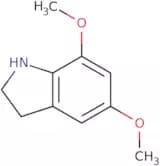
CAS:<p>Versatile small molecule scaffold</p>Formula:C8H8F2OPurity:Min. 95%Molecular weight:158.14 g/mol5,7-Dimethoxy-2,3-dihydro-1H-indole
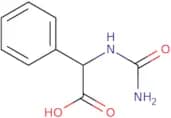
CAS:<p>Versatile small molecule scaffold</p>Formula:C10H13NO2Purity:Min. 95%Molecular weight:179.22 g/mol2-(Carbamoylamino)-2-phenylacetic acid
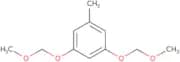
CAS:<p>2-Carbamoylamino-2-phenylacetic acid is a basic chemical that is used as a reagent in organic synthesis. It can be synthesized by the reaction of lithium aluminum hydride with phenylglycinol, and it can be purified by recrystallization from water. The compound is also used to reduce aluminium to aluminium hydride. 2-Carbamoylamino-2-phenylacetic acid has been shown to react with lithium or aluminium hydride, forming a lithium or aluminum salt respectively.</p>Formula:C9H10N2O3Purity:Min. 95%Molecular weight:194.19 g/mol1,3-Bis(methoxymethoxy)-5-methylbenzene
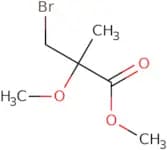
CAS:<p>Versatile small molecule scaffold</p>Formula:C11H16O4Purity:Min. 95%Molecular weight:212.24 g/molMethyl 3-bromo-2-methoxy-2-methylpropanoate
CAS:<p>Versatile small molecule scaffold</p>Formula:C6H11BrO3Purity:Min. 95%Molecular weight:211.05 g/mol

![3H-Spiro[2-benzofuran-1,3'-pyrrolidine]](/_next/image/?url=https%3A%2Fstatic.cymitquimica.com%2Fproducts%2F3D%2Fthumb-webp%2FHCA17448.webp&w=3840&q=75)