Building Blocks
This section contains fundamental products for the synthesis of organic and biological compounds. Building blocks are the essential starting materials used to construct complex molecules through various chemical reactions. They play a critical role in drug discovery, material science, and chemical research. At CymitQuimica, we offer a diverse range of high-quality building blocks to support your innovative research and industrial projects, ensuring you have the essential components for successful synthesis.
Subcategories of "Building Blocks"
- Boronic Acids & Boronic Acid Derivatives(5,778 products)
- Chiral Building Blocks(1,242 products)
- Hydrocarbon Building Blocks(6,098 products)
- Organic Building Blocks(61,034 products)
Found 199601 products of "Building Blocks"
Sort by
Purity (%)
0
100
|
0
|
50
|
90
|
95
|
100
Ethyl fumaroyl chloride
CAS:<p>Ethyl fumaroyl chloride is an activating agent that can be used as an antibacterial or bacteriostatic agent. Ethyl fumaroyl chloride is active against a variety of bacteria, including strains that are resistant to other antibiotics. The inhibitory effect of ethyl fumaroyl chloride is due to the presence of chlorine in its structure. This substance has been shown to be effective against human cancer cells and may be a potential treatment for cancer. It also has organocatalytic properties and can be used in organic synthesis, making it a versatile chemical.</p>Formula:C6H7ClO3Purity:Min. 95%Molecular weight:162.57 g/mol2,4,6-Trichloro-3-methoxyphenol
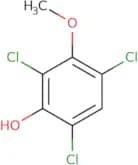
CAS:<p>2,4,6-Trichloro-3-methoxyphenol is a phenol that is found in the basidiomycete Hypholoma elongatum. It has been shown to inhibit the growth of basidiomycete strains and culture. The mechanism of action is not well understood, but it may be due to the inhibition of phenols synthesis. 2,4,6-Trichloro-3-methoxyphenol also inhibits the production of acetate in cultures and can be used as an additive for fruit juice.</p>Formula:C7H5Cl3O2Purity:Min. 95%Molecular weight:227.5 g/mol2-(3-Methyl-4-oxo-1,3-thiazolidin-2-ylidene)acetic acid
CAS:<p>Versatile small molecule scaffold</p>Formula:C6H7NO3SPurity:Min. 95%Molecular weight:173.19 g/mol4-(Methylamino)butan-2-one hydrochloride
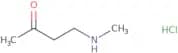
CAS:Versatile small molecule scaffoldFormula:C5H12ClNOPurity:Min. 95%Molecular weight:137.61 g/molBis(cyclopropylmethyl)amine
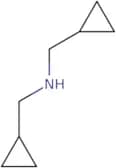
CAS:<p>Bis(cyclopropylmethyl)amine is a stereoisomer of aminopyrine. It inhibits the synthesis of lipoproteins, which are molecules that transport cholesterol and other lipids in the blood. Bis(cyclopropylmethyl)amine also inhibits transcription and protein synthesis. It has been shown to be an effective treatment for atherosclerosis in animal experiments, but there is not enough evidence to confirm its effectiveness in humans.</p>Formula:C8H15NPurity:Min. 95%Molecular weight:125.21 g/mol5-Methyl-2-oxohexanoic acid
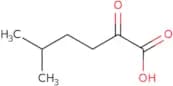
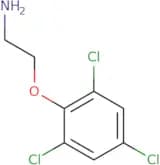
CAS:<p>5-Methyl-2-oxohexanoic acid is a long-chain carboxylic acid that is a product of the metabolism of isopropylmalate. It has been found to be an isomerase localized in the chloroplast. Biochemical tests have shown that 5-methyl-2-oxohexanoic acid inhibits the biosynthesis of glucosinolates, which are plant secondary metabolites that protect against predators and pathogens. The biochemical properties of 5-methyl-2-oxohexanoic acid have also been shown to influence the phenotype of plants. This compound has been genetically reintroduced into plants to alter their chemical defenses and produce different phenotypes.</p>Formula:C7H12O3Purity:Min. 95%Molecular weight:144.17 g/mol2-(2-Aminoethoxy)-1,3,5-trichlorobenzene
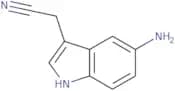
CAS:<p>Versatile small molecule scaffold</p>Formula:C8H8Cl3NOPurity:Min. 95%Molecular weight:240.5 g/mol2-(5-Amino-1H-indol-3-yl)acetonitrile
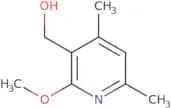
CAS:Versatile small molecule scaffoldFormula:C10H9N3Purity:Min. 95%Molecular weight:171.2 g/mol(2-Methoxy-4,6-dimethylpyridin-3-yl)methanol
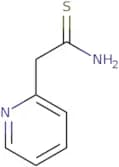
CAS:<p>Versatile small molecule scaffold</p>Formula:C9H13NO2Purity:Min. 95%Molecular weight:167.2 g/mol2-(Pyridin-2-yl)ethanethioamide
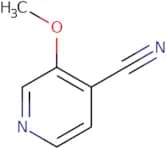
CAS:<p>2-(Pyridin-2-yl)ethanethioamide is a molecule that has been shown to have clinical use in humans. It reduces gastric acid secretion by inhibiting the proton pump and is used as an antisecretory and antiulcer agent. The molecule has also been shown to inhibit the growth of bacteria, such as Escherichia coli, Helicobacter pylori, and Bacillus subtilis. 2-(Pyridin-2-yl)ethanethioamide binds to the bacterial enzyme adenosine deaminase (ADA), which is involved in purine metabolism, leading to inhibition of bacterial growth.</p>Formula:C7H8N2SPurity:Min. 95%Molecular weight:152.22 g/mol3-Methoxyisonicotinonitrile
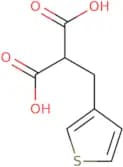
CAS:<p>Versatile small molecule scaffold</p>Formula:C6H6N4Purity:Min. 95%Molecular weight:134.14 g/mol2-(Thiophen-3-ylmethyl)propanedioic acid
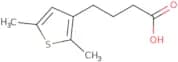
CAS:<p>Versatile small molecule scaffold</p>Formula:C8H8O4SPurity:Min. 95%Molecular weight:200.21 g/mol4-(2,5-Dimethylthiophen-3-yl)butanoic acid
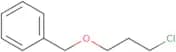
CAS:Versatile small molecule scaffoldFormula:C10H14O2SPurity:Min. 95%Molecular weight:198.28 g/mol((3-Chloropropoxy)methyl)benzene
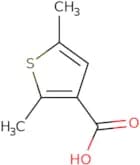
CAS:<p>Versatile small molecule scaffold</p>Formula:C10H13ClOPurity:Min. 95%Color and Shape:Clear LiquidMolecular weight:184.66 g/mol2,5-Dimethyl-thiophene-3-carboxylic acid
CAS:<p>Versatile small molecule scaffold</p>Formula:C7H8O2SPurity:Min. 95%Molecular weight:156.2 g/molMethyl 5-cyanopicolinate
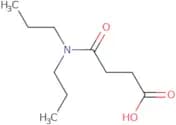
CAS:<p>Methyl 5-cyanopicolinate is a medicinal compound that is used in the treatment of various diseases. It has been shown to block the activation of plasminogen by plasmin, which prevents the breakdown of fibrin and other proteins. Methyl 5-cyanopicolinate has also been found to be an inhibitor of acetylcholinesterase, which leads to increased acetylcholine levels in the brain and can be used for the treatment of Alzheimer's disease. The synthesis and chemical studies of this substance are still ongoing.</p>Formula:C8H6N2O2Purity:Min. 95%Molecular weight:162.15 g/mol3-(Dipropylcarbamoyl)propanoic acid
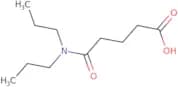
CAS:<p>Versatile small molecule scaffold</p>Formula:C10H19NO3Purity:Min. 95%Molecular weight:201.26 g/mol4-(Dipropylcarbamoyl)butanoic acid
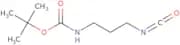
CAS:<p>Versatile small molecule scaffold</p>Formula:C11H21NO3Purity:Min. 95%Molecular weight:215.29 g/moltert-Butyl N-(3-isocyanatopropyl)carbamate
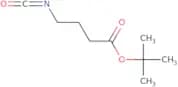
CAS:<p>Versatile small molecule scaffold</p>Formula:C9H16N2O3Purity:Min. 95%Molecular weight:200.2 g/moltert-Butyl 4-isocyanatobutanoate
CAS:<p>Versatile small molecule scaffold</p>Formula:C9H15NO3Purity:Min. 95%Molecular weight:185.22 g/mol