


Building Blocks
This section contains fundamental products for the synthesis of organic and biological compounds. Building blocks are the essential starting materials used to construct complex molecules through various chemical reactions. They play a critical role in drug discovery, material science, and chemical research. At CymitQuimica, we offer a diverse range of high-quality building blocks to support your innovative research and industrial projects, ensuring you have the essential components for successful synthesis.
Subcategories of "Building Blocks"
- Boronic Acids & Boronic Acid Derivatives(5,756 products)
- Chiral Building Blocks(1,242 products)
- Hydrocarbon Building Blocks(6,095 products)
- Organic Building Blocks(61,038 products)
Found 196817 products of "Building Blocks"
Sort by
Purity (%)
0
100
|
0
|
50
|
90
|
95
|
100
3-{6-Bromo-3H-imidazo[4,5-b]pyridin-2-yl}pyridine
CAS:<p>Versatile small molecule scaffold</p>Formula:C11H7BrN4Purity:Min. 95%Molecular weight:275.1 g/mol7-Chloroquinoline-2-carboxamide
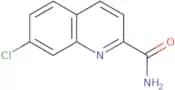
CAS:<p>Versatile small molecule scaffold</p>Formula:C10H7ClN2OPurity:Min. 95%Molecular weight:206.63 g/mol3-(N-Phenyl4-methylbenzenesulfonamido)propanoic acid
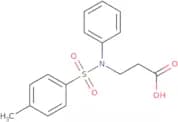
CAS:<p>Versatile small molecule scaffold</p>Formula:C16H17NO4SPurity:Min. 95%Molecular weight:319.4 g/mol4-(3-Methoxyphenyl)-2-oxobut-3-enoic acid
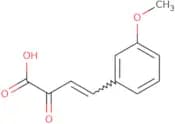
CAS:<p>Versatile small molecule scaffold</p>Formula:C11H10O4Purity:Min. 95%Molecular weight:206.19 g/mol6-Chloro-4-methyl-nicotinamide
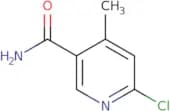
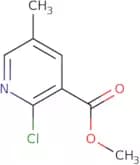
CAS:<p>Versatile small molecule scaffold</p>Formula:C7H7ClN2OPurity:Min. 95%Molecular weight:170.59 g/molMethyl 2-chloro-5-methylnicotinate
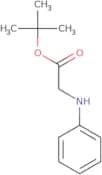
CAS:<p>Versatile small molecule scaffold</p>Formula:C8H8ClNO2Purity:Min. 95%Molecular weight:185.61 g/moltert-Butyl 2-(phenylamino)acetate
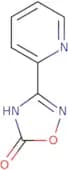
CAS:<p>Versatile small molecule scaffold</p>Formula:C12H17NO2Purity:Min. 95%Molecular weight:207.27 g/mol3-(Pyridin-2-yl)-4,5-dihydro-1,2,4-oxadiazol-5-one
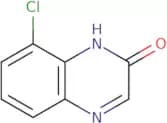
CAS:<p>Versatile small molecule scaffold</p>Formula:C7H5N3O2Purity:Min. 95%Molecular weight:163.13 g/mol8-Chloro-2-quinoxalinol
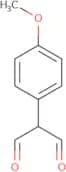
CAS:<p>Versatile small molecule scaffold</p>Formula:C8H5ClN2OPurity:Min. 95%Molecular weight:180.59 g/mol2-(4-Methoxyphenyl)malondialdehyde
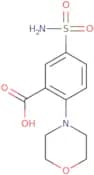
CAS:<p>2-(4-Methoxyphenyl)malondialdehyde is a synthetic chemical that is used as a reagent for the synthesis of piperidine derivatives. It can be readily prepared using hydrogen chloride and a hydrocarbon solvent in the presence of an acid catalyst. 2-(4-Methoxyphenyl)malondialdehyde has been used in the synthesis of bone morphogenetic proteins and other molecules, such as dorsomorphin and ldn-193189.</p>Formula:C10H10O3Purity:Min. 95%Molecular weight:178.18 g/mol2-(Morpholin-4-yl)-5-sulfamoylbenzoic acid
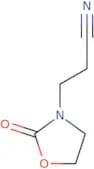
CAS:<p>Versatile small molecule scaffold</p>Formula:C11H14N2O5SPurity:Min. 95%Molecular weight:286.31 g/mol3-(2-Oxo-1,3-oxazolidin-3-yl)propanenitrile
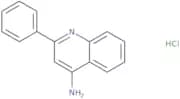
CAS:<p>Versatile small molecule scaffold</p>Formula:C6H8N2O2Purity:Min. 95%Molecular weight:140.14 g/mol2-Phenylquinolin-4-amine hydrochloride
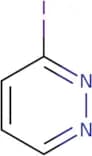
CAS:<p>Versatile small molecule scaffold</p>Formula:C15H13ClN2Purity:Min. 95%Molecular weight:256.73 g/mol3-Iodopyridazine
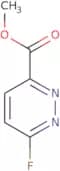
CAS:<p>3-Iodopyridazine is a trifunctional molecule that has been used as a luminophor. It can be synthesized by palladium-catalyzed cross-coupling of 3-bromopyridazine with diethyl ester, yielding the desired product. This product is an organic solvent that contains nitrogen atoms and exhibits enhanced fluorescent properties. The supramolecular chemistry of this compound has been studied extensively, and it has been shown to have nucleophilic functionalities, which make it useful in cross-coupling reactions.</p>Formula:C4H3IN2Purity:Min. 95%Molecular weight:205.98 g/molMethyl 6-fluoropyridazine-3-carboxylate
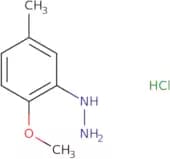
CAS:<p>Versatile small molecule scaffold</p>Formula:C6H5FN2O2Purity:Min. 95%Molecular weight:156.11 g/mol(2-Methoxy-5-methylphenyl)hydrazine hydrochloride
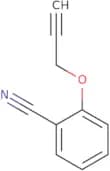
CAS:<p>Versatile small molecule scaffold</p>Formula:C8H13ClN2OPurity:Min. 95%Molecular weight:188.65 g/mol2-(Prop-2-yn-1-yloxy)benzonitrile
CAS:<p>Versatile small molecule scaffold</p>Formula:C10H7NOPurity:Min. 95%Molecular weight:157.17 g/mol3-[(2-Aminophenyl)amino]propan-1-ol
CAS:<p>Versatile small molecule scaffold</p>Formula:C9H14N2OPurity:Min. 95%Molecular weight:166.22 g/mol4-(4-Methoxyphenyl)-5-sulfanyl-8-thia-4,6-diazatricyclo[7.4.0.0,2,7]trideca-1(9),2(7),5-trien-3-one
CAS:<p>Versatile small molecule scaffold</p>Formula:C17H16N2O2S2Purity:Min. 95%Molecular weight:344.5 g/mol4-(4-Ethoxyphenyl)-5-sulfanyl-8-thia-4,6-diazatricyclo[7.4.0.0,2,7]trideca-1(9),2(7),5-trien-3-one
CAS:<p>Versatile small molecule scaffold</p>Formula:C18H18N2O2S2Purity:Min. 95%Molecular weight:358.5 g/mol
![3-{6-Bromo-3H-imidazo[4,5-b]pyridin-2-yl}pyridine](/_next/image/?url=https%3A%2Fstatic.cymitquimica.com%2Fproducts%2F3D%2Fthumb-webp%2FQCA14790.webp&w=3840&q=75)

![3-[(2-Aminophenyl)amino]propan-1-ol](/_next/image/?url=https%3A%2Fstatic.cymitquimica.com%2Fproducts%2F3D%2Fthumb-webp%2FQCA21443.webp&w=3840&q=75)
![4-(4-Methoxyphenyl)-5-sulfanyl-8-thia-4,6-diazatricyclo[7.4.0.0,2,7]trideca-1(9),2(7),5-trien-3-one](/_next/image/?url=https%3A%2Fstatic.cymitquimica.com%2Fproducts%2F3D%2Fthumb-webp%2FQCA23402.webp&w=3840&q=75)
![4-(4-Ethoxyphenyl)-5-sulfanyl-8-thia-4,6-diazatricyclo[7.4.0.0,2,7]trideca-1(9),2(7),5-trien-3-one](/_next/image/?url=https%3A%2Fstatic.cymitquimica.com%2Fproducts%2F3D%2Fthumb-webp%2FQCA23403.webp&w=3840&q=75)