Building Blocks
This section contains fundamental products for the synthesis of organic and biological compounds. Building blocks are the essential starting materials used to construct complex molecules through various chemical reactions. They play a critical role in drug discovery, material science, and chemical research. At CymitQuimica, we offer a diverse range of high-quality building blocks to support your innovative research and industrial projects, ensuring you have the essential components for successful synthesis.
Subcategories of "Building Blocks"
- Boronic Acids & Boronic Acid Derivatives(5,756 products)
- Chiral Building Blocks(1,242 products)
- Hydrocarbon Building Blocks(6,095 products)
- Organic Building Blocks(61,038 products)
Found 196817 products of "Building Blocks"
Sort by
Purity (%)
0
100
|
0
|
50
|
90
|
95
|
100
[1,3]Dioxolo[4,5-G]quinazoline-6,8-diol
CAS:<p>Versatile small molecule scaffold</p>Formula:C9H6N2O4Purity:Min. 95%Molecular weight:206.15 g/mol2-Chloro-1-(4-isopropylphenyl)ethanone
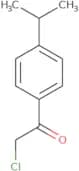
CAS:<p>Versatile small molecule scaffold</p>Formula:C11H13ClOPurity:Min. 95%Molecular weight:196.67 g/mol1-Methylcyclobutane-1-carbonyl chloride
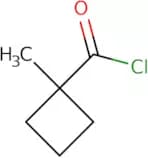
CAS:<p>Versatile small molecule scaffold</p>Formula:C6H9ClOPurity:Min. 95%Molecular weight:132.59 g/mol2,6-bis(hydroxymethyl)-4-methoxyphenol
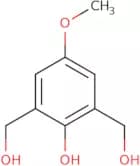
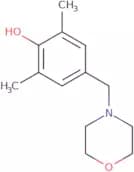
CAS:<p>2,6-Bis(hydroxymethyl)-4-methoxyphenol is a phloroglucinol derivative that is obtained through the conversion of 2,6-bis(hydroxymethyl)phenol by reaction with sodium methoxide in methanol. It is used as a catalyst for making polyhydric phenols and aromatic compounds. This compound has been shown to be an efficient catalyst for reactions such as the synthesis of sulfuric acid and aromatic compounds. 2,6-Bis(hydroxymethyl)-4-methoxyphenol can be prepared from 2,6-bis(hydroxymethyl)phenol and sodium hydroxide in methanol, which yields a clean product.</p>Formula:C9H12O4Purity:Min. 95%Molecular weight:184.18 g/mol2,6-Dimethyl-4-(morpholin-4-ylmethyl)phenol
CAS:Versatile small molecule scaffoldFormula:C13H19NO2Purity:Min. 95%Molecular weight:221.29 g/mol3-[2-(Trifluoromethyl)phenyl]butan-2-amine
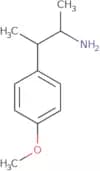
CAS:Controlled Product<p>Versatile small molecule scaffold</p>Formula:C11H14F3NPurity:Min. 95%Molecular weight:217.23 g/mol3-(4-Methoxyphenyl)butan-2-amine
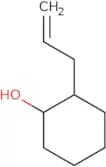
CAS:Controlled Product<p>Versatile small molecule scaffold</p>Formula:C11H17NOPurity:Min. 95%Molecular weight:179.26 g/mol2-(Prop-2-en-1-yl)cyclohexan-1-ol
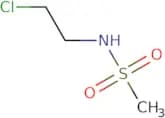
CAS:<p>2-(Prop-2-en-1-yl)cyclohexan-1-ol (PCOH) is a pyranoside that can be used as a biomolecular transfer agent. PCOH is synthesized by the reaction of cyclohexanone with propargyl alcohol in the presence of a ruthenium complex and ligand. This reaction proceeds without any side reactions, and the hydrogenated product is obtained in good yield. The carbonyl group on PCOH has been shown to be an efficient nucleophile for ring opening reactions of styrene derivatives.</p>Formula:C9H16OPurity:Min. 95%Molecular weight:140.22 g/molN-(2-Chloroethyl)methanesulfonamide
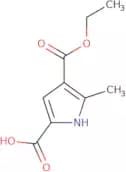
CAS:<p>N-(2-Chloroethyl)methanesulfonamide (NEMSA) is an ethylene-methanesulfonamide compound that is a serotonergic drug. It has been shown to bind to the 5-HT4 receptor and inhibit the release of serotonin in the brain by blocking chloride channels. NEMSA is used to treat chronic pain, anxiety, and depression. This drug also has affinity for the 5-HT1A receptor and has been shown to be effective in animal models of anxiety and depression. NEMSA binds with high affinity to molecular modeling studies using nitrogen atom as a probe. This drug undergoes a reaction in aqueous solution or reaction system at physiological pH. The pharmacological activity of this drug may be due to its inhibition of serotonin receptors, which are involved in mood regulation, sleep, appetite, sexual function, memory, learning and many other functions.</p>Formula:C3H8ClNO2SPurity:Min. 95%Molecular weight:157.62 g/mol4-(Ethoxycarbonyl)-5-methyl-1H-pyrrole-2-carboxylic acid
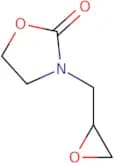
CAS:<p>Versatile small molecule scaffold</p>Formula:C9H11NO4Purity:Min. 95%Molecular weight:197.19 g/mol3-(Oxiran-2-ylmethyl)-1,3-oxazolidin-2-one
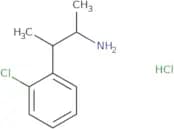
CAS:<p>Versatile small molecule scaffold</p>Formula:C6H9NO3Purity:Min. 95%Molecular weight:143.14 g/mol3-(2-Chlorophenyl)butan-2-amine hydrochloride
CAS:Controlled Product<p>Versatile small molecule scaffold</p>Formula:C10H15Cl2NPurity:Min. 95%Molecular weight:220.14 g/mol[3-(4-Chlorophenyl)butan-2-yl](methyl)amine
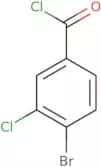
CAS:Controlled Product<p>Versatile small molecule scaffold</p>Formula:C11H16ClNPurity:Min. 95%Molecular weight:197.7 g/mol4-Bromo-3-chlorobenzoyl chloride
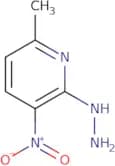
CAS:<p>Versatile small molecule scaffold</p>Formula:C7H3BrCl2OPurity:Min. 95%Molecular weight:253.9 g/mol2-Hydrazinyl-6-methyl-3-nitropyridine
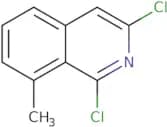
CAS:<p>Versatile small molecule scaffold</p>Formula:C6H8N4O2Purity:Min. 95%Molecular weight:168.15 g/mol1,3-Dichloro-8-methylisoquinoline
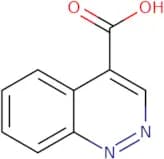
CAS:<p>Versatile small molecule scaffold</p>Formula:C10H7Cl2NPurity:Min. 95%Molecular weight:212.07 g/molCinnoline-4-carboxylic acid
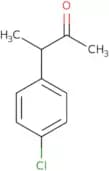
CAS:<p>Cinnoline-4-carboxylic acid is a synthetic compound that is used in the synthesis of cinnolines. It is synthesized from formaldehyde and cinnamic acid through a process called decarboxylation. This process produces two molecules of CO2 and one molecule of formic acid. Cinnoline-4-carboxylic acid is soluble in organic solvents such as formamide, chloroform, or ethyl acetate, but insoluble in water. The compound has been shown to exhibit dose-dependent effects on the growth of cell cultures and can be used to study the effect of drugs on cells. It also has been shown to inhibit an enzyme called ciliaris, which is involved in the production of mucus by cells.</p>Formula:C9H6N2O2Purity:Min. 95%Molecular weight:174.16 g/mol3-(4-Chlorophenyl)butan-2-one
CAS:<p>Versatile small molecule scaffold</p>Formula:C10H11ClOPurity:Min. 95%Molecular weight:182.64 g/mol3-[2-(Trifluoromethyl)phenyl]butan-2-one
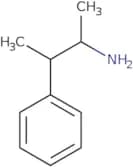
CAS:<p>Versatile small molecule scaffold</p>Formula:C11H11F3OPurity:Min. 95%Molecular weight:216.2 g/mol3-Phenylbutan-2-amine
CAS:Controlled Product<p>Versatile small molecule scaffold</p>Formula:C10H15NPurity:Min. 95%Molecular weight:149.23 g/mol
![[1,3]Dioxolo[4,5-G]quinazoline-6,8-diol](/_next/image/?url=https%3A%2Fstatic.cymitquimica.com%2Fproducts%2F3D%2Fthumb-webp%2FWAA88435.webp&w=3840&q=75)

![3-[2-(Trifluoromethyl)phenyl]butan-2-amine](/_next/image/?url=https%3A%2Fstatic.cymitquimica.com%2Fproducts%2F3D%2Fthumb-webp%2FWAA89466.webp&w=3840&q=75)
amine](/_next/image/?url=https%3A%2Fstatic.cymitquimica.com%2Fproducts%2F3D%2Fthumb-webp%2FWAA90014.webp&w=3840&q=75)
![3-[2-(Trifluoromethyl)phenyl]butan-2-one](/_next/image/?url=https%3A%2Fstatic.cymitquimica.com%2Fproducts%2F3D%2Fthumb-webp%2FWAA90606.webp&w=3840&q=75)