Building Blocks
This section contains fundamental products for the synthesis of organic and biological compounds. Building blocks are the essential starting materials used to construct complex molecules through various chemical reactions. They play a critical role in drug discovery, material science, and chemical research. At CymitQuimica, we offer a diverse range of high-quality building blocks to support your innovative research and industrial projects, ensuring you have the essential components for successful synthesis.
Subcategories of "Building Blocks"
- Boronic Acids & Boronic Acid Derivatives(5,780 products)
- Chiral Building Blocks(1,241 products)
- Hydrocarbon Building Blocks(6,100 products)
- Organic Building Blocks(61,010 products)
Found 205258 products of "Building Blocks"
Sort by
Purity (%)
0
100
|
0
|
50
|
90
|
95
|
100
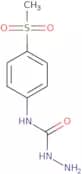
3-Amino-1-(4-methanesulfonylphenyl)urea
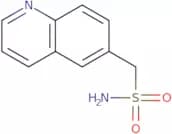
CAS:Versatile small molecule scaffoldFormula:C8H11N3O3SPurity:Min. 95%Molecular weight:229.26 g/mol(Quinolin-6-yl)methanesulfonamide
CAS:Quinolin-6-yl)methanesulfonamide is an intermediate in the synthesis of azetidine.
Formula:C10H10N2O2SPurity:Min. 95%Molecular weight:222.27 g/mol[4-(3,5-Dimethyl-1H-pyrazol-1-yl)-2-(trifluoromethyl)phenyl]methanamine
CAS:Versatile small molecule scaffoldFormula:C13H14F3N3Purity:Min. 95%Molecular weight:269.27 g/mol1-[2-(Trifluoromethyl)phenyl]-1H-pyrazole-3-carboxylic acid
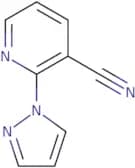
CAS:Versatile small molecule scaffoldFormula:C11H7F3N2O2Purity:Min. 95%Molecular weight:256.18 g/mol2-(Pyrazol-1-yl)-3-cyanopyridine
CAS:2-(Pyrazol-1-yl)-3-cyanopyridine is a benzyl pyridine that has been shown to have antimicrobial activity, including inhibition of bacterial growth. It was synthesized by the reaction of diazotization of thiourea with sodium sulfite and 2-(chlorosulfonyl)benzene. The product is a white solid that is soluble in water and ether. 2-(Pyrazol-1-yl)-3-cyanopyridine can be used as an antimicrobial agent to prevent bacterial growth in water systems such as chloroacetic acid, chloride, and nitrous acid. The compound inhibits the formation of the cytoplasmic membrane because it binds to the cytoplasmic membrane protein cytochrome c oxidase. This binding prevents the production of ATP, which leads to cell death.Formula:C9H6N4Purity:Min. 95%Molecular weight:170.17 g/mol1-(3-Nitrophenyl)-1H-pyrazole-3-carboxylic acid
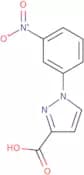
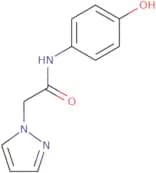
CAS:Versatile small molecule scaffoldFormula:C10H7N3O4Purity:Min. 95%Molecular weight:233.18 g/molN-(4-Hydroxyphenyl)-2-(1H-pyrazol-1-yl)acetamide
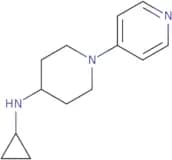
CAS:Versatile small molecule scaffoldFormula:C11H11N3O2Purity:Min. 95%Molecular weight:217.22 g/molN-Cyclopropyl-1-(pyridin-4-yl)piperidin-4-amine
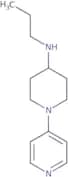
CAS:Versatile small molecule scaffoldFormula:C13H19N3Purity:Min. 95%Molecular weight:217.31 g/molN-Propyl-1-(pyridin-4-yl)piperidin-4-amine
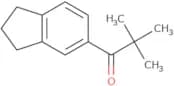
CAS:Versatile small molecule scaffoldFormula:C13H21N3Purity:Min. 95%Molecular weight:219.33 g/mol1-(2,3-Dihydro-1H-inden-5-yl)-2,2-dimethylpropan-1-one
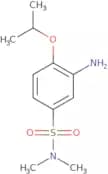
CAS:Versatile small molecule scaffoldFormula:C14H18OPurity:Min. 95%Molecular weight:202.29 g/mol3-Amino-N,N-dimethyl-4-(propan-2-yloxy)benzene-1-sulfonamide
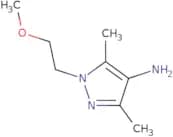
CAS:Versatile small molecule scaffoldFormula:C11H18N2O3SPurity:Min. 95%Molecular weight:258.34 g/mol1-(2-Methoxyethyl)-3,5-dimethyl-1H-pyrazol-4-amine
CAS:Versatile small molecule scaffoldFormula:C8H15N3OPurity:Min. 95%Molecular weight:169.22 g/mol8-Ethyl-8-azabicyclo[3.2.1]octan-3-one
CAS:8-Ethyl-8-azabicyclo[3.2.1]octan-3-one is a synthetic compound that is structurally similar to nicotine, which is found in the leaves of tobacco plants. It has been shown to have pharmacological activity as a nicotinic receptor agonist. 8-Ethyl-8-azabicyclo[3.2.1]octan-3-one has been used in the treatment of various types of cancer, including Hodgkin's disease and breast cancer, as well as for Parkinson's disease and Alzheimer's disease. 8EBAO also has antiemetic properties and can be used to treat motion sickness or postoperative nausea and vomiting. The drug is metabolized by CYP450 enzymes into tigloyloximes, which are then converted into pseudotropine or piperideine through the action of rhizogenes from Pseudomonas sp., Streptomyces sp.,Formula:C9H15NOPurity:Min. 95%Molecular weight:153.22 g/mol9-Methyl-3,9-diazabicyclo[3.3.1]nonane dihydrochloride
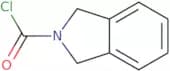
CAS:Versatile small molecule scaffoldFormula:C8H18Cl2N2Purity:Min. 95%Molecular weight:213.15 g/mol2,3-Dihydro-1H-isoindole-2-carbonyl chloride
CAS:Versatile small molecule scaffold
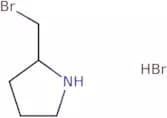
Formula:C9H8ClNOPurity:Min. 95%Molecular weight:181.62 g/mol2-(Bromomethyl)pyrrolidine hydrobromide
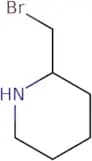
CAS:2-Bromomethylpyrrolidine hydrobromide is a brominated analog of pyrrolidine. It is an intermediate in the reaction pathway for the synthesis of piperidine, which is a precursor to many pharmaceuticals. 2-Bromomethylpyrrolidine hydrobromide is synthesized by the reaction of bromine with pyrrolidine and undergoes electrophilic substitution at the nitrogen atom in its chain. The equilibrium between 2-bromomethylpyrrolidine hydrobromide and 2-methylpyrrolidinium bromide is shifted to favor hydrobromide when it is reacted with an alcohol or amine.Formula:C5H11Br2NPurity:Min. 95%Molecular weight:244.96 g/mol2-Bromomethyl-piperidine hydrobromide
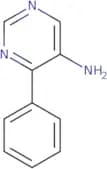
CAS:2-Bromomethyl-piperidine hydrobromide is a potent 5-HT6 receptor antagonist. It has been shown to have affinity for the 5-HT6 receptor and is selective for this receptor over other serotonin receptors. 2-Bromomethyl-piperidine hydrobromide inhibits the binding of serotonin to its receptors and prevents the activation of these receptors, which leads to an anti-depressive effect. This compound is also used as an intermediate in organic synthesis, such as acrylates or hydrides.Formula:C6H13Br2NPurity:Min. 95%Molecular weight:258.99 g/mol4-Phenylpyrimidin-5-amine
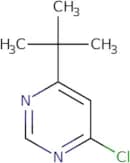
CAS:4-Phenylpyrimidin-5-amine is an organic compound that belongs to the group of bromo compounds. It is a colorless solid. 4-Phenylpyrimidin-5-amine can be synthesized from phenylacetic acid, nitroethane, and ammonium acetate. The substance is used in the manufacture of other substances.Formula:C10H9N3Purity:Min. 95%Molecular weight:171.2 g/mol4-Tert-butyl-6-chloropyrimidine
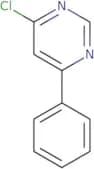
CAS:Versatile small molecule scaffoldFormula:C8H11ClN2Purity:Min. 95%Molecular weight:170.64 g/mol4-Chloro-6-phenylpyrimidine
CAS:4-Chloro-6-phenylpyrimidine is a crystalline solid. It has a molecular weight of 193.14 g/mol and a density of 1.832 g/cm3, with the chemical formula C11H10N4Cl2. The crystals are monoclinic and colourless. The crystals have an orthorhombic symmetry with space group P21/n. 4-Chloro-6-phenylpyrimidine has been used to measure the wavelength and radiation parameters for X-ray diffraction measurements. Bruker's software, which is used for data acquisition, was used to generate the parameters for this compound's crystal structure in order to perform these experiments.Formula:C10H7ClN2Purity:Min. 95%Molecular weight:190.63 g/mol

![[4-(3,5-Dimethyl-1H-pyrazol-1-yl)-2-(trifluoromethyl)phenyl]methanamine](/_next/image/?url=https%3A%2Fstatic.cymitquimica.com%2Fproducts%2F3D%2Fthumb-webp%2FCWB81526.webp&w=3840&q=75)
![1-[2-(Trifluoromethyl)phenyl]-1H-pyrazole-3-carboxylic acid](/_next/image/?url=https%3A%2Fstatic.cymitquimica.com%2Fproducts%2F3D%2Fthumb-webp%2FCWB81538.webp&w=3840&q=75)
![8-Ethyl-8-azabicyclo[3.2.1]octan-3-one](/_next/image/?url=https%3A%2Fstatic.cymitquimica.com%2Fproducts%2F3D%2Fthumb-webp%2FDAA42330.webp&w=3840&q=75)
![9-Methyl-3,9-diazabicyclo[3.3.1]nonane dihydrochloride](/_next/image/?url=https%3A%2Fstatic.cymitquimica.com%2Fproducts%2F3D%2Fthumb-webp%2FDAA43107.webp&w=3840&q=75)