


Building Blocks
Subcategories of "Building Blocks"
- Boronic Acids & Boronic Acid Derivatives(5,780 products)
- Chiral Building Blocks(1,240 products)
- Hydrocarbon Building Blocks(6,100 products)
- Organic Building Blocks(61,009 products)
Found 205248 products of "Building Blocks"
3-[4-(dimethylamino)phenyl]propanoic acid
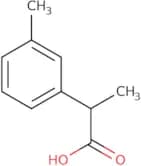
CAS:Versatile small molecule scaffoldFormula:C11H15NO2Purity:Min. 95%Molecular weight:193.25 g/mol2-(3-Methylphenyl)propanoic acid
CAS:2-(3-Methylphenyl)propanoic acid is a versatile compound that has various applications in different industries. It is commonly used as a precursor for the synthesis of glycidyl methacrylate, which is widely used in the production of polymers and resins. This compound has also been found to have potential health benefits, as it exhibits antioxidant and anti-inflammatory properties. Additionally, 2-(3-Methylphenyl)propanoic acid has been studied for its antimicrobial activity against Ganoderma lucidum, a fungus that can cause wood decay. Its unique chemical structure allows it to interact with aldehydes and metal ions such as strontium chloride. Furthermore, this compound has good solubility in methanol and can be easily incorporated into various formulations. Its bioavailability makes it a promising candidate for drug delivery systems, including those involving zolmitriptan, electrolytes, aluminum, ivabradine, benzoate, electrode
Formula:C10H12O2Purity:Min. 95%Molecular weight:164.2 g/mol2-(5-Methoxy-1H-indol-3-yl)propan-1-amine hydrochloride
CAS:Versatile small molecule scaffoldFormula:C12H17ClN2OPurity:Min. 95%Molecular weight:240.7 g/molEthyl 4-isothiocyanatopiperidine-1-carboxylate
CAS:Versatile small molecule scaffoldFormula:C9H14N2O2SPurity:Min. 95%Molecular weight:214.29 g/mol(2-Methyl-2,3-dihydro-1H-inden-2-yl)methanol
CAS:Versatile small molecule scaffoldFormula:C11H14OPurity:Min. 95%Molecular weight:162.23 g/molMethyl 2-(3,5-dimethylphenyl)acetate
CAS:Versatile small molecule scaffold
Formula:C11H14O2Purity:Min. 95%Molecular weight:178.23 g/mol5-Chloro-6-(chloromethyl)pyrimidine-2,4(1H,3H)-dione
CAS:5-Chloro-6-(chloromethyl)pyrimidine-2,4(1H,3H)-dione is a versatile compound that has various applications in different fields. It is commonly used as a metal complex for tracers in research chemicals. This compound is known for its ability to form stable complexes with metals, making it ideal for use in tracing experiments. Additionally, it is widely used in crystallization studies and has been found to be effective in the synthesis of zeolite and selenite crystals.Formula:C5H4Cl2N2O2Purity:Min. 95%Molecular weight:195 g/molMethyl 5-(benzylsulfanyl)-3-methyl-1H-pyrazole-4-carboxylate
CAS:Versatile small molecule scaffoldFormula:C13H14N2O2SPurity:Min. 95%Molecular weight:262.33 g/molrac-(2R,4R,6S)-2,6-Dimethylpiperidin-4-ol
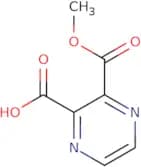
CAS:Versatile small molecule scaffoldFormula:C7H15NOPurity:Min. 95%Molecular weight:129.2 g/mol3-(Methoxycarbonyl)pyrazine-2-carboxylic acid
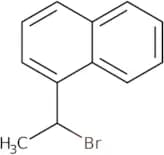
CAS:Versatile small molecule scaffoldFormula:C7H6N2O4Purity:Min. 95%Molecular weight:182.13 g/mol1-(1-Bromoethyl)naphthalene
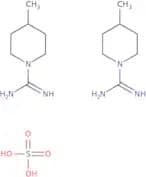
CAS:Versatile small molecule scaffoldFormula:C12H11BrPurity:Min. 95%Molecular weight:235.12 g/molBis(4-methylpiperidine-1-carboximidamide), sulfuric acid
CAS:Versatile small molecule scaffoldFormula:C14H32N6O4SPurity:Min. 95%Molecular weight:380.51 g/molMethyl 3-hydroxyquinoline-4-carboxylate
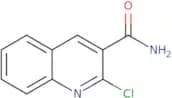
CAS:Versatile small molecule scaffoldFormula:C11H9NO3Purity:Min. 95%Molecular weight:203.19 g/mol2-Chloroquinoline-3-carboxamide
CAS:Versatile small molecule scaffoldFormula:C10H7ClN2OPurity:Min. 95%Molecular weight:206.63 g/mol2-Chloro-3-quinolinecarboxylic acid
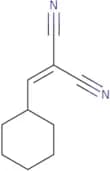
CAS:2-Chloro-3-quinolinecarboxylic acid is a versatile chemical compound with various applications. It can be used as a phosphite in the synthesis of other compounds such as ofloxacin and imatinib. Additionally, it has been studied for its potential effects on acetylcholine receptors and its ability to inhibit certain enzymes. This compound is soluble in methanol and can be precipitated by trichloroacetic acid or other precipitants such as gadolinium or maleate salts. It is also used in the research field as a tool for studying fatty acids and their metabolism. Furthermore, 2-Chloro-3-quinolinecarboxylic acid has been utilized in the development of new research chemicals, including emission probes, benzoate derivatives, electrode materials, and ligands for pharmaceuticals such as palonosetron and dasatinib. Its wide range of applications makes it an essential component in various industries.Formula:C10H6ClNO2Purity:Min. 95%Molecular weight:207.62 g/mol2-(Cyclohexylmethylidene)propanedinitrile
CAS:Versatile small molecule scaffold
Formula:C10H12N2Purity:Min. 95%Molecular weight:160.22 g/mol2,2-Difluoro-2-[4-(trifluoromethyl)phenyl]acetic acid
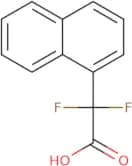
CAS:Versatile small molecule scaffoldFormula:C9H5F5O2Purity:Min. 95%Molecular weight:240.13 g/molalpha,alpha-Difluoro-1-naphthaleneacetic acid
CAS:Versatile small molecule scaffoldFormula:C12H8F2O2Purity:Min. 95%Molecular weight:222.19 g/mol2,4-Dimethyl-2H,6H,7H-pyrazolo[3,4-b]pyridin-6-one
CAS:Versatile small molecule scaffoldFormula:C8H9N3OPurity:Min. 95%Molecular weight:163.18 g/mol
![3-[4-(dimethylamino)phenyl]propanoic acid](/_next/image/?url=https%3A%2Fstatic.cymitquimica.com%2Fproducts%2F3D%2Fthumb-webp%2FYCA71809.webp&w=3840&q=75)

![2,2-Difluoro-2-[4-(trifluoromethyl)phenyl]acetic acid](/_next/image/?url=https%3A%2Fstatic.cymitquimica.com%2Fproducts%2F3D%2Fthumb-webp%2FYCA79011.webp&w=3840&q=75)
![3-Azabicyclo[3.1.0]hexane hydrochloride](/_next/image/?url=https%3A%2Fstatic.cymitquimica.com%2Fproducts%2F3D%2Fthumb-webp%2FYCA79964.webp&w=3840&q=75)
![2,4-Dimethyl-2H,6H,7H-pyrazolo[3,4-b]pyridin-6-one](/_next/image/?url=https%3A%2Fstatic.cymitquimica.com%2Fproducts%2F3D%2Fthumb-webp%2FYCA81075.webp&w=3840&q=75)