Building Blocks
This section contains fundamental products for the synthesis of organic and biological compounds. Building blocks are the essential starting materials used to construct complex molecules through various chemical reactions. They play a critical role in drug discovery, material science, and chemical research. At CymitQuimica, we offer a diverse range of high-quality building blocks to support your innovative research and industrial projects, ensuring you have the essential components for successful synthesis.
Subcategories of "Building Blocks"
- Boronic Acids & Boronic Acid Derivatives(5,778 products)
- Chiral Building Blocks(1,242 products)
- Hydrocarbon Building Blocks(6,098 products)
- Organic Building Blocks(61,098 products)
Found 199594 products of "Building Blocks"
Sort by
Purity (%)
0
100
|
0
|
50
|
90
|
95
|
100
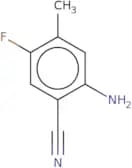
2-Amino-5-fluoro-4-methylbenzonitrile
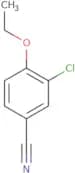
CAS:<p>Versatile small molecule scaffold</p>Formula:C8H7FN2Purity:Min. 95%Molecular weight:150.2 g/mol3-Chloro-4-ethoxybenzonitrile
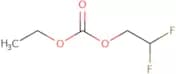
CAS:Versatile small molecule scaffoldFormula:C9H8ClNOPurity:Min. 95%Molecular weight:181.62 g/mol2,2-Difluoroethyl ethyl carbonate
CAS:2,2-Difluoroethyl ethyl carbonate is an electrolyte that belongs to the group of pyridinium salts. It is a colorless liquid with a layered structure and a melting point of -28°C. 2,2-Difluoroethyl ethyl carbonate has been used in Japan for the treatment of sectional bronchitis.Formula:C5H8F2O3Purity:Min. 95%Molecular weight:154.11 g/molBis(2,2-difluoroethyl) carbonate
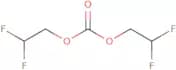
CAS:<p>Versatile small molecule scaffold</p>Formula:C5H6F4O3Purity:Min. 95%Molecular weight:190.09 g/mol5-Amino-2-fluorobenzene-1-sulfonamide
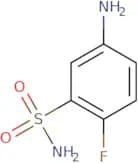
CAS:<p>Versatile small molecule scaffold</p>Formula:C6H7FN2O2SPurity:Min. 95%Molecular weight:190.2 g/mol2-Amino-6-bromo-3-methoxypyridine
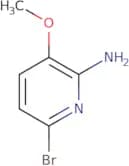
CAS:<p>Versatile small molecule scaffold</p>Formula:C6H7BrN2OPurity:Min. 95%Molecular weight:203.04 g/mol3-Ethoxy-6-methoxy-1H-indole
CAS:<p>Versatile small molecule scaffold</p>Formula:C11H13NO2Purity:Min. 95%Molecular weight:191.23 g/mol[4-(Piperidine-1-carbonyl)phenyl]methanamine hydrochloride
CAS:<p>Versatile small molecule scaffold</p>Formula:C13H19ClN2OPurity:Min. 95%Molecular weight:254.75 g/mol(2S)-2-Amino-1-(piperidin-1-yl)propan-1-one hydrochloride
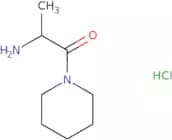
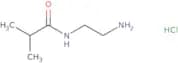
CAS:Controlled Product<p>Versatile small molecule scaffold</p>Formula:C8H17ClN2OPurity:Min. 95%Molecular weight:192.68 g/molN-(2-Aminoethyl)-2-methylpropanamide hydrochloride
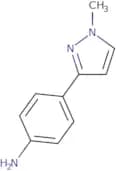
CAS:<p>Versatile small molecule scaffold</p>Formula:C6H15ClN2OPurity:Min. 95%Molecular weight:166.65 g/mol4-(1-Methyl-1H-pyrazol-3-yl)aniline
CAS:<p>Versatile small molecule scaffold</p>Formula:C10H11N3Purity:Min. 95%Molecular weight:173.22 g/mol2-Methyl-3-[(methylamino)methyl]furan
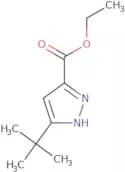
CAS:Versatile small molecule scaffoldFormula:C7H11NOPurity:Min. 95%Molecular weight:125.17 g/molEthyl 3-tert-butyl-1H-pyrazole-5-carboxylate
CAS:<p>Ethyl 3-tert-butyl-1H-pyrazole-5-carboxylate (ETBP) is an orally active, water soluble prodrug of piperidine. ETBP has been shown to be safe and effective in monkeys, with low toxicity. ETBP interacts with CYP3A4 and can be metabolized by CYP2D6 to form a pharmacokinetic profile that is similar to the parent drug. The physicochemical properties of ETBP make it difficult for the drug to cross the blood brain barrier, which may limit its use as a psychotropic agent. Benzimidazole derivatives are structurally modified ETBP analogues that have been shown to have better bioavailability and reduced neurotoxicity.</p>Formula:C10H16N2O2Purity:Min. 95%Molecular weight:196.25 g/mol4-(3-Bromophenyl)pyrazole
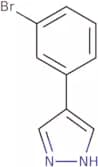
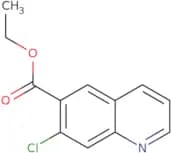
CAS:<p>4-(3-Bromophenyl)pyrazole is a chemical compound that belongs to the class of organic compounds known as pyrazoles. It is a white crystalline solid that reacts with water to produce hydrogen bromide. The reactivity of 4-(3-bromophenyl)pyrazole has been studied using thermogravimetric analysis and operational techniques, including magnetic resonance spectroscopy and calorimetry. The synthesize of this compound has been shown to be possible by reacting 3-bromobenzene with benzoyl chloride followed by reaction with potassium hydroxide in ethanol. The reactivity of 4-(3-bromophenyl)pyrazole has also been studied using magnetic resonance spectroscopy, which showed that it is a resonance molecule, meaning it has an electronically excited state.</p>Formula:C9H7BrN2Purity:Min. 95%Molecular weight:223.08 g/molEthyl 7-chloroquinoline-6-carboxylate
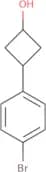
CAS:<p>Versatile small molecule scaffold</p>Formula:C12H10ClNO2Purity:Min. 95%Molecular weight:235.66 g/mol3-(4-Bromophenyl)cyclobutan-1-ol
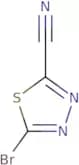
CAS:<p>Versatile small molecule scaffold</p>Formula:C10H11BrOPurity:Min. 95%Molecular weight:227.1 g/mol5-Bromo-1,3,4-thiadiazole-2-carbonitrile
CAS:<p>Versatile small molecule scaffold</p>Formula:C3BrN3SPurity:Min. 95%Molecular weight:190.02 g/mol2-{3-[(4-Chlorophenyl)methoxy]phenyl}acetic acid
CAS:<p>Versatile small molecule scaffold</p>Formula:C15H13ClO3Purity:Min. 95%Molecular weight:276.71 g/mol2-[3-(2-Methylpropoxy)phenyl]acetic acid
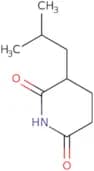
CAS:<p>Versatile small molecule scaffold</p>Formula:C12H16O3Purity:Min. 95%Molecular weight:208.25 g/molPregabalin Impurity 13 (4-Isobutyl-2,6-piperidinedione)
CAS:<p>Pregabalin Impurity 13 is a stereoselective, synthetic compound that has been shown to be an inhibitor of gamma-aminobutyric acid (GABA) receptors. It can be synthesized by reacting 4-isobutyl-2,6-piperidinedione with hydrochloric acid and xylene. Pregabalin Impurity 13 binds to the amino acid sequence of GABA receptors in such a way as to prevent them from opening. This prevents the binding of GABA molecules to the receptor and reduces the duration of inhibition of these receptors. Pregabalin Impurity 13 has been shown to have antimicrobial activity against faecalis, which is found in human intestines and can cause infection. The environmental pollution caused by this impurity is due to its xylene content.</p>Formula:C9H15NO2Purity:Min. 95%Molecular weight:169.22 g/mol


![[4-(Piperidine-1-carbonyl)phenyl]methanamine hydrochloride](/_next/image/?url=https%3A%2Fstatic.cymitquimica.com%2Fproducts%2F3D%2Fthumb-webp%2FRLB76248.webp&w=3840&q=75)
![2-Methyl-3-[(methylamino)methyl]furan](/_next/image/?url=https%3A%2Fstatic.cymitquimica.com%2Fproducts%2F3D%2Fthumb-webp%2FRLB76685.webp&w=3840&q=75)
![2-{3-[(4-Chlorophenyl)methoxy]phenyl}acetic acid](/_next/image/?url=https%3A%2Fstatic.cymitquimica.com%2Fproducts%2F3D%2Fthumb-webp%2FRLB90815.webp&w=3840&q=75)
![2-[3-(2-Methylpropoxy)phenyl]acetic acid](/_next/image/?url=https%3A%2Fstatic.cymitquimica.com%2Fproducts%2F3D%2Fthumb-webp%2FRLB91166.webp&w=3840&q=75)