Building Blocks
This section contains fundamental products for the synthesis of organic and biological compounds. Building blocks are the essential starting materials used to construct complex molecules through various chemical reactions. They play a critical role in drug discovery, material science, and chemical research. At CymitQuimica, we offer a diverse range of high-quality building blocks to support your innovative research and industrial projects, ensuring you have the essential components for successful synthesis.
Subcategories of "Building Blocks"
- Boronic Acids & Boronic Acid Derivatives(5,756 products)
- Chiral Building Blocks(1,242 products)
- Hydrocarbon Building Blocks(6,095 products)
- Organic Building Blocks(61,051 products)
Found 199813 products of "Building Blocks"
Sort by
Purity (%)
0
100
|
0
|
50
|
90
|
95
|
100
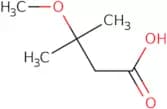
3-Methoxy-3-methylbutanoic acid
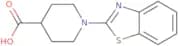
CAS:<p>3-Methoxy-3-methylbutanoic acid is a monounsaturated fatty acid found in vegetable oils. It is used as an inexpensive chemical reagent in the synthesis of various organic compounds, including herbicides, insecticides, and pharmaceuticals. 3-Methoxy-3-methylbutanoic acid reacts with hypochlorite to form 3-chloro-3-methoxypropionic acid, which is an effective insecticide. In addition, it reacts with potassium dihydrogen phosphate to produce a salt that can be used to make butanal.</p>Formula:C6H12O3Purity:Min. 95%Molecular weight:132.16 g/mol1-(1,3-Benzothiazol-2-yl)piperidine-4-carboxylic acid
CAS:<p>Versatile small molecule scaffold</p>Formula:C13H14N2O2SPurity:Min. 95%Molecular weight:262.33 g/mol4-Bromo-1-(3-chloropropoxy)-2-fluorobenzene
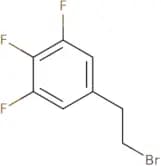
CAS:<p>Versatile small molecule scaffold</p>Formula:C9H9BrClFOPurity:Min. 95%Molecular weight:267.52 g/mol5-(2-Bromoethyl)-1,2,3-trifluorobenzene
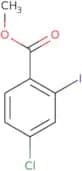
CAS:<p>Versatile small molecule scaffold</p>Formula:C8H6BrF3Purity:Min. 95%Molecular weight:239.03 g/molMethyl 4-chloro-2-iodobenzoate
CAS:<p>Methyl 4-chloro-2-iodobenzoate is an efficient synthesis of 2,4-dihydroxyphenylacetic acid.</p>Formula:C8H6ClIO2Purity:Min. 95%Molecular weight:296.49 g/mol2-[(Piperidine-1-sulfonyl)amino]ethan-1-ol
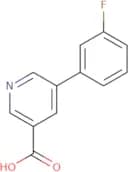
CAS:<p>Versatile small molecule scaffold</p>Formula:C7H16N2O3SPurity:Min. 95%Molecular weight:208.28 g/mol5-(3-Fluorophenyl)nicotinic acid
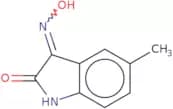
CAS:<p>Versatile small molecule scaffold</p>Formula:C12H8FNO2Purity:Min. 95%Molecular weight:217.2 g/mol3-(Hydroxyimino)-5-methyl-2,3-dihydro-1H-indol-2-one
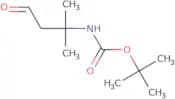
CAS:<p>Versatile small molecule scaffold</p>Formula:C9H8N2O2Purity:Min. 95%Molecular weight:176.2 g/moltert-Butyl N-(2-methyl-4-oxobutan-2-yl)carbamate
CAS:<p>Versatile small molecule scaffold</p>Formula:C10H19NO3Purity:Min. 95%Molecular weight:201.26 g/mol(2E)-4-{[(tert-Butoxy)carbonyl]amino}-4-methylpent-2-enoic acid
CAS:<p>Versatile small molecule scaffold</p>Formula:C11H19NO4Purity:Min. 95%Molecular weight:229.27 g/molEthyl 2-(1,2-dihydroxy-2-phenylethyl)-1,3-oxazole-4-carboxylate
CAS:<p>Versatile small molecule scaffold</p>Formula:C14H15NO5Purity:Min. 95%Molecular weight:277.3 g/mol3-Pyridinamine, 6-[(2-methyl-3-pyridinyl)oxy]-
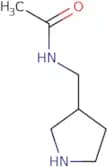
CAS:<p>Versatile small molecule scaffold</p>Formula:C11H11N3OPurity:Min. 95%Molecular weight:201.22 g/molN-(Pyrrolidin-3-ylmethyl)acetamide
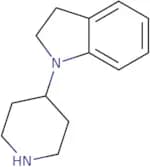
CAS:<p>Versatile small molecule scaffold</p>Formula:C7H14N2OPurity:Min. 95%Molecular weight:142.2 g/mol1-(Piperidin-4-yl)-2,3-dihydro-1H-indole
CAS:Versatile small molecule scaffoldFormula:C13H18N2Purity:Min. 95%Molecular weight:202.3 g/molMethyl 3-amino-3-(4-fluorophenyl)propanoate
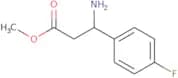
CAS:<p>Versatile small molecule scaffold</p>Formula:C10H12FNO2Purity:Min. 95%Molecular weight:197.21 g/mol(2R)-1-(Benzyloxy)propan-2-amine
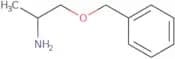
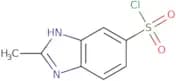
CAS:<p>Versatile small molecule scaffold</p>Formula:C10H15NOPurity:Min. 95%Molecular weight:165.23 g/mol2-Methyl-1H-benzimidazole-5-sulfonyl chloride
CAS:Versatile small molecule scaffoldFormula:C8H7ClN2O2SPurity:Min. 95%Molecular weight:230.67 g/mol1-[(Methylamino)methyl]cyclopentan-1-ol
CAS:<p>Versatile small molecule scaffold</p>Formula:C7H15NOPurity:Min. 95%Molecular weight:129.2 g/mol2-[4-(Aminomethyl)phenyl]acetamide
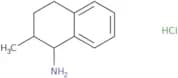
CAS:<p>2-[4-(Aminomethyl)phenyl]acetamide (2-APAA) is an optical solid catalyst that can be used in the production of drugs. 2-APAA is a control agent for autoimmune diseases. The reaction product of 2-APAA is an extender and can be hydraulically transported. It can also be used as a section to analyze heterogeneously distributed amino acids, which are important in protein synthesis. 2-APAA has been shown to generate gaseous signals that can be detected with a signal detection system.</p>Formula:C9H12N2OPurity:Min. 95%Molecular weight:164.2 g/mol2-Methyl-1,2,3,4-tetrahydronaphthalen-1-amine hydrochloride
CAS:<p>Versatile small molecule scaffold</p>Formula:C11H16ClNPurity:Min. 95%Molecular weight:197.7 g/mol


![2-[(Piperidine-1-sulfonyl)amino]ethan-1-ol](/_next/image/?url=https%3A%2Fstatic.cymitquimica.com%2Fproducts%2F3D%2Fthumb-webp%2FGHA76202.webp&w=3840&q=75)
![(2E)-4-{[(tert-Butoxy)carbonyl]amino}-4-methylpent-2-enoic acid](/_next/image/?url=https%3A%2Fstatic.cymitquimica.com%2Fproducts%2F3D%2Fthumb-webp%2FGHA64594.webp&w=3840&q=75)

![3-Pyridinamine, 6-[(2-methyl-3-pyridinyl)oxy]-](/_next/image/?url=https%3A%2Fstatic.cymitquimica.com%2Fproducts%2F3D%2Fthumb-webp%2FGHA63342.webp&w=3840&q=75)
![1-[(Methylamino)methyl]cyclopentan-1-ol](/_next/image/?url=https%3A%2Fstatic.cymitquimica.com%2Fproducts%2F3D%2Fthumb-webp%2FGHA47263.webp&w=3840&q=75)
![2-[4-(Aminomethyl)phenyl]acetamide](/_next/image/?url=https%3A%2Fstatic.cymitquimica.com%2Fproducts%2F3D%2Fthumb-webp%2FGHA46681.webp&w=3840&q=75)