Building Blocks
This section contains fundamental products for the synthesis of organic and biological compounds. Building blocks are the essential starting materials used to construct complex molecules through various chemical reactions. They play a critical role in drug discovery, material science, and chemical research. At CymitQuimica, we offer a diverse range of high-quality building blocks to support your innovative research and industrial projects, ensuring you have the essential components for successful synthesis.
Subcategories of "Building Blocks"
- Boronic Acids & Boronic Acid Derivatives(5,774 products)
- Chiral Building Blocks(1,237 products)
- Hydrocarbon Building Blocks(6,098 products)
- Organic Building Blocks(60,980 products)
Found 205158 products of "Building Blocks"
Sort by
Purity (%)
0
100
|
0
|
50
|
90
|
95
|
100
Ethyl 2-(cyclopent-2-en-1-yl)acetate
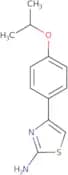
CAS:Versatile small molecule scaffoldFormula:C9H14O2Purity:Min. 95%Molecular weight:154.21 g/mol4-(4-Isopropoxy-phenyl)-thiazol-2-ylamine
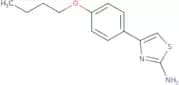
CAS:Versatile small molecule scaffoldFormula:C12H14N2OSPurity:Min. 95%Molecular weight:234.32 g/mol4-(4-Butoxyphenyl)-1,3-thiazol-2-amine
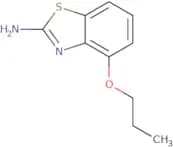
CAS:Versatile small molecule scaffoldFormula:C13H16N2OSPurity:Min. 95%Molecular weight:248.35 g/mol4-Propoxy-1,3-benzothiazol-2-amine
CAS:Versatile small molecule scaffoldFormula:C10H12N2OSPurity:Min. 95%Molecular weight:208.28 g/mol3,4-dihydro-2H-1-benzothiopyran-4-amine hydrochloride
CAS:Versatile small molecule scaffold
Formula:C9H11NS·HClPurity:Min. 95%Molecular weight:201.71 g/mol5-Bromo-2,3-dihydro-1H-indole hydrochloride
CAS:5-Bromo-2,3-dihydro-1H-indole hydrochloride is an indoline that is used in the transformation of compounds. It is a precursor to other compounds such as 2,3-dichloroindole and 5-bromoindole.Formula:C8H9BrClNPurity:Min. 95%Molecular weight:234.52 g/mol2,3-Dihydro-1H-indole-7-carboxylic acid
CAS:Versatile small molecule scaffoldFormula:C9H9NO2Purity:Min. 95%Molecular weight:163.17 g/mol1-Oxo-1H-isochromene-4-carboxylic acid
CAS:Versatile small molecule scaffoldFormula:C10H6O4Purity:Min. 95%Molecular weight:190.15 g/molN-(1,3-Thiazol-4-ylmethyl)aniline
CAS:Versatile small molecule scaffoldFormula:C10H10N2SPurity:Min. 95%Molecular weight:190.27 g/mol7,7,9,9-Tetramethyl-1,3,8-triazaspiro[4.5]decane-2,4-dione
CAS:Versatile small molecule scaffoldFormula:C11H19N3O2Purity:Min. 95%Molecular weight:225.29 g/mol6-(Benzylamino)pyridine-3-carbonitrile
CAS:Versatile small molecule scaffoldFormula:C13H11N3Purity:Min. 95%Molecular weight:209.25 g/mol2-(2,4,6-Trimethoxyphenyl)ethan-1-amine
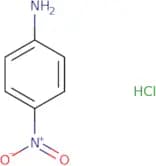
CAS:Controlled ProductVersatile small molecule scaffoldFormula:C11H17NO3Purity:Min. 95%Molecular weight:211.26 g/mol4-Nitroaniline Hydrochloride
CAS:4-Nitroaniline Hydrochloride is a synthetic substrate that has been shown to inhibit the serine protease activity of human neutrophils. It is a potent inhibitor of the inflammatory response in k562 cells and is also an inhibitor of hydrolysis reactions catalyzed by p-hydroxybenzoic acid. The inhibition of these enzymes may be due to a kinetic or chemical reaction with hydrogen chloride, which acts as a catalyst. 4-Nitroaniline Hydrochloride has not been tested in clinical trials, but it has been shown to have an inhibitory effect on inflammatory diseases in animal models.Formula:C6H6N2O2·HClPurity:Min. 95%Molecular weight:174.58 g/mol1-Chloro-4-{[(chloromethyl)sulfanyl]methyl}benzene
CAS:Versatile small molecule scaffoldFormula:C8H8Cl2SPurity:Min. 95%Molecular weight:207.12 g/mol1-Bromo-5,5-dimethylhexane
CAS:Versatile small molecule scaffoldFormula:C8H17BrPurity:Min. 95%Molecular weight:193.12 g/mol6,6-Dimethylheptanoic acid
CAS:6,6-Dimethylheptanoic acid is a polybasic fatty acid that is used as an antifungal agent. It has been shown to inhibit the growth of various yeast and fungi in laboratory studies. 6,6-Dimethylheptanoic acid has also been shown to have anticancer properties due to its ability to cause tumor cell apoptosis. This compound may be used for coatings or treatments on surfaces, such as skin or teeth, and can be used in the production of polymers with antimicrobial activities. 6,6-Dimethylheptanoic acid has been shown to have anti-inflammatory properties and may be useful for the treatment of nociceptive pain.Formula:C9H18O2Purity:Min. 95%Molecular weight:158.24 g/mol2-Methyl-2-(propan-2-yl)cyclopropane-1-carboxylic acid
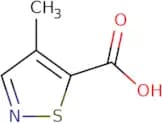
CAS:Versatile small molecule scaffoldFormula:C8H14O2Purity:Min. 95%Molecular weight:142.2 g/mol4-Methyl-isothiazole-5-carboxylic acid
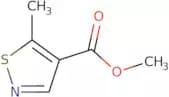
CAS:Versatile small molecule scaffoldFormula:C5H5NO2SPurity:Min. 95%Molecular weight:143.16 g/molMethyl 5-methyl-1,2-thiazole-4-carboxylate
CAS:Versatile small molecule scaffoldFormula:C6H7NO2SPurity:Min. 95%Molecular weight:157.19 g/mol3-Methylisothiazole-4-carboxylic acid
CAS:3-Methylisothiazole-4-carboxylic acid is an amino acid that has shown anti-tumor activity. It has been shown to inhibit the growth of leukemia cells in mice and to prevent the proliferation of human cancer cells in vitro. 3-Methylisothiazole-4-carboxylic acid is a competitive inhibitor of benzoylamino, which is a key enzyme involved in the synthesis of DNA. The compound inhibits DNA replication by binding to nucleic acids at the site where they are synthesized, blocking the formation of base pairs. This drug also has immunosuppressive properties and can be used as an adjuvant therapy for hypersensitivity reactions such as asthma and allergies.Formula:C5H5NO2SPurity:Min. 95%Molecular weight:143.16 g/mol




![7,7,9,9-Tetramethyl-1,3,8-triazaspiro[4.5]decane-2,4-dione](/_next/image/?url=https%3A%2Fstatic.cymitquimica.com%2Fproducts%2F3D%2Fthumb-webp%2FQAA87154.webp&w=3840&q=75)


![1-Chloro-4-{[(chloromethyl)sulfanyl]methyl}benzene](/_next/image/?url=https%3A%2Fstatic.cymitquimica.com%2Fproducts%2F3D%2Fthumb-webp%2FQAA89425.webp&w=3840&q=75)