Building Blocks
This section contains fundamental products for the synthesis of organic and biological compounds. Building blocks are the essential starting materials used to construct complex molecules through various chemical reactions. They play a critical role in drug discovery, material science, and chemical research. At CymitQuimica, we offer a diverse range of high-quality building blocks to support your innovative research and industrial projects, ensuring you have the essential components for successful synthesis.
Subcategories of "Building Blocks"
- Boronic Acids & Boronic Acid Derivatives(5,756 products)
- Chiral Building Blocks(1,242 products)
- Hydrocarbon Building Blocks(6,095 products)
- Organic Building Blocks(61,037 products)
Found 196139 products of "Building Blocks"
Sort by
Purity (%)
0
100
|
0
|
50
|
90
|
95
|
100
Bis(2-(2-methoxyethoxy)ethyl)amine
CAS:<p>Versatile small molecule scaffold</p>Formula:C10H23NO4Purity:Min. 95%Molecular weight:221.29 g/mol4-Cyclopentylbutanoic acid
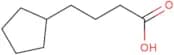
CAS:<p>4-Cyclopentylbutanoic acid is a cyclic compound that is synthesized from succinic acid. This chemical has a wide range of applications in the pharmaceutical industry, including as an intermediate in the synthesis of hydantoins and hydroxylamides. 4-Cyclopentylbutanoic acid also reacts with potassium to form a cyclopentenone, which can be used to produce esters and chiral cyclopentenones. 4-Cyclopentylbutanoic acid can be used to inhibit the growth of microorganisms by inhibiting protein synthesis.</p>Formula:C9H16O2Purity:Min. 95%Molecular weight:156.22 g/molCyclopentylacetonitrile
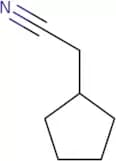
CAS:<p>Cyclopentylacetonitrile is a solvent that is used in the manufacture of organic chemicals. It is an organic compound that is a colorless liquid with a boiling point of about 111°C and a melting point of about -102°C. Cyclopentylacetonitrile has been shown to be effective as an etchant for silicon dioxide, as well as being used as a lithographic printing plate developer. Cyclopentylacetonitrile can also be used as a diluent for hydrogen fluoride gas during the production of fluorocarbons.</p>Formula:C7H11NPurity:Min. 95%Molecular weight:109.17 g/mol4-Cyclopentylbutan-1-ol
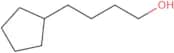
CAS:<p>4-Cyclopentylbutan-1-ol is a cyclic ester that is used in the production of fragrances. It is found naturally in sandalwood oil, which contains about 85% of this ester. 4-Cyclopentylbutan-1-ol has cytoprotective properties and can prevent lipid peroxidation induced by reactive oxygen species (ROS) and reactive nitrogen species (RNS). The molecule has an aromatic ring that consists of a benzene ring fused to a cyclopropane ring. This substance belongs to the class of alkenes, which are unsaturated hydrocarbons containing one or more carbon-carbon double bonds. Furthermore, it has an alkenyl group, which is a hydrocarbon that contains one or more carbon atoms with at least one triple bond.</p>Formula:C9H18OPurity:Min. 95%Molecular weight:142.24 g/mol4-Cyclopentylbutan-1-amine
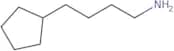
CAS:<p>Versatile small molecule scaffold</p>Formula:C9H19NPurity:Min. 95%Molecular weight:141.25 g/mol2-Oxaspiro[4.4]nonan-1-one
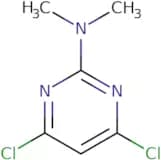
CAS:<p>Versatile small molecule scaffold</p>Formula:C8H12O2Purity:Min. 95%Molecular weight:140.18 g/mol4,6-Dichloro-N,N-dimethyl-2-pyrimidinamine
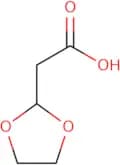
CAS:<p>Versatile small molecule scaffold</p>Formula:C6H7Cl2N3Purity:Min. 95%Molecular weight:192.05 g/mol2-(1,3-Dioxolan-2-yl)acetic acid
CAS:<p>Versatile small molecule scaffold</p>Formula:C5H8O4Purity:Min. 95%Color and Shape:PowderMolecular weight:132.11 g/mol(2-methyl-[1,3]dioxolan-2-yl)-acetic acid
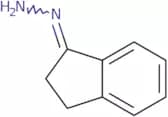
CAS:<p>Versatile small molecule scaffold</p>Formula:C6H10O4Purity:Min. 95%Molecular weight:146.14 g/mol(2,3-Dihydro-1H-inden-1-ylidene)hydrazine
CAS:<p>Versatile small molecule scaffold</p>Formula:C9H10N2Purity:Min. 95%Molecular weight:146.19 g/mol(4-Chloro-6-methyl-pyrimidin-2-yl)-methyl-amine
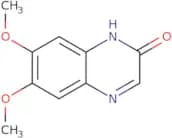
CAS:<p>Versatile small molecule scaffold</p>Formula:C6H8ClN3Purity:Min. 95%Molecular weight:157.6 g/mol2-Hydroxy-6,7-dimethoxyquinoxaline
CAS:<p>Versatile small molecule scaffold</p>Formula:C10H10N2O3Purity:Min. 95%Molecular weight:206.2 g/molSpiro[2.6]nonan-4-one
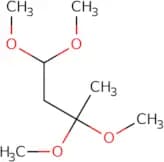
CAS:<p>Versatile small molecule scaffold</p>Formula:C9H14OPurity:Min. 95%Molecular weight:138.21 g/mol1,1,3,3-Tetramethoxybutane
CAS:<p>1,1,3,3-Tetramethoxybutane is an organic compound that is used as a raw material in the synthesis of other fluorinated compounds. It can be synthesized from formaldehyde and methoxyacetone by dehydration reactions. It has been shown to react with hydrazines to form acetals and trifluoroacetylation.</p>Formula:C8H18O4Purity:Min. 95%Molecular weight:178.23 g/molEthyl[1-(pyridin-3-yl)ethyl]amine
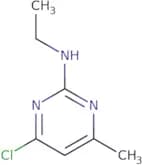
CAS:<p>Versatile small molecule scaffold</p>Formula:C9H14N2Purity:Min. 95%Molecular weight:150.22 g/mol(4-Chloro-6-methylpyrimidin-2-yl)Ethylamine
CAS:<p>Versatile small molecule scaffold</p>Formula:C7H10N3ClPurity:Min. 95%Molecular weight:171.62 g/mol2-[(2-Aminoethyl)(ethyl)amino]ethan-1-ol
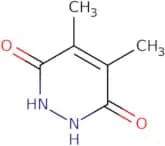
CAS:<p>Versatile small molecule scaffold</p>Formula:C6H16N2OPurity:Min. 95%Molecular weight:132.2 g/mol4,5-Dimethylpyridazine-3,6-diol
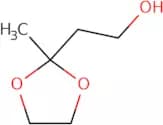
CAS:<p>Versatile small molecule scaffold</p>Formula:C6H8N2O2Purity:Min. 95%Molecular weight:140.14 g/mol2-Methyl-1,3-dioxolane-2-ethanol
CAS:<p>2-Methyl-1,3-dioxolane-2-ethanol is a ketone that can be extracted from the reaction of ethanol and methyl vinyl ketone with ethyl acetate in the presence of an acid catalyst. This ketone is used as a reagent in organic synthesis. The target compounds for this product are acids, alcohols, esters, amides, nitriles, and other organic compounds. It is also used to synthesize glycols and ethylene glycols. 2-Methyl-1,3-dioxolane-2-ethanol has an efficient yield and can be isolated by distillation or crystallization. 2-Methyl-1,3-dioxolane-2-ethanol is not toxic to humans or animals because it is not metabolized in the body.</p>Formula:C6H12O3Purity:Min. 95%Molecular weight:132.16 g/mol8-Methoxy-2,3,4,5-tetrahydro-1,4-benzoxazepin-5-one
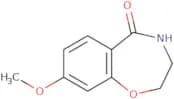
CAS:<p>Versatile small molecule scaffold</p>Formula:C10H11NO3Purity:Min. 95%Molecular weight:193.2 g/mol


![2-Oxaspiro[4.4]nonan-1-one](/_next/image/?url=https%3A%2Fstatic.cymitquimica.com%2Fproducts%2F3D%2Fthumb-webp%2FFAA73298.webp&w=3840&q=75)
![(2-methyl-[1,3]dioxolan-2-yl)-acetic acid](/_next/image/?url=https%3A%2Fstatic.cymitquimica.com%2Fproducts%2F3D%2Fthumb-webp%2FFAA73597.webp&w=3840&q=75)

![Spiro[2.6]nonan-4-one](/_next/image/?url=https%3A%2Fstatic.cymitquimica.com%2Fproducts%2F3D%2Fthumb-webp%2FFAA74385.webp&w=3840&q=75)
![Ethyl[1-(pyridin-3-yl)ethyl]amine](/_next/image/?url=https%3A%2Fstatic.cymitquimica.com%2Fproducts%2F3D%2Fthumb-webp%2FFAA74654.webp&w=3840&q=75)
![2-[(2-Aminoethyl)(ethyl)amino]ethan-1-ol](/_next/image/?url=https%3A%2Fstatic.cymitquimica.com%2Fproducts%2F3D%2Fthumb-webp%2FFAA75348.webp&w=3840&q=75)