Building Blocks
This section contains fundamental products for the synthesis of organic and biological compounds. Building blocks are the essential starting materials used to construct complex molecules through various chemical reactions. They play a critical role in drug discovery, material science, and chemical research. At CymitQuimica, we offer a diverse range of high-quality building blocks to support your innovative research and industrial projects, ensuring you have the essential components for successful synthesis.
Subcategories of "Building Blocks"
- Boronic Acids & Boronic Acid Derivatives(5,756 products)
- Chiral Building Blocks(1,242 products)
- Hydrocarbon Building Blocks(6,095 products)
- Organic Building Blocks(61,037 products)
Found 196200 products of "Building Blocks"
Sort by
Purity (%)
0
100
|
0
|
50
|
90
|
95
|
100
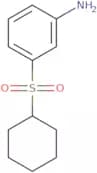
3-(Cyclohexanesulfonyl)aniline
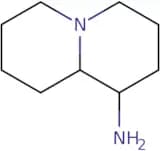
CAS:<p>Versatile small molecule scaffold</p>Formula:C12H17NO2SPurity:Min. 95%Molecular weight:239.34 g/molOctahydro-1H-quinolizin-1-amine
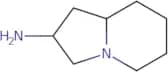
CAS:<p>Versatile small molecule scaffold</p>Formula:C9H18N2Purity:Min. 95%Molecular weight:154.25 g/molOctahydroindolizin-2-amine
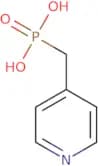
CAS:<p>Versatile small molecule scaffold</p>Formula:C8H16N2Purity:Min. 95%Molecular weight:140.23 g/mol4-Pyridylmethylphosphonic acid
CAS:<p>4-Pyridylmethylphosphonic acid is an inorganic compound that is a ligand for the metal Ruthenium. It is used in organic synthesis as a photosensitizer and a potentiometric titrant. The ligand binds to the metal through one or more of its oxygen atoms, forming a coordination complex. The bond cleavage reaction occurs when the molecule absorbs light of sufficient energy, causing it to break into two parts. 4-Pyridylmethylphosphonic acid is not very soluble in water and is therefore used as an electrolyte in potentiometric titrations. The pH of the solution will change depending on the concentration of the acid. 4-Pyridylmethylphosphonic acid can also be used as a catalyst for certain organic reactions such as esterification and transesterification reactions.</p>Formula:C6H8NO3PPurity:Min. 95%Molecular weight:173.11 g/mol4-Cyano-1H-pyrrole-2-carboxylic acid
CAS:<p>4-Cyano-1H-pyrrole-2-carboxylic acid is a small molecule that has been shown to have potent anti-cancer activity in animal models. It can induce the proliferation of human epidermal progenitor cells and the growth of tumor cells in culture. Animal studies have demonstrated that 4-cyano-1H-pyrrole-2-carboxylic acid enhances the infiltration of microglia and csf-1 receptor expression in brain tumors, leading to an increase in microglial activation. This agent also interacts with cancer cell factor receptor, enhancing its function and leading to increased infiltration of tumor cells by microglia.</p>Formula:C6H4N2O2Purity:Min. 95%Molecular weight:136.11 g/molEthyl 2-cycloheptylacetate
CAS:<p>Ethyl 2-cycloheptylacetate is an organic compound with the formula CH3CH2C6H11CH2CO2Et. It is a colorless liquid which is soluble in water and ether, but not in most common organic solvents. It has been shown to be effective in inhibiting the development of atherosclerosis in mice by interfering with cholesterol synthesis. In addition, it has been shown to inhibit the proliferation of vascular smooth muscle cells and to alter their gene expression profile. The compound also inhibits angiotensin II-induced hypertension, as well as norepinephrine-induced vasoconstriction and platelet aggregation.</p>Formula:C11H20O2Purity:Min. 95%Molecular weight:184.28 g/molEthyl 3-ethylpentanoate
CAS:<p>Versatile small molecule scaffold</p>Formula:C9H18O2Purity:Min. 95%Molecular weight:158.24 g/mol3-acetamido-2,2-dimethylpropanoic acid
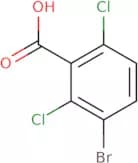
CAS:<p>Versatile small molecule scaffold</p>Formula:C7H13NO3Purity:Min. 95%Molecular weight:159.19 g/mol2,6-dichloro-3-bromobenzoic acid
CAS:<p>Versatile small molecule scaffold</p>Formula:C7H3BrCl2O2Purity:Min. 95%Molecular weight:269.9 g/mol2-(4-Nitrophenyl)ethane-1-sulfonyl chloride
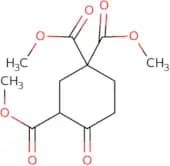
CAS:<p>Versatile small molecule scaffold</p>Formula:C8H8ClNO4SPurity:Min. 95%Molecular weight:249.67 g/mol1,1,3-Cyclohexanetricarboxylic acid, 4-oxo-, trimethyl ester
CAS:<p>Versatile small molecule scaffold</p>Formula:C12H16O7Purity:Min. 95%Molecular weight:272.25 g/mol1-(2-Methyltetrahydrofuran-2-yl)pent-4-en-1-one
CAS:<p>Versatile small molecule scaffold</p>Formula:C10H16O2Purity:Min. 95%Molecular weight:168.23 g/mol5-chloro-2,1,3-benzoxadiazol-4-amine
CAS:<p>Versatile small molecule scaffold</p>Formula:C6H4ClN3OPurity:Min. 95%Molecular weight:169.57 g/mol2,3-Dihydro-1H-indole-6-sulfonic acid
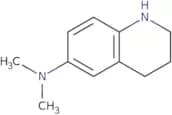
CAS:<p>Versatile small molecule scaffold</p>Formula:C8H9NO3SPurity:Min. 95%Molecular weight:199.23 g/molN,N-Dimethyl-1,2,3,4-tetrahydroquinolin-6-amine
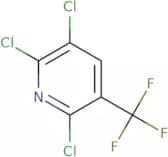
CAS:<p>Versatile small molecule scaffold</p>Formula:C11H16N2Purity:Min. 95%Molecular weight:176.26 g/mol2,3,6-Trichloro-5-(trifluoromethyl)pyridine
CAS:<p>Sodium hypochlorite is a chemical compound that contains one chlorine atom and one sodium atom. It is used in the manufacture of various products, such as bleaches, disinfectants, and water treatment. Hypochlorite can be produced by reacting chlorine with sodium hydroxide or ammonia. Hypochlorite is also used to make other chemicals, such as phenols and chlorinated compounds. Hydrazine is a colorless liquid with a suffocating odor that is highly toxic and corrosive. It has been used as rocket fuel and has been shown to have carcinogenic effects on humans.</p>Formula:C6HCl3F3NPurity:Min. 95%Molecular weight:250.4 g/mol5-Bromo-6-fluoro-2-methylquinoline
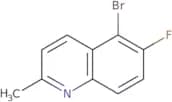
CAS:<p>5-Bromo-6-fluoro-2-methylquinoline is a reagent that is used as a counterion in organic synthesis. It also can be used as a synthetic intermediate for the production of ethoxymethylenemalonate. 5-Bromo-6-fluoro-2-methylquinoline is catalytic and readily reacts with Grignard reagents, polyphosphoric acid, and methyl groups to form reaction products. This product has been shown to react with diethyl ether and toluene in high yield under basic conditions.</p>Formula:C10H7BrFNPurity:Min. 95%Molecular weight:240.07 g/molMethyl 1-(propan-2-yl)-1H-imidazole-5-carboxylate
CAS:<p>Versatile small molecule scaffold</p>Formula:C8H12N2O2Purity:Min. 95%Molecular weight:168.2 g/mol1-Benzyl-5-hydroxymethyl-1H-imidazole
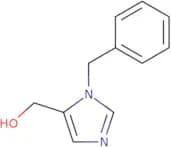
CAS:<p>1-Benzyl-5-hydroxymethyl-1H-imidazole is a dialkyl calcium channel antagonist that blocks the voltage-gated calcium channels in the nucleus and jejunum. It has been shown to have relaxant properties and antagonistic activity when it binds to the calcium channel. 1-Benzyl-5-hydroxymethyl-1H-imidazole has been investigated for its potential use as a treatment for disorders such as dyspepsia and peptic ulcer disease. The dimethylamino substituent on 1BHM may be responsible for its spontaneous decomposition, which limits its usefulness in vivo.</p>Formula:C11H12N2OPurity:Min. 95%Molecular weight:188.23 g/mol2-(Thiophen-3-yloxy)acetic acid
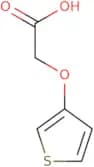
CAS:<p>Versatile small molecule scaffold</p>Formula:C6H6O3SPurity:Min. 95%Molecular weight:158.18 g/mol