


Building Blocks
This section contains fundamental products for the synthesis of organic and biological compounds. Building blocks are the essential starting materials used to construct complex molecules through various chemical reactions. They play a critical role in drug discovery, material science, and chemical research. At CymitQuimica, we offer a diverse range of high-quality building blocks to support your innovative research and industrial projects, ensuring you have the essential components for successful synthesis.
Subcategories of "Building Blocks"
- Boronic Acids & Boronic Acid Derivatives(5,756 products)
- Chiral Building Blocks(1,242 products)
- Hydrocarbon Building Blocks(6,095 products)
- Organic Building Blocks(61,038 products)
Found 196817 products of "Building Blocks"
Sort by
Purity (%)
0
100
|
0
|
50
|
90
|
95
|
100
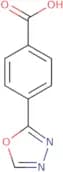
4-(1,3,4-Oxadiazol-2-yl)benzoic acid
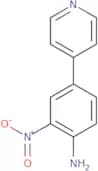
CAS:<p>Versatile small molecule scaffold</p>Formula:C9H6N203Purity:Min. 95%Molecular weight:190.16 g/mol2-Nitro-4-(pyridin-4-yl)aniline
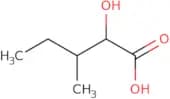
CAS:<p>Versatile small molecule scaffold</p>Formula:C11H9N3O2Purity:Min. 95%Molecular weight:215.21 g/mol(2S,3S)-2-Hydroxy-3-methylpentanoic acid
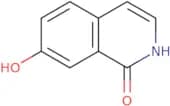
CAS:<p>(2S,3S)-2-Hydroxy-3-methylpentanoic acid (HMP) is an antimicrobial agent that functions by binding to metal ions in the bacterial cell wall and inhibiting their uptake. HMP also has a beneficial effect on insulin sensitivity. It has been shown that HMP binds to the amino acid lysine residues of proteins and inhibits protein degradation by corynebacterium glutamicum. This compound can be found in food products such as cheese and yogurt, but it is not known if it occurs naturally or is added during processing. The metabolic profile of this compound has been studied in humans and rats and it has been shown to have a wide range of effects on fatty acids and microbial metabolism. The molecular weight of HMP is 180.17 g/mol, with a melting point of 55°C. The chemical formula for HMP is C4H8O3. This molecule has two chiral centers, both at the carbon</p>Formula:C6H12O3Purity:Min. 95%Molecular weight:132.16 g/mol7-Hydroxyisoquinolin-1(2H)-one
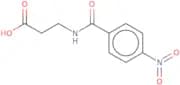
CAS:<p>Versatile small molecule scaffold</p>Formula:C9H7NO2Purity:Min. 95%Molecular weight:161.16 g/molN-(4-Nitrobenzoyl)-β-alanine
CAS:<p>N-(4-Nitrobenzoyl)-beta-alanine is a synthetic compound that can be used for the treatment of inflammatory bowel disease. This drug is synthesized by reacting 4-nitrobenzoyl chloride with beta-alanine in an organic solvent such as ethyl acetate or cyclohexanol. The reaction mixture is then filtered and crystallized to yield the desired product. The synthesis of this compound takes place at room temperature, and the reaction time can be varied depending on the desired rate of synthesis.</p>Formula:C10H10N2O5Purity:Min. 95%Molecular weight:238.2 g/mol5-[(Methylsulfanyl)methyl]imidazolidine-2,4-dione
CAS:<p>Versatile small molecule scaffold</p>Formula:C5H8N2O2SPurity:Min. 95%Molecular weight:160.2 g/molN-Allylmethanesulfonamide
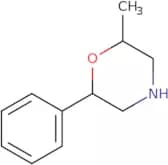
CAS:<p>N-Allylmethanesulfonamide is a benzamide that has been shown to react with carboxylic acids and amides by an analogous reaction. It is a precursor in the production of other drugs. It can be used for the synthesis of benzoic acid and its derivatives, such as sulfanilamide. N-Allylmethanesulfonamide can also be used to produce o-phenylenediamine, which is used in the manufacture of dyes. This compound can also be used to synthesize oximes, which are precursors to nitro compounds. N-Allylmethanesulfonamide undergoes halogenation at the sulfur atom and can be oxidized at the benzylic position.</p>Formula:C4H9NO2SPurity:Min. 95%Molecular weight:135.18 g/mol2-Methyl-6-phenylmorpholine
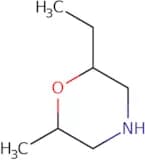
CAS:<p>Versatile small molecule scaffold</p>Formula:C11H15NOPurity:Min. 95%Molecular weight:177.24 g/mol2-Ethyl-6-methylmorpholine
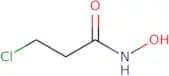
CAS:<p>Versatile small molecule scaffold</p>Formula:C7H15NOPurity:Min. 95%Molecular weight:129.2 g/mol3-Chloro-N-hydroxypropanamide
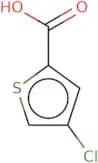
CAS:<p>Versatile small molecule scaffold</p>Formula:C3H6ClNO2Purity:Min. 95%Molecular weight:123.54 g/mol4-Chlorothiophene-2- carboxylic acid
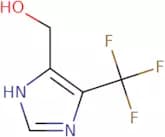
CAS:<p>4-Chlorothiophene-2-carboxylic acid is a chemical compound that belongs to the group of carboxylic acids. The synthesis of this compound is regioselective, which means that it can be synthesized in only one possible stereoisomer. 4-Chlorothiophene-2-carboxylic acid is used as an intermediate for pharmaceutical products and as a medicament, which has been shown to have trackable properties. This compound has also been shown to inhibit the interaction between anions and cations, which may lead to the development of new drugs.</p>Formula:C5H3ClO2SPurity:Min. 95%Molecular weight:162.59 g/mol(4-(Trifluoromethyl)-1H-imidazol-5-yl)methanol
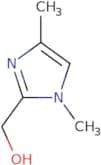
CAS:<p>Versatile small molecule scaffold</p>Formula:C5H5F3N2OPurity:Min. 95%Molecular weight:166.1 g/mol(1,4-Dimethyl-1H-imidazol-2-yl)methanol
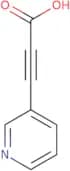
CAS:<p>Versatile small molecule scaffold</p>Formula:C6H10N2OPurity:Min. 95%Molecular weight:126.16 g/mol3-(3-Pyridyl)propiolic acid
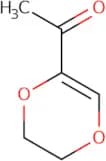
CAS:<p>Versatile small molecule scaffold</p>Formula:C8H5NO2Purity:Min. 95%Molecular weight:147.13 g/mol1-(5,6-Dihydro-1,4-dioxin-2-yl)ethan-1-one
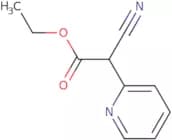
CAS:<p>Versatile small molecule scaffold</p>Formula:C6H8O3Purity:Min. 95%Molecular weight:128.13 g/molEthyl 2-cyano-2-(pyridin-2-yl)acetate
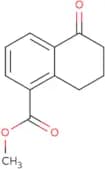
CAS:<p>Versatile small molecule scaffold</p>Formula:C10H10N2O2Purity:Min. 95%Molecular weight:190.2 g/molMethyl 5-oxo-5,6,7,8-tetrahydronaphthalene-1-carboxylate
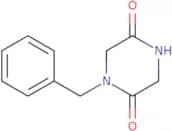
CAS:<p>Versatile small molecule scaffold</p>Formula:C12H12O3Purity:Min. 95%Molecular weight:204.22 g/mol1-Benzylpiperazine-2,5-dione
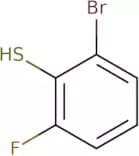
CAS:<p>Versatile small molecule scaffold</p>Formula:C11H12N2O2Purity:Min. 95%Molecular weight:204.22 g/mol2-Bromo-6-fluorobenzene-1-thiol
CAS:<p>Versatile small molecule scaffold</p>Formula:C6H4BrFSPurity:Min. 95%Molecular weight:207.07 g/molSpiro[adamantane-2,2'-azetidine]
CAS:<p>Versatile small molecule scaffold</p>Formula:C12H19NPurity:Min. 95%Molecular weight:177.29 g/mol

![5-[(Methylsulfanyl)methyl]imidazolidine-2,4-dione](/_next/image/?url=https%3A%2Fstatic.cymitquimica.com%2Fproducts%2F3D%2Fthumb-webp%2FJCA64066.webp&w=3840&q=75)

![Spiro[adamantane-2,2'-azetidine]](/_next/image/?url=https%3A%2Fstatic.cymitquimica.com%2Fproducts%2F3D%2Fthumb-webp%2FJCA59193.webp&w=3840&q=75)