Building Blocks
This section contains fundamental products for the synthesis of organic and biological compounds. Building blocks are the essential starting materials used to construct complex molecules through various chemical reactions. They play a critical role in drug discovery, material science, and chemical research. At CymitQuimica, we offer a diverse range of high-quality building blocks to support your innovative research and industrial projects, ensuring you have the essential components for successful synthesis.
Subcategories of "Building Blocks"
- Boronic Acids & Boronic Acid Derivatives(5,756 products)
- Chiral Building Blocks(1,242 products)
- Hydrocarbon Building Blocks(6,095 products)
- Organic Building Blocks(61,038 products)
Found 196817 products of "Building Blocks"
Sort by
Purity (%)
0
100
|
0
|
50
|
90
|
95
|
100
2-Chloro-N-[2-(1-phenyl-1H-pyrazol-4-yl)ethyl]acetamide
CAS:<p>Versatile small molecule scaffold</p>Formula:C13H14ClN3OPurity:Min. 95%Molecular weight:263.72 g/mol2-Chloro-N-{2-[(2-methylcyclohexyl)oxy]ethyl}acetamide
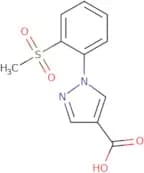
CAS:<p>Versatile small molecule scaffold</p>Formula:C11H20ClNO2Purity:Min. 95%Molecular weight:233.73 g/mol1-(2-Methanesulfonylphenyl)-1H-pyrazole-4-carboxylic acid
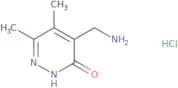
CAS:<p>Versatile small molecule scaffold</p>Formula:C11H10N2O4SPurity:Min. 95%Molecular weight:266.28 g/mol4-(Aminomethyl)-5,6-dimethylpyridazin-3-ol hydrochloride
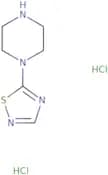
CAS:<p>Versatile small molecule scaffold</p>Formula:C7H12ClN3OPurity:Min. 95%Molecular weight:189.64 g/mol1-(1,2,4-Thiadiazol-5-yl)piperazine dihydrochloride
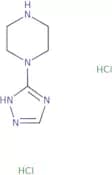
CAS:<p>Versatile small molecule scaffold</p>Formula:C6H12Cl2N4SPurity:Min. 95%Molecular weight:243.16 g/mol1-(1H-1,2,4-Triazol-3-yl)piperazine dihydrochloride
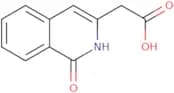
CAS:<p>Versatile small molecule scaffold</p>Formula:C6H13Cl2N5Purity:Min. 95%Molecular weight:226.1 g/mol2-(1-Oxo-1,2-dihydroisoquinolin-3-yl)acetic acid
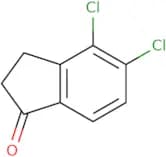
CAS:<p>Versatile small molecule scaffold</p>Formula:C11H9NO3Purity:Min. 95%Molecular weight:203.19 g/mol4,5-Dichloro-2,3-dihydro-1H-inden-1-one
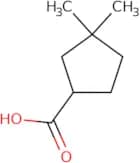
CAS:<p>Versatile small molecule scaffold</p>Formula:C8H6Cl2N2Purity:Min. 95%Molecular weight:201.05 g/mol3,3-Dimethylcyclopentane-1-carboxylic acid
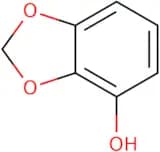
CAS:<p>Versatile small molecule scaffold</p>Formula:C8H14O2Purity:Min. 95%Molecular weight:142.2 g/mol2H-1,3-benzodioxol-4-ol
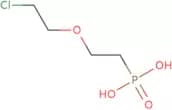
CAS:<p>2H-1,3-benzodioxol-4-ol is a colorless liquid that has a density of 0.938 g/mL at 20°C. It is an acid with a pH of 3 and a lipophilicity of 1.2. The compound is reactive with chlorine, which can lead to the formation of diazonium salts in the presence of an acid catalyst. 2H-1,3-benzodioxol-4-ol's viscosity increases as its temperature decreases.</p>Formula:C7H6O3Purity:Min. 95%Molecular weight:138.12 g/mol2-(2'-Chloroethoxy)ethylphosphonic acid
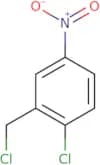
CAS:<p>Versatile small molecule scaffold</p>Formula:C4H10ClO4PPurity:Min. 95%Molecular weight:188.55 g/mol1-Chloro-2-(chloromethyl)-4-nitrobenzene
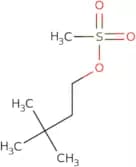
CAS:<p>1-Chloro-2-(chloromethyl)-4-nitrobenzene is a chemical that is used as a reagent to measure creatinine in human urine. Creatinine is a natural product of muscle metabolism, and its concentration in the blood is usually used to estimate the rate of muscle breakdown. The creatinine content of urine can be determined by measuring the concentration of 1-chloro-2-(chloromethyl)-4-nitrobenzene. This compound has been shown to be metabolized to oxime, which can be quantified using gas chromatography with mass spectrometry (GC/MS) or liquid chromatography with mass spectrometry (LC/MS). The validation of this method for creatinine quantification in human urine has been done by analyzing different dilutions of urine samples and comparing them with their corresponding values from the standard curve. Emulsions are also used in this process as they can help increase accuracy</p>Formula:C7H5Cl2NO2Purity:Min. 95%Molecular weight:206.02 g/mol3,3-Dimethylbutyl methanesulfonate
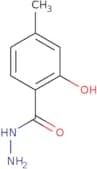
CAS:<p>Versatile small molecule scaffold</p>Formula:C7H16O3SPurity:Min. 95%Molecular weight:180.27 g/mol2-Hydroxy-4-methylbenzohydrazide
CAS:<p>2-Hydroxy-4-methylbenzohydrazide (2HMBA) is a supramolecular ligand that can bind to the active site of PI3K and AKT, which are two signaling molecules. 2HMBA has been shown to suppress immunosuppressive activities in an assay that measures the suppression of T cell proliferation by human peripheral blood mononuclear cells. The ligand binds to the active site of the enzyme and prevents its interaction with ATP, thereby inhibiting PI3K/AKT signaling. It also has magnetic properties. 2HMBA is a macrocyclic compound with a chiral center at C-2, which is responsible for its activity.</p>Formula:C8H10N2O2Purity:Min. 95%Molecular weight:166.18 g/molMethyl 1-oxo-1,2-dihydroisoquinoline-3-carboxylate
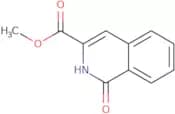
CAS:<p>Methyl 1-oxo-1,2-dihydroisoquinoline-3-carboxylate is a ligand that binds to the benzodiazepine receptor. It is a potential antitumor agent that inhibits the growth of cells in culture. The methyl ester form of Methyl 1-oxo-1,2-dihydroisoquinoline-3-carboxylate has been shown to have apoptosis inducing activity in human leukemia cells. This compound also has antiplasmodial and antiinflammatory properties.</p>Formula:C11H9NO3Purity:Min. 95%Molecular weight:203.19 g/mol3-(Pyrrolidine-1-carbonyl)-1,2-dihydroisoquinolin-1-one
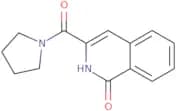
CAS:<p>Versatile small molecule scaffold</p>Formula:C14H14N2O2Purity:Min. 95%Molecular weight:242.27 g/mol4-Benzyloxy-3-bromobenzaldehyde
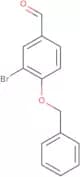
CAS:<p>4-Benzyloxy-3-bromobenzaldehyde (4BBA) is a natural product that has been found to have high affinity for the histone deacetylase (HDAC) enzyme. 4BBA shows low cytotoxicity in fibroblast cells, which are cells that synthesize collagen, and it may be used as a fluorescent probe for HDACs in marine sponges. 4BBA binds to the cytoplasmic side of the cell's nucleus and exhibits fluorescence when excited with light at 350 nm. This fluorogenic activity is due to the phenyl ring and should allow for visualization of HDACs on the surface of cells using microscopy techniques.</p>Formula:C14H11BrO2Purity:Min. 95%Molecular weight:291.14 g/mol1-(4-Methoxyphenyl)pyrimidine-2,4,6(1H,3H,5H)-trione
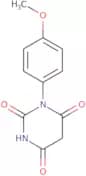
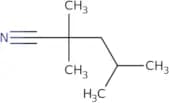
CAS:<p>Versatile small molecule scaffold</p>Formula:C11H10N2O4Purity:Min. 95%Molecular weight:234.21 g/mol2,2,4-Trimethylpentanenitrile
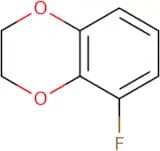
CAS:<p>Flecainide is an anti-arrhythmic drug that belongs to the class of drugs called Class IA or Class IC antiarrhythmics. It is used to treat arrhythmias in adults and children who are at least 6 months old. Flecainide is a long-acting medication, which means it remains active for a long time. This drug has been shown to have a low risk of causing neutropenia in women who take it during pregnancy. Flecainide has also been shown to cause an increase in serum levels of amide and trichloroethanol (TCE). The amide metabolite is responsible for most of the pharmacological effects of flecainide. The conformation and antipyrine metabolites are active against some bacteria and fungi, but not against other microorganisms such as Mycobacterium tuberculosis.</p>Formula:C8H15NPurity:Min. 95%Molecular weight:125.21 g/mol5-Fluoro-2,3-dihydro-1,4-benzodioxine
CAS:<p>Versatile small molecule scaffold</p>Formula:C8H7FO2Purity:Min. 95%Molecular weight:154.14 g/mol
![2-Chloro-N-[2-(1-phenyl-1H-pyrazol-4-yl)ethyl]acetamide](/_next/image/?url=https%3A%2Fstatic.cymitquimica.com%2Fproducts%2F3D%2Fthumb-webp%2FUAC15114.webp&w=3840&q=75)

![2-Chloro-N-{2-[(2-methylcyclohexyl)oxy]ethyl}acetamide](/_next/image/?url=https%3A%2Fstatic.cymitquimica.com%2Fproducts%2F3D%2Fthumb-webp%2FUAC15115.webp&w=3840&q=75)