Building Blocks
This section contains fundamental products for the synthesis of organic and biological compounds. Building blocks are the essential starting materials used to construct complex molecules through various chemical reactions. They play a critical role in drug discovery, material science, and chemical research. At CymitQuimica, we offer a diverse range of high-quality building blocks to support your innovative research and industrial projects, ensuring you have the essential components for successful synthesis.
Subcategories of "Building Blocks"
- Boronic Acids & Boronic Acid Derivatives(5,756 products)
- Chiral Building Blocks(1,242 products)
- Hydrocarbon Building Blocks(6,095 products)
- Organic Building Blocks(61,037 products)
Found 196200 products of "Building Blocks"
Sort by
Purity (%)
0
100
|
0
|
50
|
90
|
95
|
100
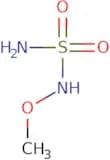
(Methoxysulfamoyl)amine
CAS:<p>Versatile small molecule scaffold</p>Formula:CH6N2O3SPurity:Min. 95%Molecular weight:126.14 g/mol1-Cyclopropylurea
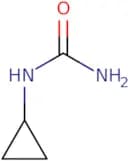
CAS:<p>1-Cyclopropylurea is a synthetic anticancer drug that was originally developed as an antihypertensive agent. It has been shown to have inhibitory effects on cancer cells and inflammatory diseases, including cyclic nucleotide phosphodiesterase (cNPD) and b-raf. 1-Cyclopropylurea also inhibits the synthesis of epoxyeicosatrienoic acids (EETs) in vitro, suggesting that it may be useful for the treatment of cardiovascular diseases such as hypertension.<br>1-Cyclopropylurea has been shown to inhibit cell proliferation in culture by causing G2/M phase arrest and apoptosis. The mechanism of action of 1-cyclopropylurea is not well understood, but it has been suggested that the drug prevents the phosphorylation of b-raf, which prevents the activation of mitogen activated protein kinases (MAPKs).</p>Purity:Min. 95%3-Ethoxy-2-methylpropanoic acid
CAS:<p>Versatile small molecule scaffold</p>Formula:C6H12O3Purity:Min. 95%Molecular weight:132.2 g/mol3-Propoxypropanoic acid
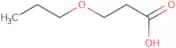
CAS:<p>Versatile small molecule scaffold</p>Formula:C6H12O3Purity:Min. 95%Molecular weight:132.16 g/molMethyl 5-ethynyl-1-methyl-1H-pyrazole-3-carboxylate
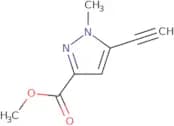
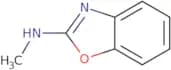
CAS:<p>Versatile small molecule scaffold</p>Formula:C8H8N2O2Purity:Min. 95%Molecular weight:164.16 g/molN-Methyl-1,3-benzoxazol-2-amine
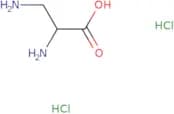
CAS:<p>N-Methyl-1,3-benzoxazol-2-amine is a linker molecule that has been used in the synthesis of chlorides, molecular ions, trifluoroacetic acid, bromoacetone, yields and benzyne. It is also a precursor to the synthesis of benzoxazoles and alkylhalides. This compound reacts with cyclization reactions such as imino and benzoxazole. N-Methyl-1,3-benzoxazol-2-amine is also used in the gas phase to synthesize phenacyls.</p>Formula:C8H8N2OPurity:Min. 95%Molecular weight:148.16 g/mol(S)-2,3-Diaminopropanoic acid dihydrochloride
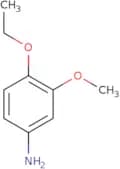
CAS:<p>Versatile small molecule scaffold</p>Formula:C3H10Cl2N2O2Purity:Min. 95%Molecular weight:177.03 g/mol4-Ethoxy-3-methoxyaniline
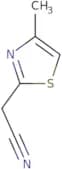
CAS:<p>Versatile small molecule scaffold</p>Formula:C9H13NO2Purity:Min. 95%Molecular weight:167.2 g/mol2-(4-Methyl-1,3-thiazol-2-yl)acetonitrile
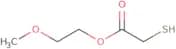
CAS:<p>Versatile small molecule scaffold</p>Formula:C6H6N2SPurity:Min. 95%Molecular weight:138.19 g/mol2-Methoxyethyl 2-sulfanylacetate
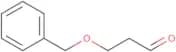
CAS:<p>2-Methoxyethyl 2-sulfanylacetate is a monomer that belongs to the group of acidic compounds. It has been shown to be a reliable acid and can be used when the desired pH range is between 4 and 7. This compound has been known to copolymerize with styrene, producing optical properties. When combined with trimethyltin, it forms an amide compound that has optical properties. The hydroxyl group on this monomer allows it to undergo reactions with mercaptides, which make it useful for optical purposes.</p>Formula:C5H10O3SPurity:Min. 95%Molecular weight:150.2 g/mol3-(Phenylmethoxy)propanal
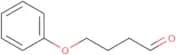
CAS:<p>3-(Phenylmethoxy)propanal is a chiral compound that can be used as an enantiomeric catalyst for the stereoselective synthesis of methyl ketones. It is also an analog for the synthesis of atorvastatin, which is a drug used to treat high cholesterol levels. This chemical has been shown to inhibit hmg-coa reductase in marine sponges and may be useful in the treatment of cardiovascular disease. 3-(Phenylmethoxy)propanal has also been shown to be effective against tetrahydropyran and marine sponge strains with aldehyde-degrading enzymes.</p>Formula:C10H12O2Purity:Min. 95%Molecular weight:164.2 g/mol4-Phenoxybutanal
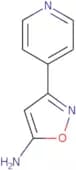
CAS:<p>Versatile small molecule scaffold</p>Formula:C10H12O2Purity:Min. 95%Molecular weight:164.2 g/mol3-(Pyridin-4-yl)isoxazol-5-amine
CAS:<p>The isoxazole ring of 3-(pyridin-4-yl)isoxazol-5-amine is stabilized by hydrogen bonds. The orientation of the pyridine ring and the two asymmetric carbon atoms result in a chiral center. The molecule has two possible structures. The result of this is a molecule that can be stabilized with one or the other configuration, depending on how it is synthesized.</p>Formula:C8H7N3OPurity:Min. 95%Molecular weight:161.16 g/mol3-Pyridin-2-yl-isoxazol-5-ylamine
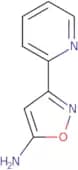
CAS:<p>Versatile small molecule scaffold</p>Formula:C8H7N3OPurity:Min. 95%Molecular weight:161.16 g/molN-(4,5,6,7-Tetrahydro-3H-1,2-benzodithiol-3-ylidene)hydroxylamine
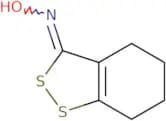
CAS:<p>Versatile small molecule scaffold</p>Formula:C7H9NOS2Purity:Min. 95%Molecular weight:187.3 g/mol7-Oxabicyclo[2.2.1]heptane-2-carboxylic acid
CAS:<p>Versatile small molecule scaffold</p>Formula:C7H10O3Purity:Min. 95%Molecular weight:142.15 g/mol2-[(2-Nitrophenyl)sulfanyl]benzoic acid
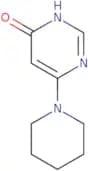
CAS:<p>Versatile small molecule scaffold</p>Formula:C13H9NO4SPurity:Min. 95%Molecular weight:275.28 g/mol6-(Piperidin-1-yl)-3,4-dihydropyrimidin-4-one
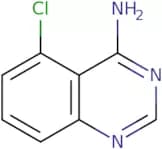
CAS:<p>Versatile small molecule scaffold</p>Formula:C9H13N3OPurity:Min. 95%Molecular weight:179.22 g/mol5-Chloroquinazolin-4-amine
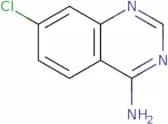
CAS:<p>Versatile small molecule scaffold</p>Formula:C8H6ClN3Purity:Min. 95%Molecular weight:179.61 g/mol7-Chloroquinazolin-4-amine
CAS:<p>Versatile small molecule scaffold</p>Formula:C8H6ClN3Purity:Min. 95%Molecular weight:179.6 g/mol

![7-Oxabicyclo[2.2.1]heptane-2-carboxylic acid](/_next/image/?url=https%3A%2Fstatic.cymitquimica.com%2Fproducts%2F3D%2Fthumb-webp%2FUAA80001.webp&w=3840&q=75)
![2-[(2-Nitrophenyl)sulfanyl]benzoic acid](/_next/image/?url=https%3A%2Fstatic.cymitquimica.com%2Fproducts%2F3D%2Fthumb-webp%2FUAA80643.webp&w=3840&q=75)