Building Blocks
This section contains fundamental products for the synthesis of organic and biological compounds. Building blocks are the essential starting materials used to construct complex molecules through various chemical reactions. They play a critical role in drug discovery, material science, and chemical research. At CymitQuimica, we offer a diverse range of high-quality building blocks to support your innovative research and industrial projects, ensuring you have the essential components for successful synthesis.
Subcategories of "Building Blocks"
- Boronic Acids & Boronic Acid Derivatives(5,756 products)
- Chiral Building Blocks(1,242 products)
- Hydrocarbon Building Blocks(6,095 products)
- Organic Building Blocks(61,038 products)
Found 196817 products of "Building Blocks"
Sort by
Purity (%)
0
100
|
0
|
50
|
90
|
95
|
100
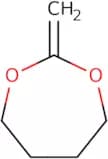
2-Methylene-1,3-dioxepane
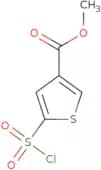
CAS:<p>2-Methylene-1,3-dioxepane is a biodegradable polymer that is used in the production of polyesters for use in film and packaging. It is synthesized by cationic polymerization, which involves the formation of ester linkages. 2-Methylene-1,3-dioxepane has been shown to be biocompatible in cell culture and can be used as a growth factor for tissue engineering. The melting point of this polymer is dependent on the molecular weight and it undergoes phase transition at temperatures around 130°C. This polymer degrades through hydrolysis when exposed to alkali or hydrogen chloride.2-Methylene-1,3-dioxepane has been observed to have an FTIR spectrum containing carbonyl absorption bands at 1710 cm−1 and 1650 cm−1. This material also displays a 13C NMR spectrum with peaks at -18 ppm and -7 ppm</p>Formula:C6H10O2Purity:Min. 95%Molecular weight:114.14 g/molMethyl 5-(chlorosulfonyl)thiophene-3-carboxylate
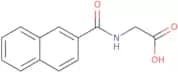
CAS:<p>Versatile small molecule scaffold</p>Formula:C6H5ClO4S2Purity:Min. 95%Molecular weight:240.7 g/mol2-(Naphthalen-2-ylformamido)acetic acid
CAS:<p>2-(Naphthalen-2-ylformamido)acetic acid (Nafamid) is a toxic agent that can be used to induce experimental diabetes in animals. Nafamid is metabolized to benzoate and then to chloride, which can be detected in urine. Chromatographic experiments showed that Nafamid was not metabolized by rats or mice, but was eliminated as the mercapturic acid (MNA) and mercapturic acid glucuronide (MAG). MNA has been isolated from urine samples of rats injected with Nafamid. The metabolic pathways for Nafamid are the same for animals and humans.</p>Formula:C13H11NO3Purity:Min. 95%Molecular weight:229.23 g/mol2-[(1-Benzofuran-2-yl)formamido]acetic acid
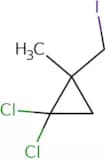
CAS:<p>Versatile small molecule scaffold</p>Formula:C11H9NO4Purity:Min. 95%Molecular weight:219.19 g/mol1,1-Dichloro-2-(iodomethyl)-2-methylcyclopropane
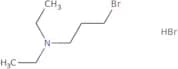
CAS:<p>Versatile small molecule scaffold</p>Formula:C5H7Cl2IPurity:Min. 95%Molecular weight:264.92 g/mol(3-Bromopropyl)diethylamine hydrobromide
CAS:<p>Versatile small molecule scaffold</p>Formula:C7H17Br2NPurity:Min. 95%Molecular weight:275.02 g/mol2-Chloro-N-[4-(3-methylphenoxy)phenyl]acetamide
CAS:<p>Versatile small molecule scaffold</p>Formula:C15H14ClNO2Purity:Min. 95%Molecular weight:275.73 g/mol2-Chloro-N-[4-(2-chlorophenoxy)phenyl]acetamide
CAS:<p>Versatile small molecule scaffold</p>Formula:C14H11Cl2NO2Purity:Min. 95%Molecular weight:296.1 g/mol2-Chloro-N-[4-(3-chlorophenoxy)phenyl]acetamide
CAS:<p>Versatile small molecule scaffold</p>Formula:C14H11Cl2NO2Purity:Min. 95%Molecular weight:296.1 g/mol3-(Methoxymethyl)-5-methylhexan-2-one
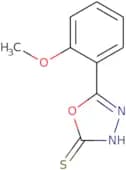
CAS:<p>Versatile small molecule scaffold</p>Formula:C9H18O2Purity:Min. 95%Molecular weight:158.2 g/mol5-(2-Methoxyphenyl)-1,3,4-oxadiazole-2-thiol
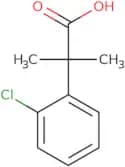
CAS:<p>Versatile small molecule scaffold</p>Formula:C9H8N2O2SPurity:Min. 95%Molecular weight:208.24 g/mol2-(2-Chlorophenyl)-2-methylpropanoic acid
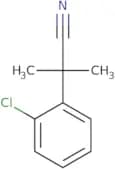
CAS:<p>Versatile small molecule scaffold</p>Formula:C10H11O2ClPurity:Min. 95%Molecular weight:198.64 g/mol2-(2-chlorophenyl)-2-methylpropanenitrile
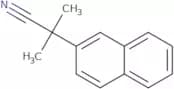
CAS:<p>Versatile small molecule scaffold</p>Formula:C10H10ClNPurity:Min. 95%Molecular weight:179.65 g/mol2-Methyl-2-(naphthalen-2-yl)propanenitrile
CAS:<p>Versatile small molecule scaffold</p>Formula:C14H13NPurity:Min. 95%Molecular weight:195.26 g/mol3-([3-(Dimethylamino)propyl]amino)propanamide
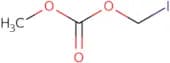
CAS:<p>Versatile small molecule scaffold</p>Formula:C8H19N3OPurity:Min. 95%Molecular weight:173.26 g/molIodomethyl methyl carbonate
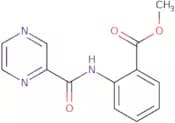
CAS:<p>Iodomethyl methyl carbonate is a carbapenem antibiotic that has been shown to have anti-influenza activity. It inhibits the cap-dependent endonuclease of the influenza virus, which prevents viral replication and release of new viruses. Iodomethyl methyl carbonate also inhibits the HIV integrase enzyme and may be used as an inhibitor for the treatment of HIV infection. This compound has antibacterial activity against bacteria that contain metallo-β-lactamase, such as Enterobacteriaceae. Iodomethyl methyl carbonate is stable in organic solvents, making it useful for chemical reactions.</p>Formula:C3H5IO3Purity:Min. 95%Molecular weight:215.97 g/molMethyl 2-(pyrazine-2-amido)benzoate
CAS:<p>Versatile small molecule scaffold</p>Formula:C13H11N3O3Purity:Min. 95%Molecular weight:257.24 g/mol4-Chloroquinoline-3-carbonitrile
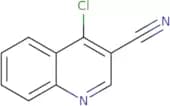
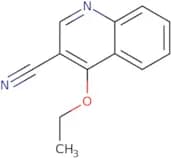
CAS:<p>4-Chloroquinoline-3-carbonitrile is an intermediate in the synthesis of the tyrosine kinase inhibitor pelitinib and the process for its synthesis has been described. The synthetic process starts from acetonitrile, which reacts with nitrous acid to produce 4-chloroquinoline-3-carbonitrile. The next stage involves the reaction of 4-chloroquinoline-3-carbonitrile with ethyl acetate in the presence of a catalyst to produce 2-(4'-chlorophenyl)ethyl acetate. This compound can then be reacted with phenylethylamine to form (2E)-N-[2-(4'-chlorophenyl)ethyl]-N-(2,6-dimethoxyphenyl)acrylamide, which is a key intermediate in the synthesis of pelitinib.</p>Formula:C10H5ClN2Purity:Min. 95%Molecular weight:188.61 g/mol4-Ethoxyquinoline-3-carbonitrile
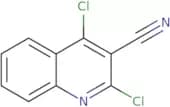
CAS:<p>Versatile small molecule scaffold</p>Formula:C12H10N2OPurity:Min. 95%Molecular weight:198.22 g/mol2,4-Dichloroquinoline-3-carbonitrile
CAS:<p>2,4-Dichloroquinoline-3-carbonitrile is a nitrosourea compound that inhibits cancer cells. It is activated by the addition of a reducing agent such as triethyl orthoformate and then reacts with an amine to form the corresponding N,N'-dichloroquinoline. The product of this reaction inhibits cancer cells by binding to DNA and inhibiting RNA synthesis. 2,4-Dichloroquinoline-3-carbonitrile has been shown to be effective against leukemia cells in vitro.</p>Formula:C10H4Cl2N2Purity:Min. 95%Molecular weight:223.06 g/mol

![2-[(1-Benzofuran-2-yl)formamido]acetic acid](/_next/image/?url=https%3A%2Fstatic.cymitquimica.com%2Fproducts%2F3D%2Fthumb-webp%2FUCA82670.webp&w=3840&q=75)
![2-Chloro-N-[4-(3-methylphenoxy)phenyl]acetamide](/_next/image/?url=https%3A%2Fstatic.cymitquimica.com%2Fproducts%2F3D%2Fthumb-webp%2FUCA83852.webp&w=3840&q=75)
![2-Chloro-N-[4-(2-chlorophenoxy)phenyl]acetamide](/_next/image/?url=https%3A%2Fstatic.cymitquimica.com%2Fproducts%2F3D%2Fthumb-webp%2FUCA83853.webp&w=3840&q=75)
![2-Chloro-N-[4-(3-chlorophenoxy)phenyl]acetamide](/_next/image/?url=https%3A%2Fstatic.cymitquimica.com%2Fproducts%2F3D%2Fthumb-webp%2FUCA83854.webp&w=3840&q=75)
![3-([3-(Dimethylamino)propyl]amino)propanamide](/_next/image/?url=https%3A%2Fstatic.cymitquimica.com%2Fproducts%2F3D%2Fthumb-webp%2FUCA85249.webp&w=3840&q=75)