


Building Blocks
This section contains fundamental products for the synthesis of organic and biological compounds. Building blocks are the essential starting materials used to construct complex molecules through various chemical reactions. They play a critical role in drug discovery, material science, and chemical research. At CymitQuimica, we offer a diverse range of high-quality building blocks to support your innovative research and industrial projects, ensuring you have the essential components for successful synthesis.
Subcategories of "Building Blocks"
- Boronic Acids & Boronic Acid Derivatives(5,756 products)
- Chiral Building Blocks(1,242 products)
- Hydrocarbon Building Blocks(6,095 products)
- Organic Building Blocks(61,051 products)
Found 199813 products of "Building Blocks"
Sort by
Purity (%)
0
100
|
0
|
50
|
90
|
95
|
100
1-bromo-2-[(methylsulfanyl)methyl]benzene
CAS:Versatile small molecule scaffoldFormula:C8H9BrSPurity:Min. 95%Molecular weight:217.12 g/mol1-Bromo-2-propylbenzene
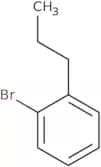
CAS:<p>Versatile small molecule scaffold</p>Formula:C9H11BrPurity:Min. 95%Molecular weight:199.09 g/mol2-(Piperidin-2-yl)acetic acid hydrochloride
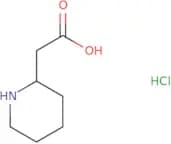
CAS:<p>2-(Piperidin-2-yl)acetic acid hydrochloride is a research chemical that is used in the synthesis of esters, solvents and other organic compounds. It is also used as a solvent in the production of pharmaceuticals. 2-(Piperidin-2-yl)acetic acid hydrochloride can be obtained by chemoenzymatic reactions or by alcoholysis of methyl esters. This compound has been shown to have the ability to act as a lipase inhibitor.</p>Formula:C7H14ClNO2Purity:Min. 95%Molecular weight:179.6 g/mol1-(5-Bromo-1H-indol-3-yl)ethanone
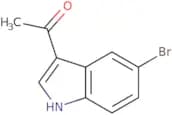
CAS:Controlled Product<p>Versatile small molecule scaffold</p>Formula:C10H8BrNOPurity:Min. 95%Molecular weight:238.08 g/mol2-Acetyl-2-azatricyclo[6.3.1.0,4,12]dodeca-1(12),8,10-trien-7-one
CAS:Versatile small molecule scaffoldFormula:C13H13NO2Purity:Min. 95%Molecular weight:215.25 g/molMethyl 2-[(2-methylpropyl)amino]acetate
CAS:<p>Versatile small molecule scaffold</p>Formula:C7H15NO2Purity:Min. 95%Molecular weight:145.2 g/mol(1R)-1-Phenylpentan-1-ol
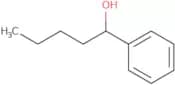
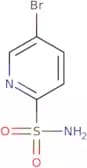
CAS:<p>Versatile small molecule scaffold</p>Formula:C11H16OPurity:Min. 95%Molecular weight:164.24 g/mol5-Bromopyridine-2-sulfonamide
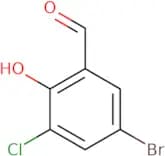
CAS:<p>Versatile small molecule scaffold</p>Formula:C5H5BrN2O2SPurity:Min. 95%Molecular weight:237.08 g/mol5-Bromo-3-chloro-2-hydroxybenzaldehyde
CAS:<p>5-Bromo-3-chloro-2-hydroxybenzaldehyde is a potent regulator of microglia, a type of immune cell. It has been shown to be neuroprotective in the presence of radiation and activated TNF-α, by decreasing necrosis and inflammation. This compound is also capable of inhibiting the production of IL-1β and IL-6 from human monocytes, which may be due to its hydrophobic properties. 5-Bromo-3-chloro-2-hydroxybenzaldehyde has been shown to suppress the development of experimental sclerosis in rats. The mechanism for this effect is unknown, but it may be due to its ability to inhibit the activation of proinflammatory genes such as p65 nuclear translocation or nuclear factor kappa B (NFκB).</p>Formula:C7H4BrClO2Purity:Min. 95%Molecular weight:235.46 g/molEthyl 1-Piperidinepropionate
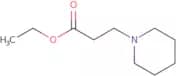
CAS:<p>Ethyl 1-Piperidinepropionate is an organic compound that is an electron donor. It has an average molecular weight of 170.1 g/mol and a sensitivity to radiation. Ethyl 1-Piperidinepropionate can be used as a polymerization initiator for the preparation of polymers with a patterning ability. This compound is also used to produce dyes, flavours, perfumes, and pesticides.</p>Formula:C10H19NO2Purity:Min. 95%Molecular weight:185.27 g/mol1-[(4-Formylphenyl)sulfanyl]-N,N-dimethylformamide
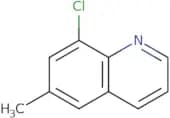
CAS:Versatile small molecule scaffoldFormula:C10H11NO2SPurity:Min. 95%Molecular weight:209.27 g/mol8-Chloro-6-methylquinoline
CAS:<p>8-Chloro-6-methylquinoline is a heterocyclic compound with the structure of an indole. This compound has been shown to selectively dehydrogenate cyclohexanones and transiminate indoles. 8-Chloro-6-methylquinoline is also capable of dehydrochlorinating indoles and tetrahydroquinolines, as well as azaheterocycles. The sequence in which these reactions occur can be controlled by the substitution of chlorine atoms at different positions on the ring.</p>Formula:C10H8ClNPurity:Min. 95%Molecular weight:177.63 g/mol8-Ethylquinoline
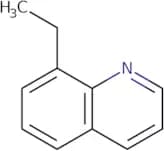
CAS:<p>8-Ethylquinoline is a chemical compound that is classified as an organometallic. It reacts with trifluoroacetic acid to give 8-ethyltrifluoromethylquinoline, which can undergo reductive elimination to form 8-ethylquinoline. 8-Ethylquinoline has been used in the synthesis of azobenzene derivatives, including a luminescent n-oxide and various quinolines. The structural studies of 8-ethylquinoline have been carried out by nmr spectroscopy. The compound has also been shown to be useful for the preparation of terminal alkynes, tetrachloropalladate ions, and constant potential cells.</p>Formula:C11H11NPurity:Min. 95%Molecular weight:157.21 g/mol2-(Quinolin-3-yl)acetic acid hydrochloride
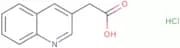
CAS:<p>Versatile small molecule scaffold</p>Formula:C11H10ClNO2Purity:Min. 95%Molecular weight:223.65 g/molN'-(Pyridin-3-yl)benzenecarboximidamide
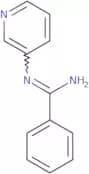
CAS:<p>Versatile small molecule scaffold</p>Formula:C12H11N3Purity:Min. 95%Molecular weight:197.24 g/mol2-Phenyloxolane-2-carboxylic acid
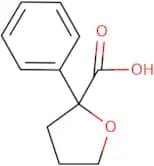
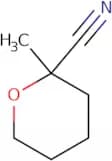
CAS:<p>Versatile small molecule scaffold</p>Formula:C11H12O3Purity:Min. 95%Molecular weight:192.21 g/mol2-Methyloxane-2-carbonitrile
CAS:<p>Versatile small molecule scaffold</p>Formula:C7H11NOPurity:Min. 95%Molecular weight:125.17 g/mol2-Chloro-N-[4-(2-phenyldiazen-1-yl)phenyl]acetamide
CAS:<p>Versatile small molecule scaffold</p>Formula:C14H12ClN3OPurity:Min. 95%Molecular weight:273.72 g/mol1-Oxa-3-azaspiro[4.4]nonan-2-one
CAS:<p>Versatile small molecule scaffold</p>Formula:C7H11NO2Purity:Min. 95%Molecular weight:141.17 g/mol8-Chloro-2,3,4,5-tetrahydro-1H-pyrido[4,3-b]-indole
CAS:Versatile small molecule scaffoldFormula:C11H11ClN2Purity:Min. 95%Molecular weight:206.67 g/mol
![1-bromo-2-[(methylsulfanyl)methyl]benzene](/_next/image/?url=https%3A%2Fstatic.cymitquimica.com%2Fproducts%2F3D%2Fthumb-webp%2FUAA61411.webp&w=3840&q=75)

![2-Acetyl-2-azatricyclo[6.3.1.0,4,12]dodeca-1(12),8,10-trien-7-one](/_next/image/?url=https%3A%2Fstatic.cymitquimica.com%2Fproducts%2F3D%2Fthumb-webp%2FUAA62115.webp&w=3840&q=75)
![Methyl 2-[(2-methylpropyl)amino]acetate](/_next/image/?url=https%3A%2Fstatic.cymitquimica.com%2Fproducts%2F3D%2Fthumb-webp%2FUAA62856.webp&w=3840&q=75)
![1-[(4-Formylphenyl)sulfanyl]-N,N-dimethylformamide](/_next/image/?url=https%3A%2Fstatic.cymitquimica.com%2Fproducts%2F3D%2Fthumb-webp%2FUAA65438.webp&w=3840&q=75)
![2-Chloro-N-[4-(2-phenyldiazen-1-yl)phenyl]acetamide](/_next/image/?url=https%3A%2Fstatic.cymitquimica.com%2Fproducts%2F3D%2Fthumb-webp%2FUAA68035.webp&w=3840&q=75)
![1-Oxa-3-azaspiro[4.4]nonan-2-one](/_next/image/?url=https%3A%2Fstatic.cymitquimica.com%2Fproducts%2F3D%2Fthumb-webp%2FUAA68459.webp&w=3840&q=75)
![8-Chloro-2,3,4,5-tetrahydro-1H-pyrido[4,3-b]-indole](/_next/image/?url=https%3A%2Fstatic.cymitquimica.com%2Fproducts%2F3D%2Fthumb-webp%2FUAA68584.webp&w=3840&q=75)