Building Blocks
This section contains fundamental products for the synthesis of organic and biological compounds. Building blocks are the essential starting materials used to construct complex molecules through various chemical reactions. They play a critical role in drug discovery, material science, and chemical research. At CymitQuimica, we offer a diverse range of high-quality building blocks to support your innovative research and industrial projects, ensuring you have the essential components for successful synthesis.
Subcategories of "Building Blocks"
- Boronic Acids & Boronic Acid Derivatives(5,756 products)
- Chiral Building Blocks(1,242 products)
- Hydrocarbon Building Blocks(6,095 products)
- Organic Building Blocks(61,038 products)
Found 196817 products of "Building Blocks"
Sort by
Purity (%)
0
100
|
0
|
50
|
90
|
95
|
100
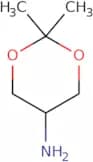
2,2-Dimethyl-1,3-dioxan-5-amine
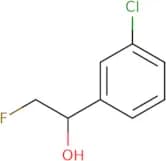
CAS:<p>2,2-Dimethyl-1,3-dioxan-5-amine is an organic molecule that utilizes electron affinity to synthesize with a variety of orientations. The hydrophobic and intramolecular orientations are the most common. The 2,2-dimethyl-1,3-dioxan-5-amine molecule has been shown to be capable of utilizing the hydrogen atom in water as an electron acceptor and donor. It can also form a monolayer on a gold electrode surface. This molecule is hydrophilic and therefore prefers hydrophilic environments such as the electrode surface or water. Impurities in this compound may include fluoride ion or chloride ion.</p>Formula:C6H13NO2Purity:Min. 95%Molecular weight:131.18 g/mol1-(3-Chlorophenyl)-2-fluoroethan-1-ol
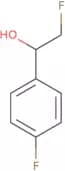
CAS:<p>Versatile small molecule scaffold</p>Formula:C8H8ClFOPurity:Min. 95%Molecular weight:174.6 g/mol2-Fluoro-1-(4-fluorophenyl)ethanol
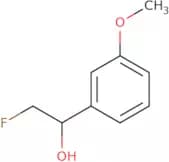
CAS:<p>Versatile small molecule scaffold</p>Formula:C8H8F2OPurity:Min. 95%Molecular weight:158.14 g/mol2-Fluoro-1-(3-methoxyphenyl)ethan-1-ol
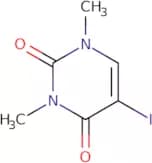
CAS:<p>Versatile small molecule scaffold</p>Formula:C9H11FO2Purity:Min. 95%Molecular weight:170.18 g/mol5-Iodo-1,3-dimethyluracil
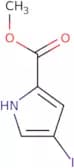
CAS:<p>5-Iodo-1,3-dimethyluracil (5IDMU) is a nucleoside that is used in cancer diagnosis. 5IDMU can be synthesized by the Suzuki coupling reaction with an amine and a halide. The synthesis of 5IDMU can also be accomplished by the cross-coupling of an amine and a tautomeric methylene compound. The methylene group in the heterocycle is electron donating, which makes it more reactive than other groups. This nucleoside has been shown to have anti-inflammatory properties, which may be due to its ability to inhibit prostaglandin synthesis. 5IDMU has also been shown to have anticancer effects in vitro and in vivo.</p>Formula:C6H7IN2O2Purity:Min. 95%Molecular weight:266.04 g/molMethyl 4-iodo-1H-pyrrole-2-carboxylate
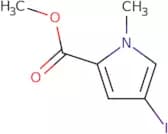
CAS:<p>Versatile small molecule scaffold</p>Formula:C6H6INO2Purity:Min. 95%Molecular weight:251.02 g/molMethyl 4-iodo-1-methyl-1H-pyrrole-2-carboxylate
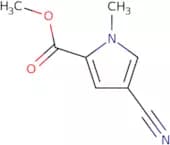
CAS:<p>Versatile small molecule scaffold</p>Formula:C7H8INO2Purity:Min. 95%Molecular weight:265.05 g/molMethyl 4-cyano-1-methyl-1H-pyrrole-2-carboxylate
CAS:<p>Versatile small molecule scaffold</p>Formula:C8H8N2O2Purity:Min. 95%Molecular weight:164.16 g/mol5-Fluoro-benzo[b]thiophene-3-carboxylic acid
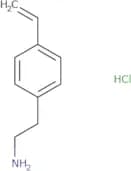
CAS:<p>Versatile small molecule scaffold</p>Formula:C9H5FO2SPurity:Min. 95%Molecular weight:196.2 g/mol2-(4-Ethenylphenyl)ethan-1-amine hydrochloride
CAS:Controlled Product<p>Versatile small molecule scaffold</p>Formula:C10H14ClNPurity:Min. 95%Molecular weight:183.68 g/mol4-(4-Bromophenyl)-1,2,3-thiadiazole
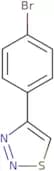
CAS:<p>4-(4-Bromophenyl)-1,2,3-thiadiazole is a mediated drug that belongs to the class of retinoids. It has been shown to have anticancer activity in vitro and in vivo. 4-(4-Bromophenyl)-1,2,3-thiadiazole is an endogenous metabolite of all-trans-retinoic acid (ATRA), which is a molecule synthesized from vitamin A. This drug also inhibits cytochrome p450 enzymes and can be used as an antidote for poisoning by itraconazole and other drugs that inhibit the same enzyme system.</p>Formula:C8H5BrN2SPurity:Min. 95%Molecular weight:241.11 g/molMethyl 5-cyano-2-methoxybenzoate
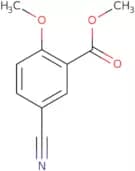
CAS:<p>Versatile small molecule scaffold</p>Formula:C10H9NO3Purity:Min. 95%Molecular weight:191.18 g/molBis(1,5-cyclooctadiene)(duroquinone) nickel(0)
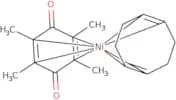
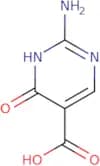
CAS:<p>Bis(1,5-cyclooctadiene)(duroquinone) nickel(0) is a synthetic compound that belongs to the class of organometallic compounds. It is used as a ligand in cross-coupling reactions and as a catalyst in organic synthesis. Bis(1,5-cyclooctadiene)(duroquinone) nickel(0) has been shown to react with Grignard reagents and boronic acids to form complex molecules with stereospecificity. This compound also reacts with aldehydes and triflates to form alkenylation products. The mechanism for this reaction is not well understood, but it is thought that the bis(1,5-cyclooctadiene)(duroquinone) nickel(0) binds to the electrophilic carbon atom of the carbonyl group through its duroquinone moiety and then undergoes oxidative addition with the Grignard reagent</p>Formula:C18H24NiO2Purity:Min. 95%Molecular weight:331.08 g/mol2-Amino-4-hydroxypyrimidine-5-carboxylic acid
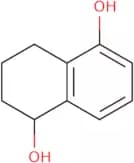
CAS:<p>Versatile small molecule scaffold</p>Formula:C5H5N3O3Purity:Min. 95%Molecular weight:155.11 g/mol1,5-Dihydroxy-1,2,3,4-tetrahydronaphthalene
CAS:1,5-Dihydroxy-1,2,3,4-tetrahydronaphthalene is an experimentally studied chemical compound. It has been studied for its ability to catalyze the transesterification of vinyl acetate and tetrahydrofuran. This reaction is a good example of a ternary catalyst that is operational under both kinetic and optimal conditions. 1,5-Dihydroxy-1,2,3,4-tetrahydronaphthalene is also an enantiomeric mixture with a selectivity of the order of 90% for the (S)-enantiomer.Formula:C10H12O2Purity:Min. 95%Molecular weight:164.2 g/mol5-Propyl-[1,2,4]triazolo[1,5-a]pyrimidin-7-ol
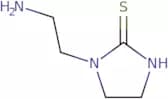
CAS:<p>Versatile small molecule scaffold</p>Formula:C8H10N4OPurity:Min. 95%Molecular weight:178.19 g/mol1-(2-Aminoethyl)imidazolidine-2-thione
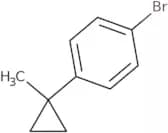
CAS:<p>1-(2-Aminoethyl)imidazolidine-2-thione is a hydrocarbon that inhibits corrosion by binding to metal ions and preventing the formation of corrosion products. It has been shown to be a potent inhibitor of corrosion in water, with more than 50% inhibition at pH 7.1. 1-(2-Aminoethyl)imidazolidine-2-thione has been shown to inhibit the deprotonation of thiourea in acidic conditions, which is an important step in the corrosion process. In addition, 1-(2-Aminoethyl)imidazolidine-2-thione binds to metal ions via its electron donor group and prevents the formation of anions. The molecular structure consists of a heterocyclic ring with five members, with the nitrogen atom occupying one position on the ring. As such, it can be classified as a heterocyclic amine or imidazolidineth</p>Formula:C5H11N3SPurity:Min. 95%Molecular weight:145.23 g/mol1-Bromo-4-(1-methylcyclopropyl)benzene
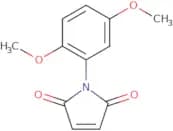
CAS:<p>Versatile small molecule scaffold</p>Formula:C10H11BrPurity:Min. 95%Molecular weight:211.1 g/mol1-(2,5-Dimethoxyphenyl)-1H-pyrrole-2,5-dione
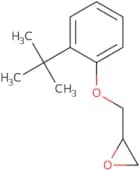
CAS:<p>Versatile small molecule scaffold</p>Formula:C12H11NO4Purity:Min. 95%Molecular weight:233.22 g/mol2-(2-tert-Butylphenoxymethyl)oxirane
CAS:<p>Versatile small molecule scaffold</p>Formula:C13H18O2Purity:Min. 95%Molecular weight:206.28 g/mol

![5-Fluoro-benzo[b]thiophene-3-carboxylic acid](/_next/image/?url=https%3A%2Fstatic.cymitquimica.com%2Fproducts%2F3D%2Fthumb-webp%2FQBA74057.webp&w=3840&q=75)
![5-Propyl-[1,2,4]triazolo[1,5-a]pyrimidin-7-ol](/_next/image/?url=https%3A%2Fstatic.cymitquimica.com%2Fproducts%2F3D%2Fthumb-webp%2FQBA77587.webp&w=3840&q=75)