Building Blocks
This section contains fundamental products for the synthesis of organic and biological compounds. Building blocks are the essential starting materials used to construct complex molecules through various chemical reactions. They play a critical role in drug discovery, material science, and chemical research. At CymitQuimica, we offer a diverse range of high-quality building blocks to support your innovative research and industrial projects, ensuring you have the essential components for successful synthesis.
Subcategories of "Building Blocks"
- Boronic Acids & Boronic Acid Derivatives(5,756 products)
- Chiral Building Blocks(1,242 products)
- Hydrocarbon Building Blocks(6,095 products)
- Organic Building Blocks(61,037 products)
Found 196139 products of "Building Blocks"
Sort by
Purity (%)
0
100
|
0
|
50
|
90
|
95
|
100
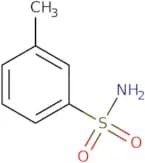
3-methylbenzenesulfonamide
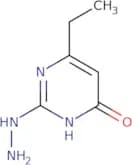
CAS:<p>3-methylbenzenesulfonamide is a dispersive, amide chemical structure that has antibacterial and antineoplastic properties. 3-methylbenzenesulfonamide is soluble in water and has a molecular weight of 198.33 g/mol. It is an experimental solubility data for this compound that it is less soluble than other compounds with the same molecular weight. 3-methylbenzenesulfonamide is a ligand and a coordination complex that has pharmacological agents, strategies, and experimental solubility data for the compound. The drug pharmacokinetics for this chemical are not well understood because it does not have an FDA classification and there are no pharmacokinetic studies available to date.</p>Formula:C7H9NO2SPurity:Min. 95%Molecular weight:171.22 g/mol6-Ethyl-2-hydrazinyl-3,4-dihydropyrimidin-4-one
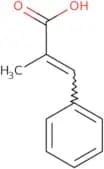
CAS:<p>Versatile small molecule scaffold</p>Formula:C6H10N4OPurity:Min. 95%Molecular weight:154.17 g/mol(E)-α-Methylcinnamic acid
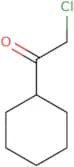
CAS:<p>The compound (E)-α-methylcinnamic acid is a methyl ketone that reacts with deionized water to form the ionic compound. This reaction is an example of Friedel-Crafts alkylation. The compound has been shown to be carcinogenic in animal studies, but not in human studies. It can also be used as a pressor and chloride channel blocker, and has been shown to have ferroelectric properties. The compound has been shown to react with fatty acids at high temperatures, yielding a reaction yield of 82%.</p>Formula:C10H10O2Purity:Min. 95%Molecular weight:162.18 g/mol2-Chloro-1-cyclohexylethan-1-one
CAS:<p>2-Chloro-1-cyclohexylethan-1-one is an enantiopure epoxide that can be synthesized from chloroketones and amines. It is used in the synthesis of chlorinating agents, such as chloramines and chlorocarbons, as well as in the preparation of carbamates. 2-Chloro-1-cyclohexylethan-1-one also has a kinetic effect on dehalogenase enzymes, which are involved in halogen metabolism. The chemical's chlorine atom can react with hydrogen chloride to form hydrogen chloride gas and hydrochloric acid. 2-Chloro-1-cyclohexylethan-1-one has been shown to be effective against nematodes, limiting their growth by inhibiting the synthesis of essential proteins needed for cell division. This chemical also reacts with chloride ions to form polymers that act as a protective barrier against insects.<br>2CCHE is a</p>Formula:C8H13ClOPurity:Min. 95%Molecular weight:160.64 g/mol1-[(Methylamino)methyl]-1,2,3,4-tetrahydronaphthalen-1-ol
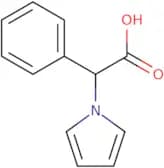
CAS:<p>Versatile small molecule scaffold</p>Formula:C12H17NOPurity:Min. 95%Molecular weight:191.3 g/mol2-phenyl-2-(1H-pyrrol-1-yl)acetic acid
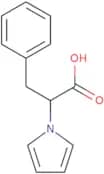
CAS:<p>Versatile small molecule scaffold</p>Formula:C12H11NO2Purity:Min. 95%Molecular weight:201.23 g/mol3-Phenyl-2-(1H-pyrrol-1-yl)propanoic acid
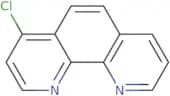
CAS:<p>Versatile small molecule scaffold</p>Formula:C13H13NO2Purity:Min. 95%Molecular weight:215.25 g/mol4-Chloro-1,10-phenanthroline
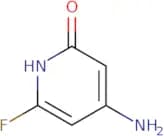
CAS:<p>Versatile small molecule scaffold</p>Formula:C12H7ClN2Purity:Min. 95%Molecular weight:214.65 g/mol4-Amino-6-fluoropyridin-2(1H)-one
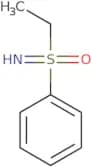
CAS:<p>Versatile small molecule scaffold</p>Formula:C5H5FN2OPurity:Min. 95%Molecular weight:128.11 g/molS-Ethyl-S-phenyl sulfoximine
CAS:<p>Versatile small molecule scaffold</p>Formula:C8H11NOSPurity:Min. 95%Molecular weight:169.25 g/molEthyl 2-[(2-carbamoylphenyl)amino]acetate
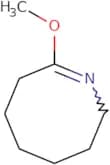
CAS:<p>Versatile small molecule scaffold</p>Formula:C11H14N2O3Purity:Min. 95%Molecular weight:222.24 g/mol8-Methoxy-2,3,4,5,6,7-hexahydroazocine
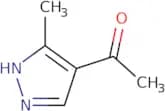
CAS:<p>Versatile small molecule scaffold</p>Formula:C8H15NOPurity:Min. 95%Molecular weight:141.21 g/mol1-(5-Methyl-1H-Pyrazol-4-Yl)Ethanone
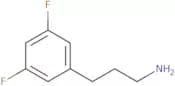
CAS:<p>Phenylhydrazine is a white crystalline solid with a molecular weight of 150.25, and the molecular formula C6H5NHN. It is soluble in water, alcohol, ether and chloroform. Phenylhydrazine can react with an acid chloride to form a hydrazone; this reaction is used in the synthesis of some pharmaceuticals. The most common use of phenylhydrazine is as a precursor to various pharmaceuticals, such as antipyretics and anti-inflammatory agents. Phenylhydrazine reacts with zinc chloride to form 1-(5-methyl-1H-pyrazol-4-yl)ethanone.</p>Formula:C6H8N2OPurity:Min. 95%Molecular weight:124.14 g/mol3-(3,5-Difluorophenyl)propan-1-amine
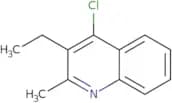
CAS:<p>Versatile small molecule scaffold</p>Formula:C9H11F2NPurity:Min. 95%Molecular weight:171.19 g/mol4-Chloro-3-ethyl-2-methylquinoline
CAS:<p>Versatile small molecule scaffold</p>Formula:C12H12ClNPurity:Min. 95%Molecular weight:205.68 g/mol1-[(4-Methoxyphenyl)methyl]-1H-1,2,3,4-tetrazole-5-thiol
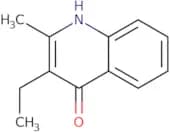
CAS:<p>Versatile small molecule scaffold</p>Formula:C9H10N4OSPurity:Min. 95%Molecular weight:222.27 g/mol3-Ethyl-2-methylquinolin-4-ol
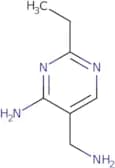
CAS:<p>Versatile small molecule scaffold</p>Formula:C12H13NOPurity:Min. 95%Molecular weight:187.24 g/mol(2-Ethyl-4-imino-1,4-dihydropyrimidin-5-yl)methanamine
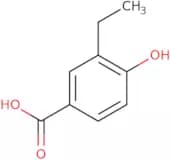
CAS:<p>Versatile small molecule scaffold</p>Formula:C7H12N4Purity:Min. 95%Molecular weight:152.2 g/mol3-Ethyl-4-hydroxybenzoic acid
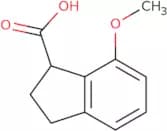
CAS:<p>Versatile small molecule scaffold</p>Formula:C9H10O3Purity:Min. 95%Molecular weight:166.17 g/mol7-Methoxy-2,3-dihydro-1H-indene-1-carboxylic acid
CAS:<p>Versatile small molecule scaffold</p>Formula:C11H12O3Purity:Min. 95%Molecular weight:192.21 g/mol

![1-[(Methylamino)methyl]-1,2,3,4-tetrahydronaphthalen-1-ol](/_next/image/?url=https%3A%2Fstatic.cymitquimica.com%2Fproducts%2F3D%2Fthumb-webp%2FFEA27155.webp&w=3840&q=75)
![Ethyl 2-[(2-carbamoylphenyl)amino]acetate](/_next/image/?url=https%3A%2Fstatic.cymitquimica.com%2Fproducts%2F3D%2Fthumb-webp%2FFEA23433.webp&w=3840&q=75)
![1-[(4-Methoxyphenyl)methyl]-1H-1,2,3,4-tetrazole-5-thiol](/_next/image/?url=https%3A%2Fstatic.cymitquimica.com%2Fproducts%2F3D%2Fthumb-webp%2FFEA21934.webp&w=3840&q=75)