Building Blocks
This section contains fundamental products for the synthesis of organic and biological compounds. Building blocks are the essential starting materials used to construct complex molecules through various chemical reactions. They play a critical role in drug discovery, material science, and chemical research. At CymitQuimica, we offer a diverse range of high-quality building blocks to support your innovative research and industrial projects, ensuring you have the essential components for successful synthesis.
Subcategories of "Building Blocks"
- Boronic Acids & Boronic Acid Derivatives(5,756 products)
- Chiral Building Blocks(1,242 products)
- Hydrocarbon Building Blocks(6,093 products)
- Organic Building Blocks(60,519 products)
Found 195533 products of "Building Blocks"
Sort by
Purity (%)
0
100
|
0
|
50
|
90
|
95
|
100
4,4,4-Trichloro-3-hydroxybutanoic acid
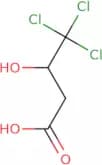
CAS:<p>4,4,4-Trichloro-3-hydroxybutanoic acid is a benzyl ester of the fatty acid 4,4,4-trichloro-3-hydroxybutanoic acid. The molecule has an optical isomer that can be synthesized from the corresponding symmetrical compound. The synthesis of 4,4,4-trichloro-3-hydroxybutanoic acid involves the reaction of benzyl alcohol with trichloromethyl chloride in the presence of an acid catalyst. This reaction yields two isomers: one of which has the same configuration as the starting material and one that is an optical isomer. The latter can be converted to its antipode by hydrogenation or by heating with sodium methoxide in methanol.</p>Formula:C4H5Cl3O3Purity:Min. 95%Molecular weight:207.43 g/mol2-{[(3-Chlorophenyl)amino]methyl}phenol
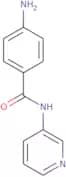
CAS:<p>Versatile small molecule scaffold</p>Formula:C13H12ClNOPurity:Min. 95%Molecular weight:233.69 g/mol4-Amino-N-pyridin-3-ylbenzamide
CAS:<p>Versatile small molecule scaffold</p>Formula:C12H11N3OPurity:Min. 95%Molecular weight:213.24 g/mol2-Bromohexanamide
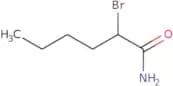
CAS:<p>2-Bromohexanamide is a receptor binding molecule that binds to the 5-HT2A receptor. 2-Bromohexanamide has been shown to be effective in treating autoimmune diseases, including psoriasis and rheumatoid arthritis. It is also used for the treatment of cancer, specifically for the prevention of chemotherapy-induced nausea and vomiting. 2-Bromohexanamide has been shown to bind to the 5-HT7 receptor, which is involved in regulating mood and appetite. The drug has a hydroxyl group that reacts with nucleophilic attack at the amide bond to form an acid complex. This reaction mechanism results in a molecule that can bind to receptors and cause receptor activity.</p>Formula:C6H12BrNOPurity:Min. 95%Molecular weight:194.07 g/mol7-Chloro-2,3-dihydro-3-phenyl-2-thioxo-1H-quinazolin-4-one
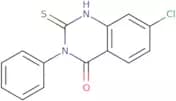
CAS:<p>Versatile small molecule scaffold</p>Formula:C14H9ClN2OSPurity:Min. 95%Molecular weight:288.75 g/mol2-Methoxybenzene-1-sulfinic acid
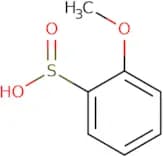
CAS:<p>2-Methoxybenzene-1-sulfinic acid is a synthetic drug that has been used as an anti-schistosomiasis agent. It is structurally related to the natural substrate of the enzyme schistosomal beta-ketoacyl synthase, and has been shown to inhibit this enzyme in vivo with a potency similar to that of praziquantel.</p>Formula:C7H8O3SPurity:Min. 95%Molecular weight:172.2 g/mol1,2,3,4,5-Pentamethyl-6-nitrobenzene
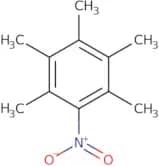
CAS:<p>The chemical name for 1,2,3,4,5-Pentamethyl-6-nitrobenzene is 6-Nitroso-1,1′-(3,3′-dimethylpropyl)-1,2,3,-4,5-pentamethylbenzene. It is a colorless liquid that has a boiling point of 190 °C and density of 1.0 g/mL. 6NMN is soluble in acetone and ethanol but insoluble in water. This compound has been shown to be an effective antihypertensive agent with reversible vasodilator properties. Clinical development of 6NMN has been hindered by the lack of a suitable animal model for congestive heart failure (CHF). There are no known functional groups on this molecule; however it does have a phenolic group at the para position and hydroxyl group at the meta position on the benzene ring. The compound also has two nitro groups that</p>Formula:C11H15NO2Purity:Min. 95%Molecular weight:193.24 g/molBenzenemethanamine, N-cyclohexyl-3,4-dimethoxy-, hydrochloride
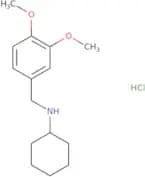
CAS:<p>Versatile small molecule scaffold</p>Formula:C15H24ClNO2Purity:Min. 95%Molecular weight:285.81 g/molTetrafluoropyrazine
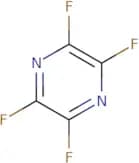
CAS:<p>Tetrafluoropyrazine is a fluorinated electrophilic compound that serves as an oxygen nucleophile. It reacts with hydrochloric acid and chlorine to form hydrogen chloride and tetrafluoropyrazine hydrochloride, respectively. Tetrafluoropyrazine has been shown to bind to the 5-HT7 receptor in rat brains, which may be due to its chemical similarity to serotonin. Magnetic resonance spectroscopy revealed that tetrafluoropyrazine contains nitrogen atoms in its structure. The polymer film structure of this molecule was determined by X-ray crystallography. Tetrafluoropyrazine also has the ability to oxidize polyethylene glycols and polypropylene glycols, which may be due to its ability to act as an electron acceptor.</p>Formula:C4F4N2Purity:Min. 95%Molecular weight:152.05 g/mol1-(Oxan-2-yl)propan-2-one
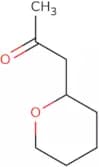
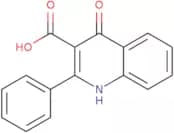
CAS:<p>Versatile small molecule scaffold</p>Formula:C8H14O2Purity:Min. 95%Molecular weight:142.2 g/mol4-Oxo-2-phenyl-1,4-dihydroquinoline-3-carboxylic acid
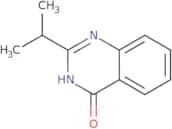
CAS:<p>Versatile small molecule scaffold</p>Formula:C16H11NO3Purity:Min. 95%Molecular weight:265.26 g/mol4-Hydroxy-2-(iso-propyl)quinazoline
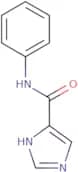
CAS:<p>Versatile small molecule scaffold</p>Formula:C11H12N2OPurity:Min. 95%Molecular weight:188.23 g/molN-Phenyl-1H-imidazole-5-carboxamide
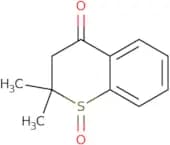
CAS:<p>Versatile small molecule scaffold</p>Formula:C10H9N3OPurity:Min. 95%Molecular weight:187.2 g/mol2,3-Ddihydro-2,2-dimethyl-4H-1-benzothiopyran-4-one 1-oxide
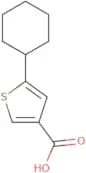
CAS:<p>Versatile small molecule scaffold</p>Formula:C11H12O2SPurity:Min. 95%Molecular weight:208.28 g/mol5-Cyclohexylthiophene-3-carboxylic acid
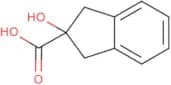
CAS:<p>Versatile small molecule scaffold</p>Formula:C11H14O2SPurity:Min. 95%Molecular weight:210.29 g/mol2-Hydroxy-2,3-dihydro-1H-indene-2-carboxylic acid
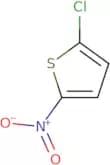
CAS:<p>Versatile small molecule scaffold</p>Formula:C10H10O3Purity:Min. 95%Molecular weight:178.18 g/mol2-chloro-5-nitrothiophene
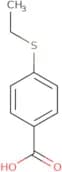
CAS:<p>2-Chloro-5-nitrothiophene is a nucleophilic compound that reacts with acetonitrile, which is a nucleophile. The inhibitory concentration of 2-chloro-5-nitrothiophene has been shown to be lower than that of thiophenes in general, and the compound can be used as a tool for evaluating the biological activity of thiophenes. 2-Chloro-5-nitrothiophene has been shown to have good inhibitory effects on Escherichia coli and other organisms. This compound also induces a number of different reactions: heterocyclic ring formation, synthesis of acetonitrile, and biomolecule evaluation.</p>Formula:C4H2ClNO2SPurity:Min. 95%Molecular weight:163.58 g/mol4-(Ethylthio)benzoic acid
CAS:<p>4-(Ethylthio)benzoic acid is a stabilizer and biotransformation product of salicylic acid. It is synthesized by the demethylation of 4-hydroxybenzoic acid, which is an intermediate in the synthesis of salicylic acid. 4-(Ethylthio)benzoic acid has been shown to be a potent inhibitor of bacterial cytochrome P450 enzymes and may be useful as an antibacterial agent against bacteria that are resistant to other antibiotics. The nature and mechanism of its action on bacterial cytochrome P450 enzymes is not well understood at this time.</p>Formula:C9H10O2SPurity:Min. 95%Molecular weight:182.24 g/mol4-(Isopropylsulfanyl)benzoic acid
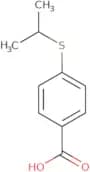
CAS:<p>4-(Isopropylsulfanyl)benzoic acid is a disubstituted benzoic acid with a 4-isopropylsulfanyl substituent. The compound is an analog of 4-methoxybenzoic acid and has been shown to be complementary to the same target site. Analogously, it also has been shown to have similar regiochemistry and ortho substitution as 4-methoxybenzoic acid.</p>Formula:C10H12O2SPurity:Min. 95%Molecular weight:196.27 g/mol2-Bromo-2-methylpropanal
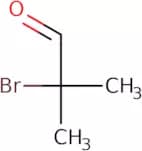
CAS:<p>2-Bromo-2-methylpropionaldehyde is an organic compound that belongs to the class of propionates. It is a primary amine that can be synthesized from acetone and chloroform. 2-Bromo-2-methylpropionaldehyde has been used as a disinfectant for skin and mucous membranes. It also lowers blood pressure by dilating the veins, which can help to prevent strokes and heart attacks. 2-Bromo-2-methylpropionaldehyde is more labile than its parent compound, propionic acid, because it lacks the hydrogens on the methyl group. It is susceptible to oxidation by hypobromous acid or chloride ions, which can lead to the formation of phenacyl bromide. Phenacyl bromide has been shown to have antiseptic properties and can be used as an intermediate in organic synthesis. END>></p>Formula:C4H7OBrPurity:Min. 95%Molecular weight:151 g/mol

![2-{[(3-Chlorophenyl)amino]methyl}phenol](/_next/image/?url=https%3A%2Fstatic.cymitquimica.com%2Fproducts%2F3D%2Fthumb-webp%2FNAA16055.webp&w=3840&q=75)