Building Blocks
Subcategories of "Building Blocks"
- Boronic Acids & Boronic Acid Derivatives(5,780 products)
- Chiral Building Blocks(1,241 products)
- Hydrocarbon Building Blocks(6,100 products)
- Organic Building Blocks(61,024 products)
Found 205297 products of "Building Blocks"
4-{[(Diaminomethylidene)amino]methyl}benzoic acid
CAS:4-(Diaminomethylidene)amino-N-methylbenzoic acid (DABA) is a potent histone deacetylase inhibitor that has been shown to inhibit the growth of cancer cells in vitro. DABA binds to the hydrophobic pocket of the acetyltransferase domain of the HDAC enzyme and prevents its interaction with the substrate lysine, inhibiting histone acetylation. In addition, DABA also inhibits platelet aggregation by reducing ATP production in platelets, which may be due to its ability to inhibit protein kinase A activity. The molecular modeling study demonstrated that DABA fits well into the hydrophobic pocket of HDAC2, with potential for binding to other HDACs.Formula:C9H11N3O2Purity:Min. 95%Molecular weight:193.2 g/molEthyl 3-sulfanylbenzoate
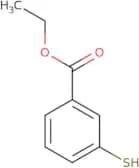
CAS:Ethyl 3-sulfanylbenzoate is a potent inhibitor of cytosolic phospholipase A2 (cPLA2). This enzyme is involved in the production of arachidonic acid, which is a precursor for prostaglandins and leukotrienes. Inhibition of cPLA2 prevents the release of arachidonic acid, reducing the production of inflammatory molecules. Ethyl 3-sulfanylbenzoate has been shown to inhibit platelet aggregation and reduce thrombus formation in vitro. The activity of this drug can be attributed to its substitution with electron-donating groups at the ortho position on the phenyl ring.Formula:C9H10O2SPurity:Min. 95%Molecular weight:182.24 g/molMethyl 2-hydroxy-3-methylpentanoate
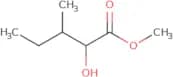
CAS:Methyl 2-hydroxy-3-methylpentanoate is a volatile chemical compound that is found in the essential oil of guajava fruit. It is an ester of a hydroxycarboxylic acid and an alcohol. This chemical has been identified by magnetic resonance spectroscopy and was found to be present in the headspace of guava fruit. Methyl 2-hydroxy-3-methylpentanoate interacts with the hydroxyl group of benzoic acid to form methyl benzoate, which is used as a food preservative. This compound can also be found in other plants such as psidium guajava, which is native to South America and has been used for centuries as a natural remedy for various ailments.Formula:C7H14O3Purity:Min. 95%Molecular weight:146.18 g/molethyl 3-bromoprop-2-ynoate
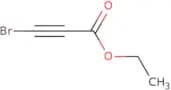
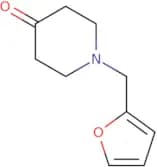
CAS:Ethyl 3-bromoprop-2-ynoate is a synthetic chemical that can be used as an ethynylation reagent in cross-coupling reactions. This compound has been shown to efficiently catalyze both Pd(0)- and Cu(I)-catalyzed cross-couples with good yields of the desired products. The stereochemistry of this reaction is not affected by the nature of the substrate, and it does not require any protecting groups. Ethyl 3-bromoprop-2-ynoate is useful for the synthesis of natural products such as amino acids, amides, and carbohydrates.Formula:C5H5BrO2Purity:Min. 95%Molecular weight:177 g/mol1-(2-Furylmethyl)-4-piperidinone
CAS:Versatile small molecule scaffold
Formula:C10H13NO2Purity:Min. 95%Molecular weight:179.22 g/mol1-(Pyridin-3-ylmethyl)piperidin-4-one
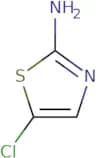
CAS:Versatile small molecule scaffoldFormula:C11H14N2OPurity:Min. 95%Molecular weight:190.24 g/mol5-Chloro-1,3-thiazol-2(3H)-imine
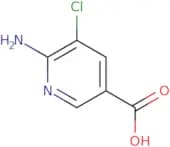
CAS:5-Chloro-1,3-thiazol-2(3H)-imine (CTA) is a mutagen with the ability to induce point mutations in DNA. It binds to sulfur, which can be found in proteins and nucleotides. CTA has been shown to cause substitutions in Salmonella typhimurium TA100 and E. coli strains TA98 and TA1535. This compound has also been shown to have mutagenic activity against the organisms Escherichia coli and Pneumoniae, although it is not active against Ta10 or Ta1537.Formula:C3H3ClN2SPurity:Min. 95%Molecular weight:134.59 g/mol6-Amino-5-chloronicotinic acid
CAS:Versatile small molecule scaffoldFormula:C6H5ClN2O2Purity:Min. 95%Molecular weight:172.57 g/molEthyl 2-{[(oxolan-2-yl)methyl]amino}acetate
CAS:Versatile small molecule scaffoldFormula:C9H17NO3Purity:Min. 95%Molecular weight:187.24 g/mol[1-(4-Methoxy-phenyl)-ethyl]-methyl-amine hydrochloride
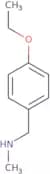
CAS:Versatile small molecule scaffoldFormula:C10H15NOPurity:Min. 95%Molecular weight:165.23 g/molN-(4-Ethoxybenzyl)-n-methylamine
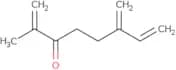
CAS:The chemical structure of N-(4-ethoxybenzyl)-n-methylamine is C(O)NHCH3. It is a colorless liquid with a boiling point of 176°C and a melting point of -5°C. N-(4-ethoxybenzyl)-n-methylamine is soluble in water, ethanol, ether, acetone and benzene. The molecule contains carboxylic acid groups that can interact with nonpolar environments. Hydrogen bonds are also possible between the molecule and water molecules. This product has been used experimentally as a screening tool for interactions with other molecules. The chemical formula of this product is C8H14N2O2 and it has an empirical formula weight of 174.22 g/mol.Formula:C10H15NOPurity:Min. 95%Molecular weight:165.23 g/mol2-Methyl-6-methylideneocta-1,7-dien-3-one
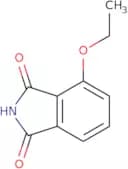
CAS:2-Methyl-6-methylideneocta-1,7-dien-3-one is a chemical substance that has been found to act as an attractant for insects. In assays, it was found to have significant chemotactic activity and also to be able to damage the wings of flies in both damaged and undamaged states. It has been shown that 2-methyl-6-methylideneocta-1,7-dien-3-one interacts with solid phase microextraction (SPME) fibers, which can be used for extracting the compound from samples. The chemical has been found to be active against Diptera and Lepidoptera species. 2MEMO can be used in treatments for controlling insects in agriculture or industry by attracting them and damaging their wings or preventing them from flying.Formula:C10H14OPurity:Min. 95%Molecular weight:150.22 g/mol4-Ethoxy-2,3-dihydro-1H-isoindole-1,3-dione
CAS:Versatile small molecule scaffold
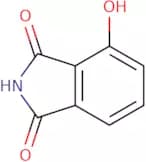
Formula:C10H9NO3Purity:Min. 95%Molecular weight:191.18 g/mol4-Hydroxy-2,3-dihydro-1H-isoindole-1,3-dione
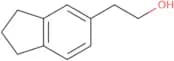
CAS:4-Hydroxy-2,3-dihydro-1H-isoindole-1,3-dione is a nonpolymeric compound that has been shown to be an inhibitor of tumor growth. It inhibits the proliferation of tumor cells by binding to the hydroxyl group on the cell surface and inducing apoptosis. 4-Hydroxy-2,3-dihydro-1H-isoindole-1,3-dione also prevents the formation of inflammatory bowel disease in mice. This drug also absorbs infrared light and can be used as an absorber for infrared radiation.Formula:C8H5NO3Purity:Min. 95%Molecular weight:163.13 g/mol2-(2,3-Dihydro-1H-inden-5-yl)ethan-1-ol
CAS:Versatile small molecule scaffoldFormula:C11H14OPurity:Min. 95%Molecular weight:162.23 g/mol1-(1-Benzofuran-2-carbonyl)piperazine
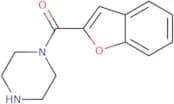
CAS:Versatile small molecule scaffold
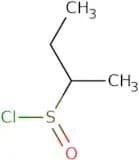
Formula:C13H14N2O2Purity:Min. 95%Molecular weight:230.26 g/molButane-2-sulfinic chloride
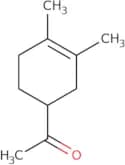
CAS:Versatile small molecule scaffoldFormula:C4H9ClOSPurity:Min. 95%Molecular weight:140.63 g/mol1-(3,4-Dimethylcyclohex-3-en-1-yl)ethan-1-one
CAS:Versatile small molecule scaffoldFormula:C10H16OPurity:Min. 95%Molecular weight:152.23 g/molMethyl 4-amino-3,5-dichlorobenzoate
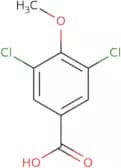
CAS:Methyl 4-amino-3,5-dichlorobenzoate is a reactive intermediate that is obtained by chlorination of 4-hydroxybenzoic acid. It is used in the synthesis of various esters and salts, such as 4-amino-3,5-dichlorobenzoic acid and methyl 3,5-dichlorobenzoyl chloride. This compound can be synthesized by saponifying the ester with stannous chloride or by hydrolyzing the ester with hydrochloric acid. The spectra of Methyl 4-amino-3,5-dichlorobenzoate are consistent with those reported for other compounds of this type. The chlorine atoms in Methyl 4-amino-3,5-dichlorobenzoate have a Cl to C ratio of 1:1.Formula:C8H7Cl2NO2Purity:Min. 95%Molecular weight:220.05 g/mol3,5-Dichloro-4-methoxybenzaldehyde
CAS:3,5-Dichloro-4-methoxybenzaldehyde is a white crystalline solid that is soluble in water. It has been shown to inhibit the activity of oxidase enzymes, which are involved in the degradation of chlorinated hydrocarbons and other toxic substances. The compound also exhibits potent cytotoxicity against various cancer cells, including melanoma cells. 3,5-Dichloro-4-methoxybenzaldehyde is used as an intermediate for the production of vanillyl alcohol (VAN) and 4-methoxybenzaldehyde (MMB). It reacts with chlorine to produce chlorohydroxyl compounds that are used as pesticides or disinfectants. 3,5-Dichloro-4-methoxybenzaldehyde has been shown to be effective against plant diseases such as powdery mildew and black spot on roses. The compound is also used in the production of methyl cinnamate (MC) by reaction
Formula:C8H6Cl2O2Purity:Min. 95%Molecular weight:205.04 g/mol
![4-{[(Diaminomethylidene)amino]methyl}benzoic acid](/_next/image/?url=https%3A%2Fstatic.cymitquimica.com%2Fproducts%2F3D%2Fthumb-webp%2FRBA65187.webp&w=3840&q=75)


![Ethyl 2-{[(oxolan-2-yl)methyl]amino}acetate](/_next/image/?url=https%3A%2Fstatic.cymitquimica.com%2Fproducts%2F3D%2Fthumb-webp%2FRBA68192.webp&w=3840&q=75)
![[1-(4-Methoxy-phenyl)-ethyl]-methyl-amine hydrochloride](/_next/image/?url=https%3A%2Fstatic.cymitquimica.com%2Fproducts%2F3D%2Fthumb-webp%2FRBA68413.webp&w=3840&q=75)