Building Blocks
This section contains fundamental products for the synthesis of organic and biological compounds. Building blocks are the essential starting materials used to construct complex molecules through various chemical reactions. They play a critical role in drug discovery, material science, and chemical research. At CymitQuimica, we offer a diverse range of high-quality building blocks to support your innovative research and industrial projects, ensuring you have the essential components for successful synthesis.
Subcategories of "Building Blocks"
- Boronic Acids & Boronic Acid Derivatives(5,756 products)
- Chiral Building Blocks(1,242 products)
- Hydrocarbon Building Blocks(6,095 products)
- Organic Building Blocks(61,038 products)
Found 196817 products of "Building Blocks"
Sort by
Purity (%)
0
100
|
0
|
50
|
90
|
95
|
100
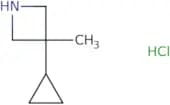
3-Cyclopropyl-3-methylazetidine hydrochloride
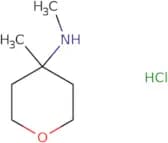
CAS:<p>Versatile small molecule scaffold</p>Formula:C7H14ClNPurity:Min. 95%Molecular weight:147.6 g/molN,4-Dimethyloxan-4-amine hydrochloride
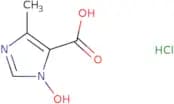
CAS:<p>Versatile small molecule scaffold</p>Formula:C7H16ClNOPurity:Min. 95%Molecular weight:165.7 g/mol1-Hydroxy-4-methyl-1H-imidazole-5-carboxylic acid hydrochloride
CAS:<p>Versatile small molecule scaffold</p>Formula:C5H7ClN2O3Purity:Min. 95%Molecular weight:178.6 g/mol2-Fluoro-5-[(pyrrolidin-3-yl)methyl]benzonitrile hydrochloride
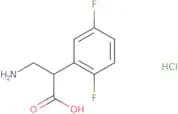
CAS:<p>Versatile small molecule scaffold</p>Formula:C12H14ClFN2Purity:Min. 95%Molecular weight:240.7 g/mol3-Amino-2-(2,5-difluorophenyl)propanoic acid hydrochloride
CAS:<p>Versatile small molecule scaffold</p>Formula:C9H10ClF2NO2Purity:Min. 95%Molecular weight:237.6 g/mol3λ⁴-Thia-7-azabicyclo[3.3.1]nonan-3-one hydrochloride
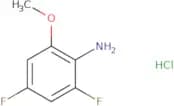
CAS:<p>Versatile small molecule scaffold</p>Formula:C7H14ClNOSPurity:Min. 95%Molecular weight:195.7 g/mol2,4-Difluoro-6-methoxyaniline hydrochloride
CAS:<p>Versatile small molecule scaffold</p>Formula:C7H8ClF2NOPurity:Min. 95%Molecular weight:195.59 g/mol3-Methyl-1H,2H,3H-pyrrolo[3,2-b]pyridine
CAS:<p>Versatile small molecule scaffold</p>Formula:C8H10N2Purity:Min. 95%Molecular weight:134.2 g/moltert-Butyl N-[1-(1-imino-1-oxo-1λ⁶-thian-4-yl)cyclopropyl]carbamate
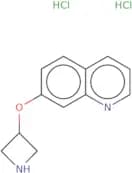
CAS:<p>Versatile small molecule scaffold</p>Formula:C13H24N2O3SPurity:Min. 95%Molecular weight:288.4 g/mol7-(Azetidin-3-yloxy)quinoline dihydrochloride
CAS:<p>Versatile small molecule scaffold</p>Formula:C12H14Cl2N2OPurity:Min. 95%Molecular weight:273.2 g/mol2',3'-Dihydro-1'H-spiro[oxane-4,4'-pyrrolo[1,2-a]pyrazine]
CAS:<p>Versatile small molecule scaffold</p>Formula:C11H16N2OPurity:Min. 95%Molecular weight:192.3 g/mol{2-Benzyl-8-oxa-2-azaspiro[4.5]decan-4-yl}methanamine dihydrochloride
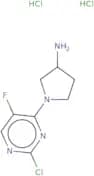
CAS:<p>Versatile small molecule scaffold</p>Formula:C16H26Cl2N2OPurity:Min. 95%Molecular weight:333.3 g/mol1-(2-Chloro-5-fluoropyrimidin-4-yl)pyrrolidin-3-amine dihydrochloride
CAS:<p>Versatile small molecule scaffold</p>Formula:C8H12Cl3FN4Purity:Min. 95%Molecular weight:289.6 g/mol7-Benzyl-7-azabicyclo[2.2.1]heptane-1-carboxylic acid hydrochloride
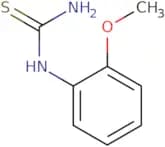
CAS:<p>Versatile small molecule scaffold</p>Formula:C14H18ClNO2Purity:Min. 95%Molecular weight:267.8 g/mol1-(2-Methoxyphenyl)-2-thiourea
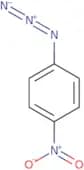
CAS:<p>1-(2-Methoxyphenyl)-2-thiourea is an organic compound. It is a white crystalline solid that is soluble in water and methanol. This molecule has a centrosymmetric structure, so it has no plane of symmetry. It has two hydrogen bonds, one intramolecular and one intermolecular. 1-(2-Methoxyphenyl)-2-thiourea can be extracted with organic solvents such as dichloromethane or chloroform. The molecules of this substance have hydrogen bonding interactions with other molecules, including benzene, dihedral angles of 60°, and orthorhombic crystals with space group Pbca.</p>Formula:CH3OC6H4NHCSNH2Purity:Min. 95%Molecular weight:182.24 g/mol1-Azido-4-nitrobenzene
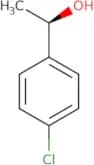
CAS:<p>1-Azido-4-nitrobenzene is a chemical compound with the molecular formula C6H5N3O2, which is derived from nitrobenzene. It has the ability to react with primary amines to form diarylamines and aziridination. 1-Azido-4-nitrobenzene has antiviral properties and can be used in the synthesis of a number of pharmaceuticals, such as chloramphenicol and zanamivir. The compound may also be used in the synthesis of dyes, explosives, and other products. 1-Azido-4-nitrobenzene reacts with chloride to produce carbon tetrachloride and nitrogen gas. This reaction can be used to make transfer reactions with other compounds, such as alkenes or ketones.</p>Formula:C6H4N4O2Purity:Min. 95%Color and Shape:PowderMolecular weight:164.12 g/mol(1R)-1-(4-Methoxyphenyl)ethan-1-ol
CAS:<p>(1R)-1-(4-Methoxyphenyl)ethan-1-ol (1R,2S)-(+)-N-methylbenzeneethanamine is a stereoselective and selective reagent for the conversion of l-phenylalanine to (2S,3S)-(+)-N-methylbenzeneethanamine. It is commonly used in the synthesis of the enantiopure amino acid l-amino acid derivatives. This compound has been shown to be an effective inhibitor of bacterial growth at high concentrations. The reaction rate increases with increasing temperature and substrate concentration. The cell membrane permeability is higher than that of styrene, which makes this compound useful for the preparation of immobilized enzymes for carbonyl reduction reactions.</p>Formula:C9H12O2Purity:Min. 95%Molecular weight:152.19 g/mol[Dimethyl(oxo)-λ⁶-sulfanylidene]urea
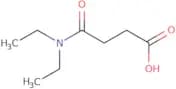
CAS:<p>Versatile small molecule scaffold</p>Formula:C3H8N2O2SPurity:Min. 95%Molecular weight:136.18 g/mol3-(Diethylcarbamoyl)propanoic acid
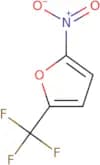
CAS:<p>3-(Diethylcarbamoyl)propanoic acid is a prodrug that is hydrolyzed in vivo to the active form, 3-diethylamino-2-propanol. This compound has analgesic and antiinflammatory properties due to its ability to inhibit prostaglandin synthesis. 3-(Diethylcarbamoyl)propanoic acid has been shown to be effective against ureaplasmas, mycoplasmas, chlamydia and some viruses. It also inhibits the replication of prions and parasites such as worms and flukes.</p>Formula:C8H15NO3Purity:Min. 95%Molecular weight:173.21 g/mol2-Nitro-5-(trifluoromethyl)furan
CAS:<p>Versatile small molecule scaffold</p>Formula:C5H2F3NO3Purity:Min. 95%Molecular weight:181.07 g/mol

![2-Fluoro-5-[(pyrrolidin-3-yl)methyl]benzonitrile hydrochloride](/_next/image/?url=https%3A%2Fstatic.cymitquimica.com%2Fproducts%2F3D%2Fthumb-webp%2FAVD27447.webp&w=3840&q=75)
![3λ⁴-Thia-7-azabicyclo[3.3.1]nonan-3-one hydrochloride](/_next/image/?url=https%3A%2Fstatic.cymitquimica.com%2Fproducts%2F3D%2Fthumb-webp%2FAVD27452.webp&w=3840&q=75)
![3-Methyl-1H,2H,3H-pyrrolo[3,2-b]pyridine](/_next/image/?url=https%3A%2Fstatic.cymitquimica.com%2Fproducts%2F3D%2Fthumb-webp%2FAVD27460.webp&w=3840&q=75)
![tert-Butyl N-[1-(1-imino-1-oxo-1λ⁶-thian-4-yl)cyclopropyl]carbamate](/_next/image/?url=https%3A%2Fstatic.cymitquimica.com%2Fproducts%2F3D%2Fthumb-webp%2FAVD27462.webp&w=3840&q=75)
![2',3'-Dihydro-1'H-spiro[oxane-4,4'-pyrrolo[1,2-a]pyrazine]](/_next/image/?url=https%3A%2Fstatic.cymitquimica.com%2Fproducts%2F3D%2Fthumb-webp%2FAVD27473.webp&w=3840&q=75)
![{2-Benzyl-8-oxa-2-azaspiro[4.5]decan-4-yl}methanamine dihydrochloride](/_next/image/?url=https%3A%2Fstatic.cymitquimica.com%2Fproducts%2F3D%2Fthumb-webp%2FAVD27476.webp&w=3840&q=75)
![7-Benzyl-7-azabicyclo[2.2.1]heptane-1-carboxylic acid hydrochloride](/_next/image/?url=https%3A%2Fstatic.cymitquimica.com%2Fproducts%2F3D%2Fthumb-webp%2FAVD27481.webp&w=3840&q=75)
![[Dimethyl(oxo)-λ⁶-sulfanylidene]urea](/_next/image/?url=https%3A%2Fstatic.cymitquimica.com%2Fproducts%2F3D%2Fthumb-webp%2FBAA52015.webp&w=3840&q=75)