


Building Blocks
This section contains fundamental products for the synthesis of organic and biological compounds. Building blocks are the essential starting materials used to construct complex molecules through various chemical reactions. They play a critical role in drug discovery, material science, and chemical research. At CymitQuimica, we offer a diverse range of high-quality building blocks to support your innovative research and industrial projects, ensuring you have the essential components for successful synthesis.
Subcategories of "Building Blocks"
- Boronic Acids & Boronic Acid Derivatives(5,756 products)
- Chiral Building Blocks(1,242 products)
- Hydrocarbon Building Blocks(6,095 products)
- Organic Building Blocks(61,038 products)
Found 196817 products of "Building Blocks"
Sort by
Purity (%)
0
100
|
0
|
50
|
90
|
95
|
100
3-[(4-Methoxyphenoxy)methyl]benzoic acid
CAS:<p>Versatile small molecule scaffold</p>Formula:C15H14O4Purity:Min. 95%Molecular weight:258.27 g/mol5-Bromobenzo[d]isothiazol-3(2H)-one
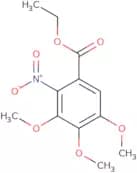
CAS:<p>Versatile small molecule scaffold</p>Formula:C7H4BrNOSPurity:Min. 95%Molecular weight:230.08 g/molEthyl 3,4,5-trimethoxy-2-nitrobenzoate
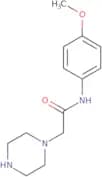
CAS:<p>Versatile small molecule scaffold</p>Formula:C12H15NO7Purity:Min. 95%Molecular weight:285.25 g/molN-(4-Methoxyphenyl)-2-(piperazin-1-yl)acetamide
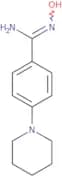
CAS:<p>Versatile small molecule scaffold</p>Formula:C13H19N3O2Purity:Min. 95%Molecular weight:249.31 g/molN'-Hydroxy-4-(piperidin-1-yl)benzene-1-carboximidamide
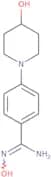
CAS:<p>Versatile small molecule scaffold</p>Formula:C12H17N3OPurity:Min. 95%Molecular weight:219.28 g/molN'-Hydroxy-4-(4-hydroxypiperidin-1-yl)benzene-1-carboximidamide
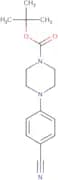
CAS:<p>Versatile small molecule scaffold</p>Formula:C12H17N3O2Purity:Min. 95%Molecular weight:235.28 g/moltert-Butyl 4-(4-cyanophenyl)tetrahydro-1(2H)-pyrazinecarboxylate
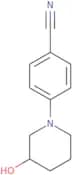
CAS:<p>Versatile small molecule scaffold</p>Formula:C16H21N3O2Purity:Min. 95%Molecular weight:287.36 g/mol4-(3-Hydroxypiperidin-1-yl)benzonitrile
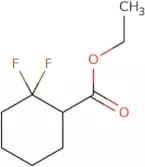
CAS:<p>Versatile small molecule scaffold</p>Formula:C12H14N2OPurity:Min. 95%Molecular weight:202.25 g/molEthyl 2,2-Difluorocyclohexanecarboxylate
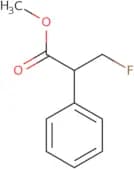
CAS:<p>Versatile small molecule scaffold</p>Formula:C9H14F2O2Purity:Min. 95%Molecular weight:192.21 g/molMethyl 3-fluoro-2-phenylpropanoate
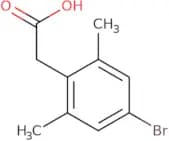
CAS:<p>Methyl 3-fluoro-2-phenylpropanoate is an organic compound that belongs to the group of esters. It is a colorless liquid. The compound can be prepared by reaction of 3-fluoro-2-phenylacetonitrile with methyl iodide and diethylaminosulfur trifluoride in a solvent such as ether or tetrahydrofuran. The elimination reaction may be anomalous, depending on the solvents used in the reaction. Methyl 3-fluoro-2-phenylpropanoate has been shown to be an anchimeric and isomeric mixture with methyl 2-(4'-nitrophenyl)propanoate, which have different physical properties. The Methyl 3-fluoro-2-phenylpropanoate can also exist as two different aryl groups: methyl (3,5,6-)trifluoromethylbenzoate and methyl (</p>Formula:C10H11FO2Purity:Min. 95%Molecular weight:182.19 g/mol2-(4-Bromo-2,6-dimethylphenyl)acetic acid
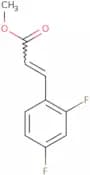
CAS:<p>Versatile small molecule scaffold</p>Formula:C10H11BrO2Purity:Min. 95%Molecular weight:243.1 g/molMethyl (2E)-3-(2,4-difluorophenyl)prop-2-enoate
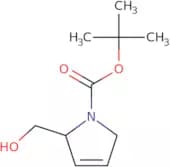
CAS:<p>Versatile small molecule scaffold</p>Formula:C10H8F2O2Purity:Min. 95%Molecular weight:198.17 g/moltert-Butyl 2-(hydroxymethyl)-2,5-dihydro-1H-pyrrole-1-carboxylate
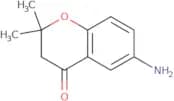
CAS:<p>Versatile small molecule scaffold</p>Formula:C10H17NO3Purity:Min. 95%Molecular weight:199.25 g/mol6-Amino-2,2-dimethyl-chroman-4-one
CAS:<p>6-Amino-2,2-dimethyl-chroman-4-one is a diazonium salt that belongs to the class of chromanones. It has been shown to be effective in inhibiting the growth of fungi. This drug is a formylating agent that reacts with an electron donor and an electron acceptor, resulting in the formation of a formyl group. 6-Amino-2,2-dimethyl-chroman-4-one can be used as a synthetic intermediate for producing paracetamol.</p>Formula:C11H13NO2Purity:Min. 95%Molecular weight:191.23 g/mol10-Azidodecanoic acid
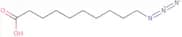
CAS:<p>10-Azidodecanoic acid is a fatty acid that is activated by the addition of trehalose. It is used as a model protein to study peptide binding and bioconjugate chemistry. The compound has been shown to be able to react with cyclooctyne, which can then be immobilized on surfaces. This allows for the use of 10-azidodecanoic acid in fluorescent assays and in the detection of physiological levels of fatty acids.</p>Formula:C10H19N3O2Purity:Min. 95%Color and Shape:Clear LiquidMolecular weight:213.28 g/mol2-(4-Phenoxybenzamido)benzoic acid
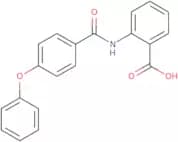
CAS:<p>Versatile small molecule scaffold</p>Formula:C20H15NO4Purity:Min. 95%Molecular weight:333.3 g/mol(2R)-3-Cyclohexyl-2-methylpropanoic acid
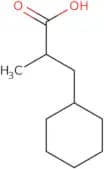
CAS:<p>Versatile small molecule scaffold</p>Formula:C10H18O2Purity:Min. 95%Molecular weight:170.25 g/mol5-(1-Chloroethyl)-1-methyl-1H-1,2,3,4-tetrazole
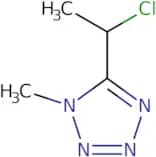
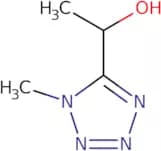
CAS:<p>Versatile small molecule scaffold</p>Formula:C4H7ClN4Purity:Min. 95%Molecular weight:146.58 g/mol1-(1-Methyl-1H-1,2,3,4-tetrazol-5-yl)ethan-1-ol
CAS:<p>Versatile small molecule scaffold</p>Formula:C4H8N4OPurity:Min. 95%Molecular weight:128.13 g/mol5-Chloro-3-thiophen-2-yl-[1,2,4]thiadiazole
CAS:<p>Versatile small molecule scaffold</p>Formula:C6H3ClN2S2Purity:Min. 95%Molecular weight:202.69 g/mol
![3-[(4-Methoxyphenoxy)methyl]benzoic acid](/_next/image/?url=https%3A%2Fstatic.cymitquimica.com%2Fproducts%2F3D%2Fthumb-webp%2FLHA58455.webp&w=3840&q=75)

![5-Bromobenzo[d]isothiazol-3(2H)-one](/_next/image/?url=https%3A%2Fstatic.cymitquimica.com%2Fproducts%2F3D%2Fthumb-webp%2FLHA58479.webp&w=3840&q=75)
![5-Chloro-3-thiophen-2-yl-[1,2,4]thiadiazole](/_next/image/?url=https%3A%2Fstatic.cymitquimica.com%2Fproducts%2F3D%2Fthumb-webp%2FLHA98241.webp&w=3840&q=75)