Building Blocks
This section contains fundamental products for the synthesis of organic and biological compounds. Building blocks are the essential starting materials used to construct complex molecules through various chemical reactions. They play a critical role in drug discovery, material science, and chemical research. At CymitQuimica, we offer a diverse range of high-quality building blocks to support your innovative research and industrial projects, ensuring you have the essential components for successful synthesis.
Subcategories of "Building Blocks"
- Boronic Acids & Boronic Acid Derivatives(5,756 products)
- Chiral Building Blocks(1,242 products)
- Hydrocarbon Building Blocks(6,095 products)
- Organic Building Blocks(61,055 products)
Found 199650 products of "Building Blocks"
Sort by
Purity (%)
0
100
|
0
|
50
|
90
|
95
|
100
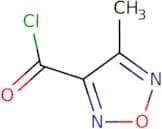
4-Methyl-1,2,5-oxadiazole-3-carbonyl chloride
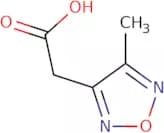
CAS:<p>Versatile small molecule scaffold</p>Formula:C4H3ClN2O2Purity:Min. 95%Molecular weight:146.53 g/mol(4-Methyl-furazan-3-yl)-acetic acid
CAS:<p>Versatile small molecule scaffold</p>Formula:C5H6N2O3Purity:Min. 95%Molecular weight:142.1 g/mol1-Cyanobenzotriazole
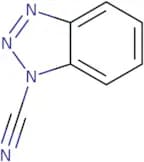
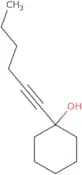
CAS:<p>1-Cyanobenzotriazole is a labile and reactive compound that has been used as a reagent in organic synthesis, due to its nucleophilic properties. 1-Cyanobenzotriazole can be used in the elimination reactions of amines or as a coupling agent for the formation of nitriles from terminal alkynes. The compound has been used as an analytical method for measuring the concentration of protein, nucleic acid and peptide bonds. 1-Cyanobenzotriazole is also used in the preparation of biomolecules such as proteins, peptides, and oligosaccharides.</p>Formula:C7H4N4Purity:Min. 95%Molecular weight:144.13 g/mol1-(Hex-1-yn-1-yl)cyclohexan-1-ol
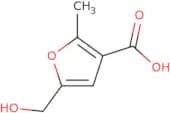
CAS:<p>Versatile small molecule scaffold</p>Formula:C12H20OPurity:Min. 95%Molecular weight:180.29 g/mol5-(Hydroxymethyl)-2-methylfuran-3-carboxylic acid
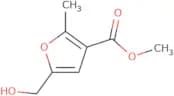
CAS:<p>Versatile small molecule scaffold</p>Formula:C7H8O4Purity:Min. 95%Molecular weight:156.14 g/molMethyl 5-(hydroxymethyl)-2-methylfuran-3-carboxylate
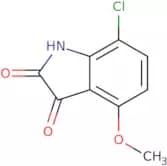
CAS:<p>Versatile small molecule scaffold</p>Formula:C8H10O4Purity:Min. 95%Molecular weight:170.16 g/mol7-Chloro-4-methoxyindoline-2,3-dione
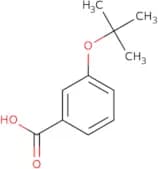
CAS:<p>Versatile small molecule scaffold</p>Formula:C9H6ClNO3Purity:Min. 95%Molecular weight:211.6 g/mol3-(tert-Butoxy)benzenecarboxylic acid
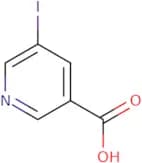
CAS:<p>Versatile small molecule scaffold</p>Formula:C11H14O3Purity:Min. 95%Molecular weight:194.23 g/mol5-iodopyridine-3-carboxylic acid
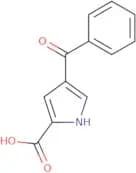
CAS:<p>5-Iodopyridine-3-carboxylic acid is a monoclonal antibody that binds to the epidermal growth factor receptor. It is used in vitro and in vivo as a tool for identifying the epidermal growth factor receptor and its interaction with other proteins. 5-Iodopyridine-3-carboxylic acid has been shown to have high affinity for the epidermal growth factor receptor, and it can be used to identify the presence of this receptor on cells or tissues. The compound has also been conjugated to different molecules, such as carboxylates, which can be used to study their effects on cell uptake.</p>Formula:C6H4INO2Purity:Min. 95%Molecular weight:249 g/mol4-Benzoyl-1H-pyrrole-2-carboxylic acid
CAS:<p>Versatile small molecule scaffold</p>Formula:C12H9NO3Purity:Min. 95%Molecular weight:215.2 g/mol1H,2H,3H,4H,7H,8H-Pyrido[2,3-d]pyridazin-8-one
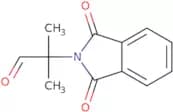
CAS:<p>Versatile small molecule scaffold</p>Formula:C7H9N3OPurity:Min. 95%Molecular weight:151.17 g/mol2-(1,3-Dioxo-2,3-dihydro-1H-isoindol-2-yl)-2-methylpropanal
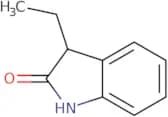
CAS:<p>Versatile small molecule scaffold</p>Formula:C12H11NO3Purity:Min. 95%Molecular weight:217.22 g/mol3-ethylindolin-2-one
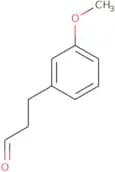
CAS:<p>3-Ethylindolin-2-one is a synthetic compound that has been shown to be able to alkylate olefins. It is not yet known what the biological function of 3-ethylindolin-2-one might be. It has been found in leaves, but its presence there is not well understood. The reaction of 3-ethylindolin-2-one with amines gives the corresponding amides, while acylation reactions with alcohols yield esters and other compounds. The addition of 3-ethylindolin-2-one to benzene or butyllithium results in the formation of a new ring system containing three carbons and two nitrogens.</p>Formula:C10H11NOPurity:Min. 95%Molecular weight:161.2 g/mol3-(3-Methoxyphenyl)propionaldehyde
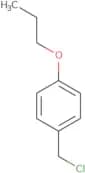
CAS:<p>3-(3-Methoxyphenyl)propionaldehyde is a ligand that interacts with the mosquito Aedes aegypti. It has been shown to be orally active and has an affinity for the interaction site on the mosquito's olfactory receptor, which is responsible for detecting odors. 3-(3-Methoxyphenyl)propionaldehyde modulates this receptor, thereby interfering with the mosquito's ability to detect certain odors. It is also known to have an affinity for trypsin and collagen and can be used as a potential drug in treating breast cancer.</p>Formula:C10H12O2Purity:Min. 95%Molecular weight:164.2 g/mol1-(Chloromethyl)-4-propoxybenzene
CAS:<p>Versatile small molecule scaffold</p>Formula:C10H13ClOPurity:Min. 95%Molecular weight:184.66 g/mol4-chlorobenzo[4,5]thieno[2,3-d]pyrimidine
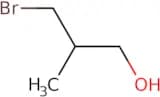
CAS:<p>Versatile small molecule scaffold</p>Formula:C10H5ClN2SPurity:Min. 95%Molecular weight:220.67 g/mol3-Bromo-2-methylpropan-1-ol
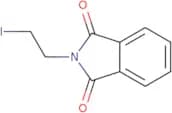
CAS:<p>3-Bromo-2-methylpropan-1-ol is a chiral, neurotoxic alcohol. It has been shown to be a precursor for the synthesis of neurotrophic analogues, which are compounds that help maintain the structure and function of neurons, such as 3-bromo-2-methylpropanal (BMPA) and 3-bromoacetophenone. The enantiomers of BMPA have different effects on fetal rat cerebral neuronal cells. One enantiomer inhibits the growth of neurons, while the other promotes their growth. These differences may be related to their optical activity: one enantiomer is active when present in the form of left circularly polarized light and the other is active in right circularly polarized light.</p>Formula:C4H9BrOPurity:Min. 95%Molecular weight:153.02 g/mol2-(2-Iodoethyl)-2,3-dihydro-1H-isoindole-1,3-dione
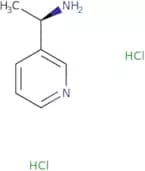
CAS:<p>2-(2-Iodoethyl)-2,3-dihydro-1H-isoindole-1,3-dione is a crystalline compound that is an n-substituted derivative of phthalimide. It has been shown to be effective for the treatment of tuberculosis. This drug binds to DNA and inhibits transcription and replication. 2-(2-Iodoethyl)-2,3-dihydro-1H-isoindole-1,3-dione also inhibits bacterial growth by binding to RNA polymerase.</p>Formula:C10H8INO2Purity:Min. 95%Molecular weight:301.08 g/mol(R)-1-(Pyridin-3-yl)ethan-1-amine dihydrochloride
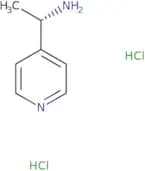
CAS:<p>Versatile small molecule scaffold</p>Formula:C7H10N2·2HClPurity:Min. 95%Molecular weight:122.17 g/mol(S)-1-(Pyridin-4-yl)ethanamine diHCl ee
CAS:<p>Versatile small molecule scaffold</p>Formula:C7H12Cl2N2Purity:Min. 95%Molecular weight:195.09 g/mol

![1H,2H,3H,4H,7H,8H-Pyrido[2,3-d]pyridazin-8-one](/_next/image/?url=https%3A%2Fstatic.cymitquimica.com%2Fproducts%2F3D%2Fthumb-webp%2FQAA37578.webp&w=3840&q=75)
![4-chlorobenzo[4,5]thieno[2,3-d]pyrimidine](/_next/image/?url=https%3A%2Fstatic.cymitquimica.com%2Fproducts%2F3D%2Fthumb-webp%2FQBA14292.webp&w=3840&q=75)