Building Blocks
This section contains fundamental products for the synthesis of organic and biological compounds. Building blocks are the essential starting materials used to construct complex molecules through various chemical reactions. They play a critical role in drug discovery, material science, and chemical research. At CymitQuimica, we offer a diverse range of high-quality building blocks to support your innovative research and industrial projects, ensuring you have the essential components for successful synthesis.
Subcategories of "Building Blocks"
- Boronic Acids & Boronic Acid Derivatives(5,756 products)
- Chiral Building Blocks(1,242 products)
- Hydrocarbon Building Blocks(6,093 products)
- Organic Building Blocks(60,522 products)
Found 195533 products of "Building Blocks"
Sort by
Purity (%)
0
100
|
0
|
50
|
90
|
95
|
100
3a,4,5,6,7,7a-Hexahydro-1,3-benzothiazol-2-amine
CAS:<p>Versatile small molecule scaffold</p>Formula:C7H12N2SPurity:Min. 95%Molecular weight:156.2 g/mol3-[(2-Methylpropyl)sulfanyl]propan-1-amine
CAS:<p>Versatile small molecule scaffold</p>Formula:C7H17NSPurity:Min. 95%Molecular weight:147.28 g/mol(7-Chloroquinolin-8-yl)methanol
CAS:<p>Versatile small molecule scaffold</p>Formula:C10H8ClNOPurity:Min. 95%Molecular weight:193.63 g/mol[3-(Dimethylamino)propyl](2-methoxyethyl)amine
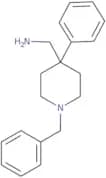
CAS:<p>Versatile small molecule scaffold</p>Formula:C8H20N2OPurity:Min. 95%Molecular weight:160.26 g/mol(1-Benzyl-4-phenylpiperidin-4-yl)methanamine
CAS:<p>Versatile small molecule scaffold</p>Formula:C19H24N2Purity:Min. 95%Molecular weight:280.41 g/molrac-(1S,3S)-3-Aminocyclobutane-1-carboxamide hydrochloride
CAS:<p>Versatile small molecule scaffold</p>Formula:C5H11ClN2OPurity:Min. 95%Molecular weight:150.61 g/moltrans-3-Aminocyclobutanecarboxylic acid hydrochloride
CAS:<p>Versatile small molecule scaffold</p>Formula:C5H10ClNO2Purity:Min. 95%Molecular weight:151.59 g/mol3-[4-(Benzyloxy)phenyl]prop-2-enal
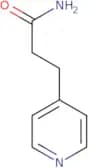
CAS:<p>Versatile small molecule scaffold</p>Formula:C16H14O2Purity:Min. 95%Molecular weight:238.28 g/mol3-(4-Pyridyl)propanamide
CAS:<p>Versatile small molecule scaffold</p>Formula:C8H10N2OPurity:Min. 95%Molecular weight:150.18 g/mol2-Iodoprop-2-en-1-ol
CAS:<p>Versatile small molecule scaffold</p>Formula:C3H5IOPurity:Min. 95%Molecular weight:183.98 g/molMethyl-(4-methylsulfanyl-benzyl)-amine
CAS:<p>Versatile small molecule scaffold</p>Formula:C9H13NSPurity:Min. 95%Molecular weight:167.27 g/mol[4-(Phenylsulfanyl)phenyl]methanamine
CAS:<p>Versatile small molecule scaffold</p>Formula:C13H13NSPurity:Min. 95%Molecular weight:215.32 g/mol4-Hydroxy-2-methoxybenzonitrile
CAS:<p>Versatile small molecule scaffold</p>Formula:C8H7NO2Purity:Min. 95%Molecular weight:149.15 g/mol{2-[(Diethylamino)methyl]phenyl}methanamine
CAS:<p>Versatile small molecule scaffold</p>Formula:C12H20N2Purity:Min. 95%Molecular weight:192.3 g/mol{4-[(Diethylamino)methyl]phenyl}methanamine
CAS:<p>Versatile small molecule scaffold</p>Formula:C12H20N2Purity:Min. 95%Molecular weight:192.3 g/mol1-Oxa-4,9-diazaspiro[5.5]undecan-3-one
CAS:<p>1-Oxa-4,9-diazaspiro[5.5]undecan-3-one is a monoamine inhibitor that has been shown to be an effective treatment for disease conditions such as Parkinson's disease. It inhibits the activity of monoamine oxidase (MAO) and prevents it from breaking down monoamines in the brain. MAO inhibitors have been shown to be effective in treating Parkinson's disease by restoring the balance of neurotransmitters in the brain. 1-Oxa-4,9-diazaspiro[5.5]undecan-3-one is also capable of binding to other receptors involved in modulating neuronal activity, such as serotonin and dopamine receptors.</p>Formula:C8H14N2O2Purity:Min. 95%Molecular weight:170.21 g/mol2-Ethyl-1H-imidazole-4-carboxylic acid
CAS:<p>2-Ethyl-1H-imidazole-4-carboxylic acid is a weak organic acid that is commonly used as an acid catalyst in pharmaceutical formulations. This compound is also used to produce hippuric acid, which is a preservative. The ionization of 2-ethyl-1H-imidazole-4-carboxylic acid depends on its pH. At acidic pH, it has a positive charge and at a neutral pH it has no charge. 2-Ethyl-1H-imidazole-4-carboxylic acid is also an anion at acidic pH and can form complexes with other anions such as citric or phosphoric acids. The functional theory for the formation of these complexes suggest that the carboxyl group coordinates with hydrogen atoms from the other anions, forming covalent bonds.</p>Formula:C6H8N2O2Purity:Min. 95%Molecular weight:140.14 g/mol2,4-Dimethylquinolin-6-amine
CAS:<p>Versatile small molecule scaffold</p>Formula:C11H12N2Purity:Min. 95%Molecular weight:172.23 g/mol1-(4-Formylphenoxy)-N,N-dimethylmethanethioamide
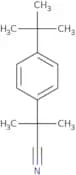
CAS:<p>Versatile small molecule scaffold</p>Formula:C10H11NO2SPurity:Min. 95%Molecular weight:209.27 g/mol2-(4-tert-Butylphenyl)-2-methylpropanenitrile
CAS:<p>Versatile small molecule scaffold</p>Formula:C14H19NPurity:Min. 95%Molecular weight:201.3 g/mol


![3-[(2-Methylpropyl)sulfanyl]propan-1-amine](/_next/image/?url=https%3A%2Fstatic.cymitquimica.com%2Fproducts%2F3D%2Fthumb-webp%2FJDA15546.webp&w=3840&q=75)

amine](/_next/image/?url=https%3A%2Fstatic.cymitquimica.com%2Fproducts%2F3D%2Fthumb-webp%2FJDA17668.webp&w=3840&q=75)


![3-[4-(Benzyloxy)phenyl]prop-2-enal](/_next/image/?url=https%3A%2Fstatic.cymitquimica.com%2Fproducts%2F3D%2Fthumb-webp%2FJDA18453.webp&w=3840&q=75)


![[4-(Phenylsulfanyl)phenyl]methanamine](/_next/image/?url=https%3A%2Fstatic.cymitquimica.com%2Fproducts%2F3D%2Fthumb-webp%2FJDA21205.webp&w=3840&q=75)

![{2-[(Diethylamino)methyl]phenyl}methanamine](/_next/image/?url=https%3A%2Fstatic.cymitquimica.com%2Fproducts%2F3D%2Fthumb-webp%2FJDA22768.webp&w=3840&q=75)
![{4-[(Diethylamino)methyl]phenyl}methanamine](/_next/image/?url=https%3A%2Fstatic.cymitquimica.com%2Fproducts%2F3D%2Fthumb-webp%2FJDA22770.webp&w=3840&q=75)
![1-Oxa-4,9-diazaspiro[5.5]undecan-3-one](/_next/image/?url=https%3A%2Fstatic.cymitquimica.com%2Fproducts%2F3D%2Fthumb-webp%2FJDA24325.webp&w=3840&q=75)