Building Blocks
This section contains fundamental products for the synthesis of organic and biological compounds. Building blocks are the essential starting materials used to construct complex molecules through various chemical reactions. They play a critical role in drug discovery, material science, and chemical research. At CymitQuimica, we offer a diverse range of high-quality building blocks to support your innovative research and industrial projects, ensuring you have the essential components for successful synthesis.
Subcategories of "Building Blocks"
- Boronic Acids & Boronic Acid Derivatives(5,756 products)
- Chiral Building Blocks(1,242 products)
- Hydrocarbon Building Blocks(6,093 products)
- Organic Building Blocks(60,522 products)
Found 195533 products of "Building Blocks"
Sort by
Purity (%)
0
100
|
0
|
50
|
90
|
95
|
100
tert-Butylamino-acetic acid ethyl ester
CAS:<p>Versatile small molecule scaffold</p>Formula:C8H17NO2Purity:Min. 95%Molecular weight:159.23 g/mol2-{[(2,2,2-Trifluoroethoxy)carbonyl]amino}acetic acid
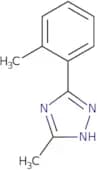
CAS:<p>Versatile small molecule scaffold</p>Formula:C5H6F3NO4Purity:Min. 95%Molecular weight:201.1 g/mol3-Methyl-5-(2-methylphenyl)-1H-1,2,4-triazole
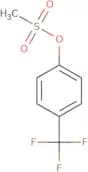
CAS:<p>Versatile small molecule scaffold</p>Formula:C10H11N3Purity:Min. 95%Molecular weight:173.21 g/mol4-(Trifluoromethyl)phenyl methanesulfonate
CAS:<p>Versatile small molecule scaffold</p>Formula:C8H7F3O3SPurity:Min. 95%Molecular weight:240.2 g/mol2-Ethyl-3-methylquinoxaline
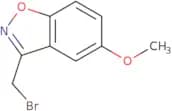
CAS:<p>Quinoxalines are a class of heterocyclic compounds that is structurally related to the more common amino acid, tryptophan. They are typically synthesized by modifications of the quinoxaline ring system with epoxide, amine, or carbonyl groups. Quinoxalines can be analyzed using many different techniques including gas chromatography-mass spectrometry, liquid chromatography-mass spectrometry, and nuclear magnetic resonance spectroscopy. The most common modification is the addition of an aminoguanidine group that is used to distinguish between 2-ethyl-3-methylquinoxaline and 3-ethyl-2-methylquinoxaline. The reaction time between glyoxal and aniline to produce 2-ethyl-3-methylquinoxaline can be optimized by adding potassium dichromate as a catalyst.</p>Formula:C11H12N2Purity:Min. 95%Molecular weight:172.23 g/mol3-(Bromomethyl)-5-methoxy-1,2-benzoxazole
CAS:<p>Versatile small molecule scaffold</p>Formula:C9H8BrNO2Purity:Min. 95%Molecular weight:242.07 g/mol2,6-Dimethyl-4-methoxybenzoic acid
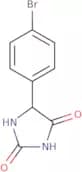
CAS:<p>Versatile small molecule scaffold</p>Formula:C10H12O3Purity:Min. 95%Molecular weight:180.2 g/mol5-(4-Bromophenyl)imidazolidine-2,4-dione
CAS:<p>Versatile small molecule scaffold</p>Formula:C9H7BrN2O2Purity:Min. 95%Molecular weight:255.07 g/mol2-[3-Bromo-4-(propan-2-yloxy)phenyl]acetonitrile
CAS:<p>Versatile small molecule scaffold</p>Formula:C11H12BrNOPurity:Min. 95%Molecular weight:254.12 g/molEthyl 3-[(5-hydroxypentyl)(methyl)amino]propanoate
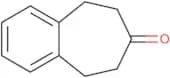
CAS:<p>Versatile small molecule scaffold</p>Formula:C11H23NO3Purity:Min. 95%Molecular weight:217.31 g/mol5,6,8,9-Tetrahydrobenzocyclohepten-7-one
CAS:<p>5,6,8,9-Tetrahydrobenzocyclohepten-7-one is a methylated analogue of benzocycloheptene. It is prepared by the reaction of dichlorocarbene (1) with 7-hydroxybenzocycloheptene (2). The deuterium isotope effect on the conformation of 5,6,8,9-tetrahydrobenzocyclohepten-7-one has been investigated using a spectroscopic technique. The reaction parameters have been optimized for this transformation to produce the desired product in high yield.</p>Formula:C11H12OPurity:Min. 95%Molecular weight:160.22 g/mol3-(Benzyloxy)propanehydrazide
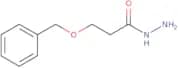
CAS:<p>Versatile small molecule scaffold</p>Formula:C10H14N2O2Purity:Min. 95%Molecular weight:194.23 g/mol2-[5-Oxo-1-(pyridin-2-yl)-2,5-dihydro-1H-pyrazol-3-yl]acetic acid
CAS:<p>Versatile small molecule scaffold</p>Formula:C10H9N3O3Purity:Min. 95%Molecular weight:219.2 g/mol3H,4H-Pyrido[3,2-d][1,2,3]triazin-4-one
CAS:<p>3H,4H-Pyrido[3,2-d][1,2,3]triazin-4-one is a heterocyclic compound that belongs to the group of endometriosis drugs. It has been shown to inhibit tyrosine kinase and thus has a proliferative effect on the skeleton. 3H,4H-Pyrido[3,2-d][1,2,3]triazin-4-one also has an antiangiogenic activity that prevents the formation of new blood vessels from pre-existing ones. This drug also inhibits tumor growth by blocking cell division and may cause cancerous cells to self destruct. 3H,4H-Pyrido[3,2-d][1,2,3]triazin-4-one can be used to treat symptom of endometriosis such as pain and infertility.</p>Formula:C6H4N4OPurity:Min. 95%Molecular weight:148.12 g/molEthyl 1H-pyrrole-3-carboxylate
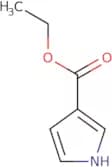
CAS:<p>Ethyl 1H-pyrrole-3-carboxylate is a nitro compound that has been shown to be efficient and multisubstituted. It reacts with carbon monoxide to form a nitro group, which can then be reduced by reductive means. Ethyl 1H-pyrrole-3-carboxylate is also capable of forming vinyl or carbonyl compounds in the presence of appropriate reagents.</p>Formula:C7H9NO2Purity:Min. 95%Molecular weight:139.15 g/mol4-Amino-3-ethoxyphenol hydrochloride
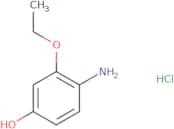
CAS:<p>Versatile small molecule scaffold</p>Formula:C8H12ClNO2Purity:Min. 95%Molecular weight:189.64 g/mol2-Chloro-4-ethynylpyrimidine
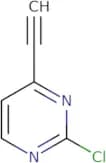
CAS:<p>2-Chloro-4-ethynylpyrimidine is a chemical compound that belongs to the family of meridianins. It has been shown to have medicinal properties, and is used in the treatment of trypanosomiasis. This molecule also has physicochemical properties that warrant further investigation. Optimization studies have shown that 2-chloro-4-ethynylpyrimidine can be synthesized with yields of up to 76% using nitrosoarenes as reactants.</p>Formula:C6H3ClN2Purity:Min. 95%Molecular weight:138.55 g/mol1-(3-Ethylpyridin-4-yl)ethan-1-one
CAS:<p>Versatile small molecule scaffold</p>Formula:C9H11NOPurity:Min. 95%Molecular weight:149.19 g/mol1-Nitro-3-(phenylsulfanyl)benzene
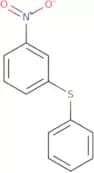
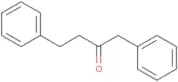
CAS:<p>1-Nitro-3-(phenylsulfanyl)benzene is a compound that belongs to the class of organic compounds with a molecular formula C11H10O3S. It has a transmittance of 0.10 and a polycondensation value of 3.2. The conformation of 1-nitro-3-(phenylsulfanyl)benzene is linear, and it has an average refractive index of 1.5214. This compound has high stabilities, as well as being n-methyl-2-pyrrolidone and sulfur stable, with birefringence values of 0.0805 and -0.0125 respectively. The steric effect on this compound is negligible, with the refractive index being polarizable in optical activity experiments, with an average optical rotation value of -5°/Mol at 20°C (298K).</p>Formula:C12H9NO2SPurity:Min. 95%Molecular weight:231.27 g/mol1,4-Diphenylbutan-2-one
CAS:<p>1,4-Diphenylbutan-2-one is a chemical compound that has been shown to have anticancer activity. It is an inhibitor of the enzyme tyrosinase and can be used as an anti-cancer treatment. 1,4-Diphenylbutan-2-one binds to the active site of tyrosinase and blocks the formation of melanin, which is the pigment in skin cells that gives the skin its color. 1,4-Diphenylbutan-2-one also inhibits growth factor receptors on cancer cells, which prevents tumor growth. This drug has minimal toxicity levels in humans and has been shown to have minimal interactions with other drugs or substances.</p>Formula:C16H16OPurity:Min. 95%Molecular weight:224.3 g/mol


![2-{[(2,2,2-Trifluoroethoxy)carbonyl]amino}acetic acid](/_next/image/?url=https%3A%2Fstatic.cymitquimica.com%2Fproducts%2F3D%2Fthumb-webp%2FMBA88815.webp&w=3840&q=75)


![2-[3-Bromo-4-(propan-2-yloxy)phenyl]acetonitrile](/_next/image/?url=https%3A%2Fstatic.cymitquimica.com%2Fproducts%2F3D%2Fthumb-webp%2FMBA94639.webp&w=3840&q=75)
![Ethyl 3-[(5-hydroxypentyl)(methyl)amino]propanoate](/_next/image/?url=https%3A%2Fstatic.cymitquimica.com%2Fproducts%2F3D%2Fthumb-webp%2FMBA94715.webp&w=3840&q=75)
![2-[5-Oxo-1-(pyridin-2-yl)-2,5-dihydro-1H-pyrazol-3-yl]acetic acid](/_next/image/?url=https%3A%2Fstatic.cymitquimica.com%2Fproducts%2F3D%2Fthumb-webp%2FMBA95919.webp&w=3840&q=75)
![3H,4H-Pyrido[3,2-d][1,2,3]triazin-4-one](/_next/image/?url=https%3A%2Fstatic.cymitquimica.com%2Fproducts%2F3D%2Fthumb-webp%2FMBA96289.webp&w=3840&q=75)