


Building Blocks
This section contains fundamental products for the synthesis of organic and biological compounds. Building blocks are the essential starting materials used to construct complex molecules through various chemical reactions. They play a critical role in drug discovery, material science, and chemical research. At CymitQuimica, we offer a diverse range of high-quality building blocks to support your innovative research and industrial projects, ensuring you have the essential components for successful synthesis.
Subcategories of "Building Blocks"
- Boronic Acids & Boronic Acid Derivatives(5,780 products)
- Chiral Building Blocks(1,239 products)
- Hydrocarbon Building Blocks(6,100 products)
- Organic Building Blocks(61,005 products)
Found 205234 products of "Building Blocks"
Sort by
Purity (%)
0
100
|
0
|
50
|
90
|
95
|
100
5-(2-Hydroxyethoxy)pentan-1-ol
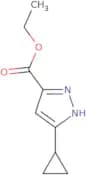
CAS:Versatile small molecule scaffoldFormula:C7H16O3Purity:Min. 95%Molecular weight:148.2 g/molEthyl 5-cyclopropyl-1H-pyrazole-3-carboxylate
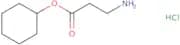
CAS:Versatile small molecule scaffoldFormula:C9H12N2O2Purity:Min. 95%Molecular weight:180.21 g/molCyclohexyl 3-aminopropanoate hydrochloride
CAS:Versatile small molecule scaffold
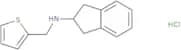
Formula:C9H18ClNO2Purity:Min. 95%Molecular weight:207.7 g/molN-(Thiophen-2-ylmethyl)-2,3-dihydro-1H-inden-2-amine hydrochloride
CAS:Versatile small molecule scaffoldFormula:C14H16ClNSPurity:Min. 95%Molecular weight:265.8 g/mol[2-(Dimethylamino)ethyl](pyridin-2-ylmethyl)amine
CAS:The emission of this dye is quenched by the presence of an electron donor, such as a solvent or a biomolecule. When the electron donor is removed, it can emit light. This property makes it a good fluorescent probe for biological systems. The fluorescence of this dye is enhanced by introducing a red-shifted excitation wavelength and increased quantum yield. It has been shown to be selective for proteins in the presence of other biomolecules, such as nucleic acids and lipids.Formula:C10H17N3Purity:Min. 95%Molecular weight:179.26 g/mol3-Bromo-2,2-difluoropropanoic acid
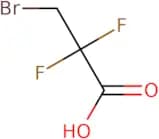
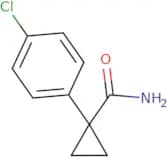
CAS:Versatile small molecule scaffoldFormula:C3H3BrF2O2Purity:Min. 95%Molecular weight:188.96 g/mol1-(4-Chlorophenyl)cyclopropane-1-carboxamide
CAS:Versatile small molecule scaffoldFormula:C10H10ClNOPurity:Min. 95%Molecular weight:195.65 g/molMethyl 2-{[2-(tert-butoxy)-2-oxoethyl]amino}acetate
CAS:Versatile small molecule scaffoldFormula:C9H17NO4Purity:Min. 95%Molecular weight:203.24 g/mol4-[(1-Methyl-1H-imidazol-2-yl)sulfanyl]aniline
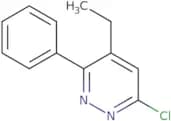
CAS:Versatile small molecule scaffoldFormula:C10H11N3SPurity:Min. 95%Molecular weight:205.28 g/mol6-Chloro-4-ethyl-3-phenylpyridazine
CAS:Versatile small molecule scaffoldFormula:C12H11ClN2Purity:Min. 95%Molecular weight:218.68 g/mol2-[(1-Methyl-1H-imidazol-2-yl)sulfanyl]aniline
CAS:2-[(1-Methyl-1H-imidazol-2-yl)sulfanyl]aniline is a research tool that inhibits antibody production by binding to the enzyme immunoglobulin E (IgE) and preventing its activation. It also has been shown to inhibit the production of peptides, which are important in cell biology, pharmacology, and ligand binding. 2-[(1-Methyl-1H-imidazol-2-yl)sulfanyl]aniline has shown to be an activator for ion channels as well as a receptor for proteins.Formula:C10H11N3SPurity:Min. 95%Molecular weight:205.28 g/mol2H,3H,5H,6H,8H-[1,2,4]Triazolo[3,4-c]morpholin-3-one
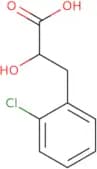
CAS:Versatile small molecule scaffoldFormula:C5H7N3O2Purity:Min. 95%Molecular weight:141.13 g/mol3-(2-Chlorophenyl)-2-hydroxypropanoic acid
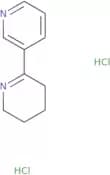
CAS:Versatile small molecule scaffoldFormula:C9H9ClO3Purity:Min. 95%Molecular weight:200.62 g/mol3-(3,4,5,6-Tetrahydropyridin-2-yl)pyridine dihydrochloride
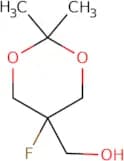
CAS:Versatile small molecule scaffoldFormula:C10H14Cl2N2Purity:Min. 95%Molecular weight:233.13 g/mol(5-Fluoro-2,2-dimethyl-1,3-dioxan-5-yl)methanol
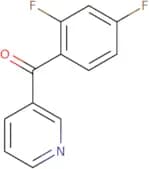
CAS:Versatile small molecule scaffoldFormula:C7H13FO3Purity:Min. 95%Molecular weight:164.17 g/mol3-(2,4-Difluorobenzoyl)pyridine
CAS:Versatile small molecule scaffold
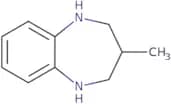
Formula:C12H7F2NOPurity:Min. 95%Molecular weight:219.19 g/mol3-Methyl-2,3,4,5-tetrahydro-1H-1,5-benzodiazepine
CAS:Versatile small molecule scaffoldFormula:C10H14N2Purity:Min. 95%Molecular weight:162.23 g/mol2-Bromo-4-iodophenol
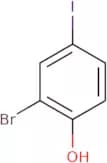
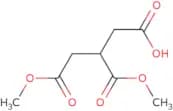
CAS:2-Bromo-4-iodophenol is a synthetic compound that is used in the synthesis of medicines. It is also used to study biological properties and population dynamics. 2-Bromo-4-iodophenol has been shown to interact with adenine nucleotide, which provides it with a radioisotopic skeleton that can be detected by chromatography. This substance has also been found to be able to catalyze the decomposition of bromophenols, which are functional groups in some medicines. 2-Bromo-4-iodophenol can be used as an intermediate for donepezil, a medicine for Alzheimer's disease and other neurodegenerative diseases.Formula:C6H4BrIOPurity:Min. 95%Molecular weight:298.9 g/mol5-Methoxy-3-(methyl carboxy)-5-oxopentanoic acid
CAS:Versatile small molecule scaffoldFormula:C8H12O6Purity:Min. 95%Molecular weight:204.18 g/molSodium 3-[(4-methylphenyl)amino]propanoate
CAS:Versatile small molecule scaffoldFormula:C10H12NNaO2Purity:Min. 95%Molecular weight:201.2 g/mol


amine](/_next/image/?url=https%3A%2Fstatic.cymitquimica.com%2Fproducts%2F3D%2Fthumb-webp%2FIFA28080.webp&w=3840&q=75)
![Methyl 2-{[2-(tert-butoxy)-2-oxoethyl]amino}acetate](/_next/image/?url=https%3A%2Fstatic.cymitquimica.com%2Fproducts%2F3D%2Fthumb-webp%2FIFA29744.webp&w=3840&q=75)
![4-[(1-Methyl-1H-imidazol-2-yl)sulfanyl]aniline](/_next/image/?url=https%3A%2Fstatic.cymitquimica.com%2Fproducts%2F3D%2Fthumb-webp%2FIFA30354.webp&w=3840&q=75)
![2-[(1-Methyl-1H-imidazol-2-yl)sulfanyl]aniline](/_next/image/?url=https%3A%2Fstatic.cymitquimica.com%2Fproducts%2F3D%2Fthumb-webp%2FIFA32877.webp&w=3840&q=75)
![2H,3H,5H,6H,8H-[1,2,4]Triazolo[3,4-c]morpholin-3-one](/_next/image/?url=https%3A%2Fstatic.cymitquimica.com%2Fproducts%2F3D%2Fthumb-webp%2FIFA36536.webp&w=3840&q=75)
![Sodium 3-[(4-methylphenyl)amino]propanoate](/_next/image/?url=https%3A%2Fstatic.cymitquimica.com%2Fproducts%2F3D%2Fthumb-webp%2FIFA48120.webp&w=3840&q=75)