Building Blocks
This section contains fundamental products for the synthesis of organic and biological compounds. Building blocks are the essential starting materials used to construct complex molecules through various chemical reactions. They play a critical role in drug discovery, material science, and chemical research. At CymitQuimica, we offer a diverse range of high-quality building blocks to support your innovative research and industrial projects, ensuring you have the essential components for successful synthesis.
Subcategories of "Building Blocks"
- Boronic Acids & Boronic Acid Derivatives(5,756 products)
- Chiral Building Blocks(1,242 products)
- Hydrocarbon Building Blocks(6,095 products)
- Organic Building Blocks(61,037 products)
Found 196200 products of "Building Blocks"
Sort by
Purity (%)
0
100
|
0
|
50
|
90
|
95
|
100
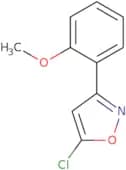
5-Chloro-3-(2-methoxyphenyl)-1,2-oxazole
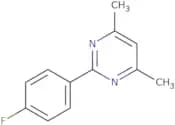
CAS:<p>Versatile small molecule scaffold</p>Formula:C10H8ClNO2Purity:Min. 95%Molecular weight:209.63 g/mol2-(4-Fluorophenyl)-4,6-dimethylpyrimidine
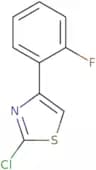
CAS:<p>Versatile small molecule scaffold</p>Formula:C12H11FN2Purity:Min. 95%Molecular weight:202.23 g/mol2-Chloro-4-(2-fluorophenyl)-1,3-thiazole
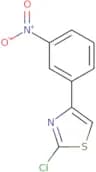
CAS:<p>Versatile small molecule scaffold</p>Formula:C9H5ClFNSPurity:Min. 95%Molecular weight:213.66 g/mol2-Chloro-4-(3-nitrophenyl)thiazole
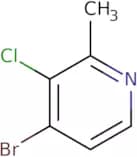
CAS:<p>Versatile small molecule scaffold</p>Formula:C9H5ClN2O2SPurity:Min. 95%Molecular weight:240.67 g/mol4-Bromo-3-chloro-2-methylpyridine
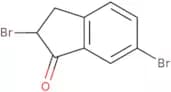
CAS:<p>Versatile small molecule scaffold</p>Formula:C6H5BrClNPurity:Min. 95%Molecular weight:206.47 g/mol2,6-Dibromo-2,3-dihydro-1H-inden-1-one
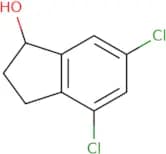
CAS:<p>Versatile small molecule scaffold</p>Formula:C9H6Br2OPurity:Min. 95%Molecular weight:289.95 g/mol4,6-Dichloro-2,3-dihydro-1H-inden-1-ol
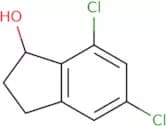
CAS:<p>Versatile small molecule scaffold</p>Formula:C9H8Cl2OPurity:Min. 95%Molecular weight:203.06 g/mol5,7-Dichloro-2,3-dihydro-1H-inden-1-ol
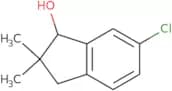
CAS:<p>Versatile small molecule scaffold</p>Formula:C9H8Cl2OPurity:Min. 95%Molecular weight:203.06 g/mol6-Chloro-2,2-dimethyl-2,3-dihydro-1H-inden-1-ol
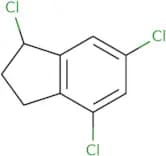
CAS:<p>Versatile small molecule scaffold</p>Formula:C11H13ClOPurity:Min. 95%Molecular weight:196.67 g/mol1,4,6-Trichloro-2,3-dihydro-1H-indene
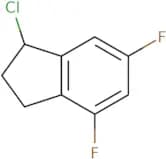
CAS:<p>Versatile small molecule scaffold</p>Formula:C9H7Cl3Purity:Min. 95%Molecular weight:221.5 g/mol1-Chloro-4,6-difluoro-2,3-dihydro-1H-indene
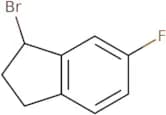
CAS:<p>Versatile small molecule scaffold</p>Formula:C9H7ClF2Purity:Min. 95%Molecular weight:188.6 g/mol1-Bromo-6-fluoro-2,3-dihydro-1H-indene
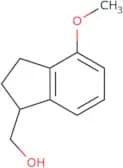
CAS:<p>Versatile small molecule scaffold</p>Formula:C9H8BrFPurity:Min. 95%Molecular weight:215.06 g/mol(4-Methoxy-2,3-dihydro-1H-inden-1-yl)methanol
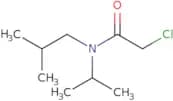
CAS:<p>Versatile small molecule scaffold</p>Formula:C11H14O2Purity:Min. 95%Molecular weight:178.23 g/mol2-Chloro-N-(2-methylpropyl)-N-(propan-2-yl)acetamide
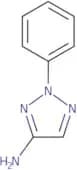
CAS:<p>Versatile small molecule scaffold</p>Formula:C9H18ClNOPurity:Min. 95%Molecular weight:191.7 g/mol2-Phenyl-2H-1,2,3-triazol-4-amine
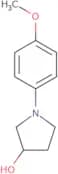
CAS:<p>Versatile small molecule scaffold</p>Formula:C8H8N4Purity:Min. 95%Molecular weight:160.18 g/mol1-(4-Methoxyphenyl)pyrrolidin-3-ol
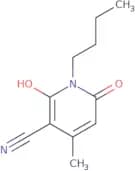
CAS:<p>Versatile small molecule scaffold</p>Formula:C11H15NO2Purity:Min. 95%Molecular weight:193.24 g/mol1-Butyl-6-hydroxy-4-methyl-2-oxo-1,2-dihydropyridine-3-carbonitrile
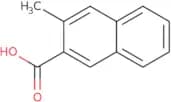
CAS:<p>Versatile small molecule scaffold</p>Formula:C11H14N2O2Purity:Min. 95%Molecular weight:206.24 g/mol3-Methylnaphthalene-2-carboxylic acid
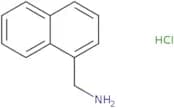
CAS:<p>3-Methylnaphthalene-2-carboxylic acid is a dicarboxylic acid that can be found in the environment. It has been isolated from Australian soil samples and is produced by some bacterial strains. 3-Methylnaphthalene-2-carboxylic acid has antimicrobial activity, which may be due to its ability to inhibit microbial growth by inhibiting protein synthesis.</p>Formula:C12H10O2Purity:Min. 95%Molecular weight:186.21 g/mol1-(Aminomethyl)naphthalene Hydrochloride
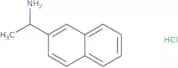
CAS:<p>1-(Aminomethyl)naphthalene hydrochloride (1-AMN) is an organocatalytic oxidant that is used to oxidize quaternary ammonium salts and quinazolinones. 1-AMN is a white crystalline solid that can be stored at room temperature. It has been shown to have the ability to react with anisidine, amines, and alcohols to produce aniline, nitrosobenzene, and hydroxylamine, respectively. This product also has a functional group which is capable of reacting with chlorides or diazonium ions. The use of this product in biochemistry has been shown in the immobilization of biomolecules such as DNA and RNA.</p>Formula:C11H12ClNPurity:Min. 95%Molecular weight:193.67 g/mol1-(Naphthalen-2-yl)ethanamine hydrochloride
CAS:<p>Versatile small molecule scaffold</p>Formula:C12H14ClNPurity:Min. 95%Molecular weight:207.7 g/mol