Building Blocks
This section contains fundamental products for the synthesis of organic and biological compounds. Building blocks are the essential starting materials used to construct complex molecules through various chemical reactions. They play a critical role in drug discovery, material science, and chemical research. At CymitQuimica, we offer a diverse range of high-quality building blocks to support your innovative research and industrial projects, ensuring you have the essential components for successful synthesis.
Subcategories of "Building Blocks"
- Boronic Acids & Boronic Acid Derivatives(5,756 products)
- Chiral Building Blocks(1,242 products)
- Hydrocarbon Building Blocks(6,095 products)
- Organic Building Blocks(61,037 products)
Found 196139 products of "Building Blocks"
Sort by
Purity (%)
0
100
|
0
|
50
|
90
|
95
|
100
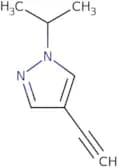
4-Ethynyl-1-isopropyl-1H-pyrazole
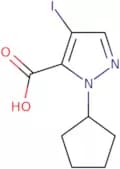
CAS:<p>Versatile small molecule scaffold</p>Formula:C8H10N2Purity:Min. 95%Molecular weight:134.18 g/mol1-Cyclopentyl-4-iodo-1H-pyrazole-5-carboxylic acid
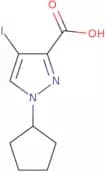
CAS:<p>Versatile small molecule scaffold</p>Formula:C9H11IN2O2Purity:Min. 95%Molecular weight:306.1 g/mol1-Cyclopentyl-4-iodo-1H-pyrazole-3-carboxylic acid
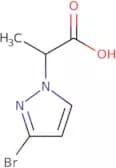
CAS:<p>Versatile small molecule scaffold</p>Formula:C9H11IN2O2Purity:Min. 95%Molecular weight:306.1 g/mol2-(3-Bromo-1H-pyrazol-1-yl)propanoic acid
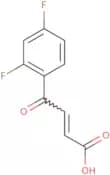
CAS:<p>Versatile small molecule scaffold</p>Formula:C6H7BrN2O2Purity:Min. 95%Molecular weight:219.04 g/mol(2E)-4-(2,4-Difluorophenyl)-4-oxobut-2-enoic acid
CAS:<p>Versatile small molecule scaffold</p>Formula:C10H6F2O3Purity:Min. 95%Molecular weight:212.15 g/mol2-[(2-{[(tert-Butoxy)carbonyl]amino}ethyl)sulfanyl]acetic acid
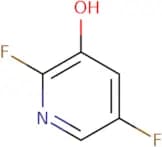
CAS:<p>Versatile small molecule scaffold</p>Formula:C9H17NO4SPurity:Min. 95%Molecular weight:235.3 g/mol2,5-Difluoropyridin-3-ol
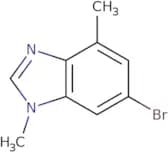
CAS:<p>Versatile small molecule scaffold</p>Formula:C5H3F2NOPurity:Min. 95%Molecular weight:131.08 g/mol6-Bromo-1,4-dimethyl-1H-1,3-benzodiazole
CAS:<p>Versatile small molecule scaffold</p>Formula:C9H9BrN2Purity:Min. 95%Molecular weight:225.08 g/molMethyl 7-bromo-1H-benzotriazole-5-carboxylate
CAS:<p>Versatile small molecule scaffold</p>Formula:C8H6BrN3O2Purity:Min. 95%Molecular weight:256.06 g/molMethyl 5-bromo-1H-benzo[D][1,2,3]triazole-7-carboxylate
CAS:<p>Versatile small molecule scaffold</p>Formula:C8H6BrN3O2Purity:Min. 95%Molecular weight:256.06 g/mol5-Bromo-1H-benzo[D]imidazole-7-carboxamide
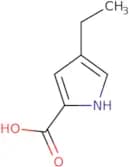
CAS:<p>Versatile small molecule scaffold</p>Formula:C8H6BrN3OPurity:Min. 95%Molecular weight:240.06 g/mol4-Ethyl-1H-pyrrole-2-carboxylic acid
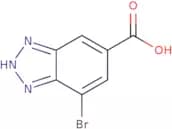
CAS:<p>Versatile small molecule scaffold</p>Formula:C7H9NO2Purity:Min. 95%Molecular weight:139.15 g/mol7-Bromo-1H-1,2,3-benzotriazole-5-carboxylic acid
CAS:<p>Versatile small molecule scaffold</p>Formula:C7H4BrN3O2Purity:Min. 95%Molecular weight:242.03 g/mol2-(1-Ethyl-1H-pyrrol-2-yl)ethan-1-amine
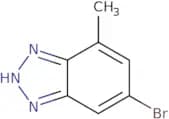
CAS:<p>Versatile small molecule scaffold</p>Formula:C8H14N2Purity:Min. 95%Molecular weight:138.2 g/mol5-Bromo-7-methyl-1H-1,2,3-benzotriazole
CAS:<p>5-Bromo-7-methyl-1H-1,2,3-benzotriazole is a potent inhibitor of the protein kinase CK2. It binds to the ATP binding site of CK2 and inhibits its activity by forming a covalent bond with the enzyme. This leads to a reduction in phosphorylation of cellular proteins and decreased cell proliferation. 5-Bromo-7-methyl-1H-1,2,3-benzotriazole has been shown to be effective against benzene exposure in animal models. It also inhibits benzimidazole and benzotriazole, which are important industrial chemicals used for insecticides and fungicides. The substitution of bromine for hydrogen on the benzene ring confers higher potency as an inhibitor.</p>Formula:C7H6BrN3Purity:Min. 95%Molecular weight:212.05 g/mol5-Bromo-1H-1,2,3-benzotriazole-7-carboxylic acid
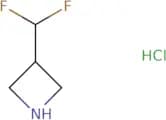
CAS:<p>Versatile small molecule scaffold</p>Formula:C7H4BrN3O2Purity:Min. 95%Molecular weight:242.03 g/mol3-(difluoromethyl)azetidine hcl
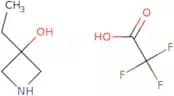
CAS:<p>Versatile small molecule scaffold</p>Formula:C4H8ClF2NPurity:Min. 95%Molecular weight:143.56 g/mol3-Ethylazetidin-3-ol, trifluoroacetic acid
CAS:<p>3-Ethylazetidin-3-ol, trifluoroacetic acid (AZT) is an organic acid that inhibits the activity of matrix metalloproteinases. It has been shown to have a strong inhibitory effect on collagenase and gelatinase, which are enzymes that break down collagen and gelatin respectively. AZT also has anti-inflammatory properties, as it inhibits prostaglandin synthesis by blocking cyclooxygenase activity. This compound has been used as a polymer drug in tissue culture experiments to study the effects of pH on drug release rates. It has been shown to inhibit bowel disease and inflammatory bowel disease in animal models, which may be due to its ability to inhibit the production of tumor necrosis factor alpha (TNFα) and serum enzymes such as dismutase activity. AZT is also able to bind with monoclonal antibodies, making it possible for this compound to be used as an antibody carrier or target for therapeutic antibodies.</p>Formula:C7H12F3NO3Purity:Min. 95%Molecular weight:215.17 g/mol(3-Methylpyrrolidin-3-yl)methanol hydrochloride
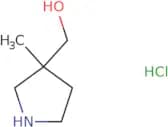
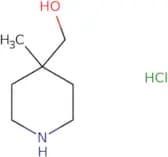
CAS:<p>Versatile small molecule scaffold</p>Formula:C6H14ClNOPurity:Min. 95%Molecular weight:151.63 g/mol(4-Methylpiperidin-4-yl)methanol hydrochloride
CAS:<p>Versatile small molecule scaffold</p>Formula:C7H16ClNOPurity:Min. 95%Molecular weight:165.66 g/mol

![2-[(2-{[(tert-Butoxy)carbonyl]amino}ethyl)sulfanyl]acetic acid](/_next/image/?url=https%3A%2Fstatic.cymitquimica.com%2Fproducts%2F3D%2Fthumb-webp%2FEEC71462.webp&w=3840&q=75)
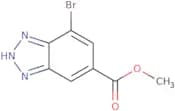
![Methyl 5-bromo-1H-benzo[D][1,2,3]triazole-7-carboxylate](/_next/image/?url=https%3A%2Fstatic.cymitquimica.com%2Fproducts%2F3D%2Fthumb-webp%2FEEC76356.webp&w=3840&q=75)
![5-Bromo-1H-benzo[D]imidazole-7-carboxamide](/_next/image/?url=https%3A%2Fstatic.cymitquimica.com%2Fproducts%2F3D%2Fthumb-webp%2FEEC76363.webp&w=3840&q=75)