Building Blocks
This section contains fundamental products for the synthesis of organic and biological compounds. Building blocks are the essential starting materials used to construct complex molecules through various chemical reactions. They play a critical role in drug discovery, material science, and chemical research. At CymitQuimica, we offer a diverse range of high-quality building blocks to support your innovative research and industrial projects, ensuring you have the essential components for successful synthesis.
Subcategories of "Building Blocks"
- Boronic Acids & Boronic Acid Derivatives(5,756 products)
- Chiral Building Blocks(1,242 products)
- Hydrocarbon Building Blocks(6,095 products)
- Organic Building Blocks(61,037 products)
Found 196200 products of "Building Blocks"
Sort by
Purity (%)
0
100
|
0
|
50
|
90
|
95
|
100
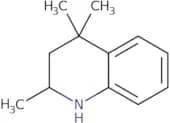
2,4,4-Trimethyl-1,2,3,4-tetrahydroquinoline
CAS:<p>Versatile small molecule scaffold</p>Formula:C12H17NPurity:Min. 95%Molecular weight:175.27 g/mol3-[(4-Methylphenyl)amino]propanenitrile
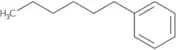
CAS:<p>Versatile small molecule scaffold</p>Formula:C10H12N2Purity:Min. 95%Molecular weight:160.22 g/molHexylbenzene
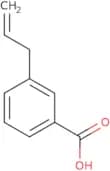
CAS:<p>Hexylbenzene is a colorless liquid that is soluble in alcohol, ether, and benzene. Hexylbenzene has been shown to undergo a suzuki coupling reaction with aniline and phenylboronic acid. The yield of chloride was site specific, as the reaction occurred more readily at the ortho-positions than the para-positions. Hexylbenzene has been used as a model system for studying transfer reactions in proteins. In this system, hexylbenzene reacts with peroxidase to form hydrogen peroxide, which then reacts with p-nitroaniline to produce p-aminophenol and nitrite ions. The detection sensitivity of light emission from hexylbenzene was significantly higher than that of other compounds such as tetracycline or ampicillin.</p>Formula:C12H18Purity:Min. 95%Molecular weight:162.28 g/mol3-(Prop-2-en-1-yl)benzoic acid
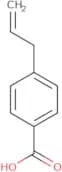
CAS:<p>Versatile small molecule scaffold</p>Formula:C10H10O2Purity:Min. 95%Molecular weight:162.18 g/mol4-(Prop-2-en-1-yl)benzoic acid
CAS:<p>Glycinamide ribonucleotide (GAR) is a glycinamide that is used as an inhibitor of formyltransferase. It forms a reversible covalent bond with the active site cysteine residue of the enzyme, thereby inhibiting its activity. GAR has been shown to inhibit both eukaryotic and prokaryotic formyltransferases, and also inhibits the related enzyme ribonucleotide reductase. This compound may have potential for use in treating cancer due to its ability to inhibit tumor growth by interfering with DNA synthesis.</p>Formula:C10H10O2Purity:Min. 95%Molecular weight:162.18 g/mol1-Phenyl-1H-pyrazol-4-ol
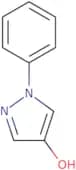
CAS:<p>1-Phenyl-1H-pyrazol-4-ol is an organic compound that is a white crystalline solid with a strong odor. It is used in the manufacture of pyrazoles and as a reagent for the synthesis of other compounds. 1-Phenyl-1H-pyrazol-4-ol can be used to synthesize pyrazoles, which are important in the production of several pharmaceuticals.</p>Formula:C9H8N2OPurity:Min. 95%Molecular weight:160.17 g/mol2,2'-(Cyclobutane-1,1-diyl)diacetic acid
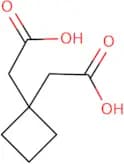
CAS:<p>Ammonium 2,2'-(cyclobutane-1,1-diyl)diacetate (ACDA) is a salt of ACDA and ammonium. It is an analogue of barbiturates that has been used in medicine to relieve neuralgia and sciatica. ACDA is injected intravenously or intramuscularly as the ammonium salt. The toxic effects of ACDA are similar to those of other barbiturates. These are due to its depressant effect on the central nervous system and include narcosis, respiratory depression, and death from respiratory arrest.</p>Formula:C8H12O4Purity:Min. 95%Molecular weight:172.18 g/mol3-(4-Chlorophenyl)acrylaldehyde
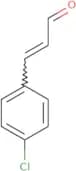
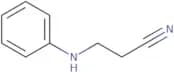
CAS:<p>Acrylaldehyde is a reactive compound that can bind to the enzyme tyrosinase, inhibiting its activity. 3-(4-Chlorophenyl)acrylaldehyde (3-CA) is a small molecule that has shown an inhibitory effect on the proliferation of leukemia cells in vitro and in vivo. It also has broad-spectrum antimicrobial activity against Gram-positive and Gram-negative bacteria, including methicillin-resistant Staphylococcus aureus (MRSA). Tyrosine kinases are enzymes that catalyze the transfer of phosphate groups from ATP to tyrosine residues in proteins, leading to cellular signaling and cell division. 3-(4-Chlorophenyl)acrylaldehyde binds to tyrosine kinases and inhibits their function, which may be responsible for its cytotoxic effects.</p>Formula:C9H7ClOPurity:Min. 95%Molecular weight:166.6 g/mol3-(Phenylamino)propanenitrile
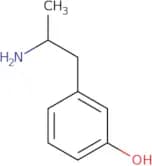
CAS:<p>3-(Phenylamino)propanenitrile (N-phenylglycine, PAG) is an amine that belongs to the class of compounds known as thermodynamic reaction intermediates. It is a chiral compound that can be used for the synthesis of β-unsaturated ketones and bichloride. The synthesis of PAG begins with the addition of phosphorus pentachloride and acrylonitrile to a solution containing thiamine pyrophosphate in an inorganic acid, such as hydrochloric acid. The reaction produces a mixture of amino acids and amides, including PAG. This process has been scaled up and shown to be selective for PAG.</p>Formula:C9H10N2Purity:Min. 95%Molecular weight:146.19 g/mol3-(2-Aminopropyl)phenol
CAS:Controlled Product<p>3-(2-Aminopropyl)phenol is a water-soluble drug that has been used as a pharmaceutical dosage to treat symptoms of autoimmune diseases and heart tissue damage. 3-(2-Aminopropyl)phenol is commonly found in the form of its salt, 3-(2-aminopropyl)benzene sulfonic acid, which is used to treat congestive heart failure. The chemical ionization of 3-(2-aminopropyl)phenol has been used to identify protein genes that encode for enzymes involved in the production of inflammatory substances. 3-(2-Aminopropyl)phenol also has anti-inflammatory properties.</p>Formula:C9H13NOPurity:Min. 95%Molecular weight:151.21 g/mol1-{Bicyclo[4.2.0]octa-1,3,5-trien-7-yl}ethan-1-one
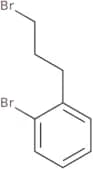
CAS:<p>Versatile small molecule scaffold</p>Formula:C10H10OPurity:Min. 95%Molecular weight:146.19 g/mol1-Bromo-2-(3-bromopropyl)benzene
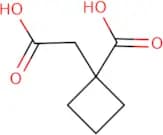
CAS:<p>Versatile small molecule scaffold</p>Formula:C9H10Br2Purity:Min. 95%Molecular weight:277.98 g/mol1-(Carboxymethyl)cyclobutane-1-carboxylic acid
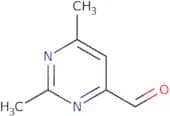
CAS:<p>Versatile small molecule scaffold</p>Formula:C7H10O4Purity:Min. 95%Molecular weight:158.15 g/mol2,6-Dimethylpyrimidine-4-carbaldehyde
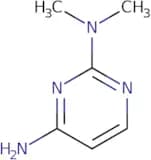
CAS:<p>Versatile small molecule scaffold</p>Formula:C7H8N2OPurity:Min. 95%Molecular weight:136.15 g/mol4-Imino-N,N-dimethyl-1,4-dihydropyrimidin-2-amine
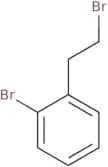
CAS:<p>Versatile small molecule scaffold</p>Formula:C6H10N4Purity:Min. 95%Molecular weight:138.17 g/mol1-bromo-2-(2-bromoethyl)benzene
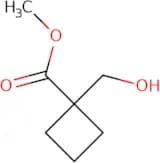
CAS:<p>1-Bromo-2-(2-bromoethyl)benzene is a quantified compound that is synthesized from 2-bromoethanol and magnesium. It has been shown to be an effective cancer drug, as it inhibits the reuptake of neurotransmitters by the amines. This compound is also used as a catalyst in organic reactions. The reaction time for this compound can be increased by using a substituent with electron withdrawing properties. 1-Bromo-2-(2-bromoethyl)benzene binds to receptors with affinity for magnesium, which may be due to its ability to form covalent bonds with reactive groups on the receptor surface.</p>Formula:C8H8Br2Purity:Min. 95%Molecular weight:263.96 g/molMethyl 1-(hydroxymethyl)cyclobutane-1-carboxylate
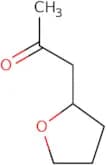
CAS:<p>Versatile small molecule scaffold</p>Formula:C7H12O3Purity:Min. 95%Molecular weight:144.17 g/mol1-(Oxolan-2-yl)propan-2-one
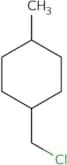
CAS:<p>Versatile small molecule scaffold</p>Formula:C7H12O2Purity:Min. 95%Molecular weight:128.17 g/mol1-(Chloromethyl)-4-methylcyclohexane
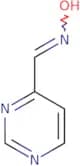
CAS:<p>Versatile small molecule scaffold</p>Formula:C8H15ClPurity:Min. 95%Molecular weight:146.66 g/molPyrimidine-4-carbaldehyde oxime
CAS:<p>Versatile small molecule scaffold</p>Formula:C5H5N3OPurity:Min. 95%Molecular weight:123.11 g/mol

![3-[(4-Methylphenyl)amino]propanenitrile](/_next/image/?url=https%3A%2Fstatic.cymitquimica.com%2Fproducts%2F3D%2Fthumb-webp%2FBAA07724.webp&w=3840&q=75)
![1-{Bicyclo[4.2.0]octa-1,3,5-trien-7-yl}ethan-1-one](/_next/image/?url=https%3A%2Fstatic.cymitquimica.com%2Fproducts%2F3D%2Fthumb-webp%2FBAA07530.webp&w=3840&q=75)