Building Blocks
This section contains fundamental products for the synthesis of organic and biological compounds. Building blocks are the essential starting materials used to construct complex molecules through various chemical reactions. They play a critical role in drug discovery, material science, and chemical research. At CymitQuimica, we offer a diverse range of high-quality building blocks to support your innovative research and industrial projects, ensuring you have the essential components for successful synthesis.
Subcategories of "Building Blocks"
- Boronic Acids & Boronic Acid Derivatives(5,778 products)
- Chiral Building Blocks(1,242 products)
- Hydrocarbon Building Blocks(6,098 products)
- Organic Building Blocks(61,098 products)
Found 199594 products of "Building Blocks"
Sort by
Purity (%)
0
100
|
0
|
50
|
90
|
95
|
100
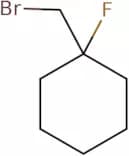
1-(Bromomethyl)-1-fluorocyclohexane
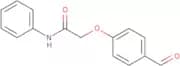
CAS:Versatile small molecule scaffoldFormula:C7H12BrFPurity:Min. 95%Molecular weight:195.07 g/mol2-(4-Formylphenoxy)-N-phenylacetamide
CAS:Versatile small molecule scaffoldFormula:C15H13NO3Purity:Min. 95%Molecular weight:255.27 g/molMethyl 4-[(phenoxycarbonyl)oxy]benzoate
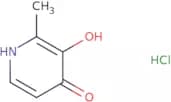
CAS:<p>Versatile small molecule scaffold</p>Formula:C15H12O5Purity:Min. 95%Molecular weight:272.25 g/mol3-Hydroxy-2-methyl-1,4-dihydropyridin-4-one hydrochloride
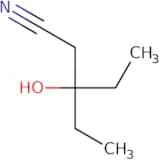
CAS:<p>Versatile small molecule scaffold</p>Formula:C6H8ClNO2Purity:Min. 95%Molecular weight:161.58 g/mol3-Ethyl-3-hydroxypentanenitrile
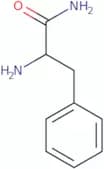
CAS:<p>Versatile small molecule scaffold</p>Formula:C7H13NOPurity:Min. 95%Molecular weight:127.18 g/mol2-Amino-3-phenylpropanamide
CAS:<p>2-Amino-3-phenylpropanamide is a peptide hormone that has been shown to have biological properties in humans. It is the active form of 2-amino-3-phenylpropanoic acid, which is found in the human serum. This compound may be involved in bowel disease and diabetes. The protonated form of this compound binds to the CB2 receptor and inhibits inflammatory responses. 2-Amino-3-phenylpropanamide also has racemase activity and can be used as an amide or sodium salt. It has a ph optimum of 5.5 to 7.5 and exhibits receptor activity when it binds to opioid receptors, such as those that are expressed on peripheral sensory neurons.</p>Formula:C9H12N2OPurity:Min. 95%Molecular weight:164.21 g/mol1-[(Oxiran-2-yl)methyl]pyrrolidin-2-one
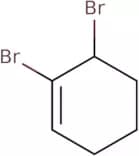
CAS:<p>1-[(Oxiran-2-yl)methyl]pyrrolidin-2-one is a chiral compound with two optical isomers. It is an amino acid derivative that can be used as a chiral catalyst for the resolution of racemic mixtures. 1-[(Oxiran-2-yl)methyl]pyrrolidin-2-one is also an ester, which can be hydrolyzed to release an alcohol and carboxylic acid. This product has been shown to have antihistamine properties and is a precursor to branched chain amino acids.</p>Formula:C7H11NO2Purity:Min. 95%Molecular weight:141.17 g/mol1,6-Dibromocyclohex-1-ene
CAS:<p>Versatile small molecule scaffold</p>Formula:C6H8Br2Purity:Min. 95%Molecular weight:239.94 g/molSpiro[2.4]heptan-1-amine hydrochloride
CAS:<p>Versatile small molecule scaffold</p>Formula:C7H14ClNPurity:Min. 95%Molecular weight:147.64 g/molEthyl spiro[2.3]hexane-1-carboxylate
CAS:<p>Versatile small molecule scaffold</p>Formula:C9H14O2Purity:Min. 95%Molecular weight:154.21 g/molSpiro[2.3]hexan-1-amine hydrochloride
CAS:Versatile small molecule scaffoldFormula:C6H12ClNPurity:Min. 95%Molecular weight:133.62 g/molSpiro[2.2]pentane-1-carboxylic acid
CAS:<p>Spiro[2.2]pentane-1-carboxylic acid is an organic compound with the chemical formula C8H14O4. It is a white solid that is soluble in water, alcohols, and ethers. This compound's stereoisomerism can be determined by its ability to rotate plane-polarized light in either the clockwise or counterclockwise direction. Spiro[2.2]pentane-1-carboxylic acid has been used as an acaricide (a chemical agent that kills ticks and mites) against ticks, lice, and fleas. The insecticidal activity of this compound may be due to its ability to disrupt chitin synthesis because it contains carboxylic acid groups that react with amino groups at the chitin chain's end.</p>Purity:Min. 95%spiro[2.5]octane-1-carboxylic acid
CAS:<p>Versatile small molecule scaffold</p>Formula:C9H14O2Purity:Min. 95%Molecular weight:154.2 g/molSpiro[2.5]oct-1-ylamine hydrochloride
CAS:<p>Versatile small molecule scaffold</p>Formula:C8H15N·HClPurity:Min. 95%Molecular weight:161.67 g/molSpiro[2.4]heptane-1-carboxylic acid
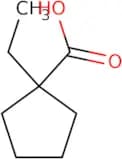
CAS:<p>Versatile small molecule scaffold</p>Formula:C8H12O2Purity:Min. 95%Molecular weight:140.18 g/mol1-Ethylcyclopentane-1-carboxylic acid
CAS:<p>Versatile small molecule scaffold</p>Formula:C8H14O2Purity:Min. 95%Molecular weight:142.2 g/molN-(3-Methoxyphenyl)prop-2-enamide
CAS:<p>Versatile small molecule scaffold</p>Formula:C10H11NO2Purity:Min. 95%Molecular weight:177.2 g/mol4-Methoxy-2-pyridinecarboxylic acid N-oxide
CAS:<p>4-Methoxy-2-pyridinecarboxylic acid N-oxide is a ligand that can form complexes with proton, which is an organic solvent. It has been shown to be able to form ternary complex formation with picolinic acid and a variety of acceptors. 4-Methoxy-2-pyridinecarboxylic acid N-oxide has been shown to catalyze the transfer reactions of hydride and catalysis.</p>Formula:C7H7NO4Purity:Min. 95%Molecular weight:169.13 g/mol2-Phenylpent-4-en-1-amine
CAS:Controlled Product<p>2-Phenylpent-4-en-1-amine is an organic compound that is synthesized by the bond cleavage of an amine and a terminal alkyne. It has been used in ligand design, which is the process of creating molecules to bind to a specific biological target. 2-Phenylpent-4-en-1-amine can be used as a chiral catalyst for asymmetric synthesis, making it enantiopure and optically active. The crystal structure of 2-phenylpentaene was determined by X-ray crystallography, which revealed that it has a c–h bond between its two phenyl groups. This bond may have been formed from an interaction with zirconium.</p>Formula:C11H15NPurity:Min. 95%Molecular weight:161.24 g/mol2-Chloro-3,4-dihydronaphthalen-1(2H)-one
CAS:<p>2-Chloro-3,4-dihydronaphthalen-1(2H)-one is a sulfoxide with significant antifungal activity. It has been shown to be effective against Candida albicans and other fungi, including Aspergillus niger and Mucor racemosus. It is commonly used as an electrolyte in electroluminescent devices, such as light emitting diodes (LEDs). The reaction time for the formation of 2-chloro-3,4-dihydronaphthalen-1(2H)-one from potassium sulfate is dependent on the acid catalyst used. Organic chemists have shown that the use of 2-chloro-3,4-dihydronaphthalen-1(2H)-one can inhibit leukotriene synthesis.</p>Formula:C10H9OClPurity:Min. 95%Molecular weight:180.63 g/mol

![Methyl 4-[(phenoxycarbonyl)oxy]benzoate](/_next/image/?url=https%3A%2Fstatic.cymitquimica.com%2Fproducts%2F3D%2Fthumb-webp%2FSAA17512.webp&w=3840&q=75)
![1-[(Oxiran-2-yl)methyl]pyrrolidin-2-one](/_next/image/?url=https%3A%2Fstatic.cymitquimica.com%2Fproducts%2F3D%2Fthumb-webp%2FSAA20166.webp&w=3840&q=75)
![Spiro[2.4]heptan-1-amine hydrochloride](/_next/image/?url=https%3A%2Fstatic.cymitquimica.com%2Fproducts%2F3D%2Fthumb-webp%2FSAA20253.webp&w=3840&q=75)
![Ethyl spiro[2.3]hexane-1-carboxylate](/_next/image/?url=https%3A%2Fstatic.cymitquimica.com%2Fproducts%2F3D%2Fthumb-webp%2FSAA20257.webp&w=3840&q=75)
![Spiro[2.3]hexan-1-amine hydrochloride](/_next/image/?url=https%3A%2Fstatic.cymitquimica.com%2Fproducts%2F3D%2Fthumb-webp%2FSAA20261.webp&w=3840&q=75)
![Spiro[2.2]pentane-1-carboxylic acid](/_next/image/?url=https%3A%2Fstatic.cymitquimica.com%2Fproducts%2F3D%2Fthumb-webp%2FSAA20264.webp&w=3840&q=75)
![spiro[2.5]octane-1-carboxylic acid](/_next/image/?url=https%3A%2Fstatic.cymitquimica.com%2Fproducts%2F3D%2Fthumb-webp%2FSAA20286.webp&w=3840&q=75)
![Spiro[2.5]oct-1-ylamine hydrochloride](/_next/image/?url=https%3A%2Fstatic.cymitquimica.com%2Fproducts%2F3D%2Fthumb-webp%2FSAA20291.webp&w=3840&q=75)
![Spiro[2.4]heptane-1-carboxylic acid](/_next/image/?url=https%3A%2Fstatic.cymitquimica.com%2Fproducts%2F3D%2Fthumb-webp%2FSAA20294.webp&w=3840&q=75)