Building Blocks
Subcategories of "Building Blocks"
- Boronic Acids & Boronic Acid Derivatives(5,774 products)
- Chiral Building Blocks(1,237 products)
- Hydrocarbon Building Blocks(6,098 products)
- Organic Building Blocks(60,980 products)
Found 205158 products of "Building Blocks"
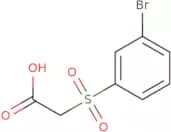
2-(3-Bromobenzenesulfonyl)acetic acid
CAS:Versatile small molecule scaffold
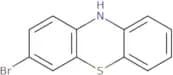
Formula:C8H7BrO4SPurity:Min. 95%Molecular weight:279.11 g/mol3-Bromo-10H-phenothiazine
CAS:3-Bromo-10H-phenothiazine is a fluorescence sensor that is sensitive to the presence of aromatic heterocycles. The molecule is an ion-pair, which means that it has two parts: a charged part and a neutral part. The charge can be either positive or negative. When the molecule interacts with polycyclic aromatic hydrocarbons (PAHs), the charge changes from positive to negative, which causes an increase in fluorescence. 3-Bromo-10H-phenothiazine has been used as a sensor for PAHs in air samples and ground water samples. It was also used as a photocurrent generator in solar cells.Formula:C12H8BrNSPurity:Min. 95%Molecular weight:278.17 g/molEthyl 2-amino-3-hydroxypropanoate hydrochloride
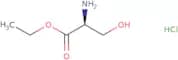
CAS:Ethyl 2-amino-3-hydroxypropanoate hydrochloride is a compound that is found in lichen. It can be synthesized by the ammonolysis of ethyl 3-aminopropanoate, which can be obtained from l-threonine and 3-hydroxypropionic acid. The synthesis of this compound proceeds through an aldol condensation followed by oxidation with sodium azide to form aziridine. Ethyl 2-amino-3-hydroxypropanoate hydrochloride has been used as a chemical intermediate for the synthesis of other compounds, such as oxazolidinones, dihydropyridines, and indole derivatives.Formula:C5H12ClNO3Purity:Min. 95%Molecular weight:169.61 g/mol4-(3-Bromopropyl)-1,2-dimethoxybenzene
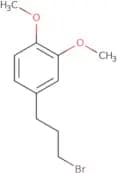
CAS:Versatile small molecule scaffoldFormula:C11H15BrO2Purity:Min. 95%Molecular weight:259.14 g/mol3,4'-Dichloropropiophenone
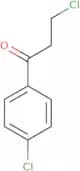
CAS:3,4'-Dichloropropiophenone is a photolysis product of benzyl chloride and trimethyl borate. It is used as a transfer catalyst in Friedel-Crafts reactions, such as the conversion of chloride to dodecyl chloride. 3,4'-Dichloropropiophenone is also used as an intermediate in the synthesis of propiophenone. This compound has been shown to have a strong tendency to form dihedral angles and orientations, which can be helpful for research into new synthetic methods. 3,4'-Dichloropropiophenone is also useful for the production of tetrabutyl ammonium from chloroethane and ammonium chloride.
Formula:C9H8Cl2OPurity:Min. 95%Molecular weight:203.06 g/mol3-Chloromethyl-piperidine hydrochloride
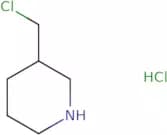
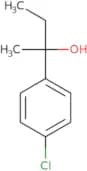
CAS:Versatile small molecule scaffoldFormula:C6H13Cl2NPurity:Min. 95%Molecular weight:170.08 g/mol2-(4-Chlorophenyl)butan-2-ol
CAS:Versatile small molecule scaffold
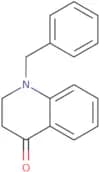
Formula:C10H13ClOPurity:Min. 95%Molecular weight:184.66 g/mol1-Benzyl-1,2,3,4-tetrahydroquinolin-4-one
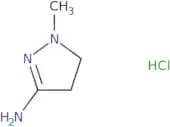
CAS:1-Benzyl-1,2,3,4-tetrahydroquinolin-4-one is a phenolic compound that is stabilized by a benzene ring. It has a carbonyl group and a heterocyclic ring. The crystal structure of 1-Benzyl-1,2,3,4-tetrahydroquinolin-4-one is shown in Figure 1. Figure 1: Crystal Structure of 1-Benzyl-1,2,3,4-tetrahydroquinolin-4-oneFormula:C16H15NOPurity:Min. 95%Molecular weight:237.3 g/mol1-Methyl-4,5-dihydro-1H-pyrazol-3-amine hydrochloride
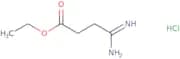
CAS:Versatile small molecule scaffoldFormula:C4H10ClN3Purity:Min. 95%Molecular weight:135.59 g/molEthyl 3-carbamimidoylpropanoate hydrochloride
CAS:Versatile small molecule scaffoldFormula:C6H13ClN2O2Purity:Min. 95%Molecular weight:180.6 g/mol4-Azatricyclo[9.4.0.0,3,8]pentadeca-1(15),3,5,7,11,13-hexaen-2-one
CAS:Versatile small molecule scaffold
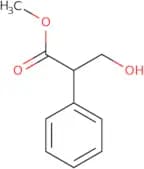
Formula:C14H11NOPurity:Min. 95%Molecular weight:209.24 g/molMethyl 3-hydroxy-2-phenylpropanoate
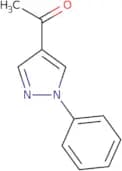
CAS:Methyl 3-hydroxy-2-phenylpropanoate is a synthetic compound that has been shown to have anti-diabetic, anticholinergic, and antibacterial properties. When tested in vitro, Methyl 3-hydroxyphenylpropanoate showed significant cytotoxicity against leukemia cells. The structure of this molecule is an amide with hydroxy groups on the phenyl groups. This molecule also possessed antibacterial activity in vitro. It was found to be active against gram positive and gram negative bacteria such as Staphylococcus aureus, Bacillus cereus, and Pseudomonas aeruginosa. Methyl 3-hydroxyphenylpropanoate was synthesized using an organic solvent that consisted of dichloromethane and ethanol.Formula:C10H12O3Purity:Min. 95%Molecular weight:180.2 g/mol4-Acetyl-1-phenyl-1H-pyrazole
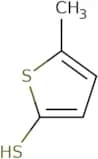
CAS:Versatile small molecule scaffoldFormula:C11H10N2OPurity:Min. 95%Molecular weight:186.21 g/mol5-Methylthiophene-2-thiol
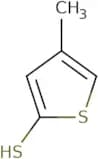
CAS:5-Methylthiophene-2-thiol is a mercaptan with a thiol group at the 5 position. The sulfur atom in the thiol group is electron deficient and can serve as an electron donor. This compound has been used in food chemistry to make a diacetyl-free butter flavor. It has also been studied for its ability to inhibit the expansion of polystyrene foam. Mercaptans are found in fossil fuels, but are also produced synthetically by alkylation of hydrocarbons with hydrogen sulfide. The term "mercaptan" was coined by combining the words "mercury" and "sulfur." Mercaptans are functionally important because they have both an alkylthio group and a mercapto group, which allow them to act as both an acid and an alcohol. 5-Methylthiophene-2-thiol can be used for many applications such as detergents, textile dFormula:C5H6S2Purity:Min. 95%Molecular weight:130.2 g/mol4-Methylthiophene-2-thiol
CAS:Versatile small molecule scaffold
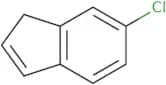
Formula:C5H6S2Purity:Min. 95%Molecular weight:130.2 g/mol6-Chloro-1H-indene
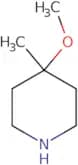
CAS:6-Chloro-1H-indene is a versatile molecule that can be used as an acceptor for cyclopropanation reactions. It is a monoadduct and the product of a unique reaction that involves carbenes. 6-Chloro-1H-indene has been shown to be selective for alkenes in photovoltaic experiments, with high conversion rates and low levels of polymers. It has also been shown to have potential in organic chemistry as a scalable synthesis.Formula:C9H7ClPurity:Min. 95%Molecular weight:150.6 g/mol4-Methoxy-4-methylpiperidine
CAS:Versatile small molecule scaffoldFormula:C7H15NOPurity:Min. 95%Molecular weight:129.2 g/mol2-Methyl-1,4-dioxa-8-azaspiro[4.5]decane hydrochloride
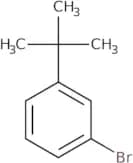
CAS:Controlled ProductVersatile small molecule scaffoldFormula:C8H16ClNO2Purity:Min. 95%Molecular weight:193.7 g/mol1-Bromo-3-tert-butylbenzene
CAS:1-Bromo-3-tert-butylbenzene is a chemical compound that is used in the synthesis of pharmaceuticals, pesticides, and other organic compounds. It has been shown to be an effective inhibitor of NF-κB, which plays a key role in the inflammatory response. 1-Bromo-3-tert-butylbenzene has also been shown to inhibit colon cancer cells and phosphatase activity. The inhibition of these two activities can lead to a decrease in human diseases such as cancer and diabetes. This compound can be synthesized by using solvents such as dichloromethane or chloroform, or by using phosphatase enzymes from bacteria or fungi.
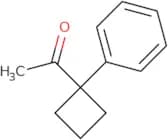
Formula:C10H13BrPurity:Min. 95%Molecular weight:213.11 g/mol1-(1-Phenylcyclobutyl)ethanone
CAS:Versatile small molecule scaffoldFormula:C12H14OPurity:Min. 95%Molecular weight:174.24 g/mol

![4-Azatricyclo[9.4.0.0,3,8]pentadeca-1(15),3,5,7,11,13-hexaen-2-one](/_next/image/?url=https%3A%2Fstatic.cymitquimica.com%2Fproducts%2F3D%2Fthumb-webp%2FDAA96473.webp&w=3840&q=75)
![2-Methyl-1,4-dioxa-8-azaspiro[4.5]decane hydrochloride](/_next/image/?url=https%3A%2Fstatic.cymitquimica.com%2Fproducts%2F3D%2Fthumb-webp%2FDAA97083.webp&w=3840&q=75)