Building Blocks
This section contains fundamental products for the synthesis of organic and biological compounds. Building blocks are the essential starting materials used to construct complex molecules through various chemical reactions. They play a critical role in drug discovery, material science, and chemical research. At CymitQuimica, we offer a diverse range of high-quality building blocks to support your innovative research and industrial projects, ensuring you have the essential components for successful synthesis.
Subcategories of "Building Blocks"
- Boronic Acids & Boronic Acid Derivatives(5,778 products)
- Chiral Building Blocks(1,242 products)
- Hydrocarbon Building Blocks(6,098 products)
- Organic Building Blocks(61,034 products)
Found 199601 products of "Building Blocks"
Sort by
Purity (%)
0
100
|
0
|
50
|
90
|
95
|
100
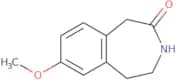
7-Methoxy-2,3,4,5-tetrahydro-1H-3-benzazepin-2-one
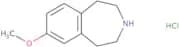
CAS:<p>Versatile small molecule scaffold</p>Formula:C11H13NO2Purity:Min. 95%Molecular weight:191.23 g/mol7-methoxy-2,3,4,5-tetrahydro-1H-3-benzazepine hydrochloride
CAS:Versatile small molecule scaffoldFormula:C11H16ClNOPurity:Min. 95%Molecular weight:213.71 g/mol2-Chloro-N-[2-(4-methoxyphenyl)ethyl]acetamide
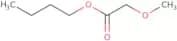
CAS:Versatile small molecule scaffoldFormula:C11H14ClNO2Purity:Min. 95%Molecular weight:227.69 g/molButyl 2-methoxyacetate
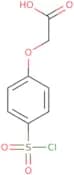
CAS:<p>Butyl 2-methoxyacetate is a solvent that is used in the polymerization of acrylate monomers. It can also be used as a polymerization initiator to initiate the polymerization of acrylic acid, methacrylic acid and acrylonitrile. Butyl 2-methoxyacetate has an acidic nature and reacts with inorganic salts such as sodium hydroxide or potassium hydroxide. This reaction produces an organic salt, which can be isolated by crystallization. The hydrocarbon group on butyl 2-methoxyacetate makes it useful for extraction of lipids from natural sources. Butyl 2-methoxyacetate is also used as a solid catalyst in the polymerization of styrene, vinyl acetate and other aliphatic hydrocarbons.</p>Formula:C7H14O3Purity:Min. 95%Molecular weight:146.18 g/mol2-(4-(Chlorosulfonyl)phenoxy)acetic acid
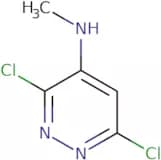
CAS:<p>Versatile small molecule scaffold</p>Formula:C8H7ClO5SPurity:Min. 95%Molecular weight:250.66 g/mol3,6-Dichloro-N-methylpyridazin-4-amine
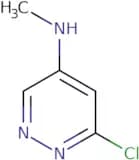
CAS:<p>Versatile small molecule scaffold</p>Formula:C5H5Cl2N3Purity:Min. 95%Molecular weight:178.02 g/mol6-Chloro-N-methylpyridazin-4-amine
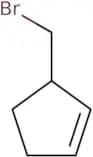
CAS:Versatile small molecule scaffoldFormula:C5H6ClN3Purity:Min. 95%Molecular weight:143.57 g/mol3-(Bromomethyl)cyclopent-1-ene
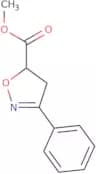
CAS:<p>Versatile small molecule scaffold</p>Formula:C6H9BrPurity:Min. 95%Molecular weight:161.04 g/molMethyl 3-phenyl-4,5-dihydro-1,2-oxazole-5-carboxylate
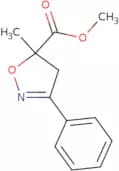
CAS:<p>Versatile small molecule scaffold</p>Formula:C11H11NO3Purity:Min. 95%Molecular weight:205.21 g/molMethyl 5-methyl-3-phenyl-4,5-dihydro-1,2-oxazole-5-carboxylate
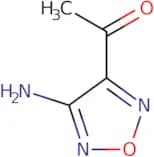
CAS:<p>Versatile small molecule scaffold</p>Formula:C12H13NO3Purity:Min. 95%Molecular weight:219.24 g/mol1-(4-Amino-1,2,5-oxadiazol-3-yl)ethan-1-one
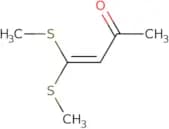
CAS:<p>Versatile small molecule scaffold</p>Formula:C4H5N3O2Purity:Min. 95%Molecular weight:127.1 g/mol4,4-Bis(methylsulfanyl)but-3-en-2-one
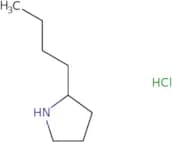
CAS:<p>Versatile small molecule scaffold</p>Formula:C6H10OS2Purity:Min. 95%Molecular weight:162.3 g/mol2-Butylpyrrolidine hydrochloride
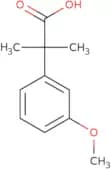
CAS:<p>Versatile small molecule scaffold</p>Formula:C8H18ClNPurity:Min. 95%Molecular weight:163.69 g/mol2-(3-Methoxyphenyl)-2-methylpropanoic acid
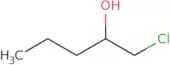
CAS:Versatile small molecule scaffoldFormula:C11H14O3Purity:Min. 95%Molecular weight:194.23 g/mol1-Chloropentan-2-ol
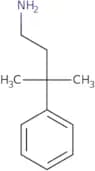
CAS:<p>1-Chloropentan-2-ol is an allylphenol compound with a chiral center. It is used as a chiral synthon in the synthesis of pharmaceutically active compounds, including pharmaceuticals and agrochemicals. 1-Chloropentan-2-ol can be synthesized by the reaction of allyl bromide and chloroform in the presence of copper(I) iodide and a diphosphine catalyst. This process generates enantiomeric excesses of up to 99%. The use of bimetallic catalysts can also increase the enantioselectivity, with selectivities up to 99% ee.<br>1-Chloropentan-2-ol has been shown to be effective as a chiral catalyst in the formation of chlorohydrins from primary amines or secondary amines. Chlorohydrins are intermediates in organic synthesis, which are used for the production of</p>Formula:C5H11ClOPurity:Min. 95%Molecular weight:122.59 g/mol3-Methyl-3-phenylbutan-1-amine
CAS:<p>Versatile small molecule scaffold</p>Formula:C11H17NPurity:Min. 95%Molecular weight:163.26 g/mol2-(2,5-Dioxo-2,5-dihydro-1H-pyrrol-1-yl)acetyl chloride
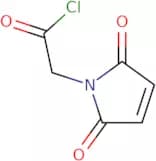
CAS:<p>2-(2,5-Dioxo-2,5-dihydro-1H-pyrrol-1-yl)acetyl chloride is a stereoselective monomer for the preparation of polymers and acetoxy compounds. It is used as an acylation agent and has been shown to react with azetidinones. 2-(2,5-Dioxo-2,5-dihydro-1H-pyrrol-1-yl)acetyl chloride is a colorless liquid that can be synthesized by reacting acetaldehyde with pyrrole in the presence of sodium <br>desulfite.</p>Formula:C6H4ClNO3Purity:Min. 95%Molecular weight:173.55 g/molN-Glutarylglycin
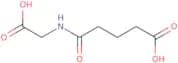
CAS:<p>N-Glutarylglycin is an antiretroviral drug that inhibits the HIV virus from infecting human cells. It is a type of nucleoside analog and works by blocking the reverse transcriptase enzyme, which is necessary for viral replication. N-Glutarylglycin has been shown to be effective in treating cardiac and renal diseases caused by HIV infection, as well as other diseases such as atherosclerosis. The drug is not active against viruses that do not use reverse transcriptase or that replicate within the cytoplasm of a cell. N-Glutarylglycin has also been shown to have probiotic properties, which may be due to its ability to stimulate intestinal bacterial growth and inhibit the adhesion of certain bacteria to intestinal epithelial cells.</p>Formula:C7H11NO5Purity:Min. 95%Molecular weight:189.17 g/molEthyl N-cyanoethoxycarboximidate
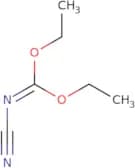
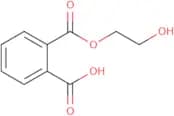
CAS:<p>Ethyl N-cyanoethoxycarboximidate is a chemical compound that is used to synthesize selenadiazoles. This compound undergoes photolysis with ultraviolet light, which leads to the formation of the corresponding oxadiazole. The sulfur analogues of this compound are thermally stable and can be synthesized using catalytic hydrogenation or hydrolysis. Ethyl N-cyanoethoxycarboximidate has been shown to react with alkenes in a rearrangement reaction and also undergoes thermolysis when heated.</p>Formula:C6H10N2O2Purity:Min. 95%Molecular weight:142.16 g/mol2-((2-Hydroxyethoxy)carbonyl)benzoic acid
CAS:<p>2-((2-Hydroxyethoxy)carbonyl)benzoic acid (HECA) is a reactive and catalytic ligand that can be used to study the kinetics and mechanism of transition metal catalyzed reactions. HECA binds to transition metals such as nickel, palladium, platinum, and copper. It is also a ligand for alkoxides and alcohols. HECA has been shown to be an effective catalyst in organic synthesis, including the catalysis of oxidative addition reactions.</p>Formula:C10H10O5Purity:Min. 95%Molecular weight:210.18 g/mol

![2-Chloro-N-[2-(4-methoxyphenyl)ethyl]acetamide](/_next/image/?url=https%3A%2Fstatic.cymitquimica.com%2Fproducts%2F3D%2Fthumb-webp%2FSAA63950.webp&w=3840&q=75)