Building Blocks
This section contains fundamental products for the synthesis of organic and biological compounds. Building blocks are the essential starting materials used to construct complex molecules through various chemical reactions. They play a critical role in drug discovery, material science, and chemical research. At CymitQuimica, we offer a diverse range of high-quality building blocks to support your innovative research and industrial projects, ensuring you have the essential components for successful synthesis.
Subcategories of "Building Blocks"
- Boronic Acids & Boronic Acid Derivatives(5,778 products)
- Chiral Building Blocks(1,242 products)
- Hydrocarbon Building Blocks(6,098 products)
- Organic Building Blocks(61,034 products)
Found 199601 products of "Building Blocks"
Sort by
Purity (%)
0
100
|
0
|
50
|
90
|
95
|
100
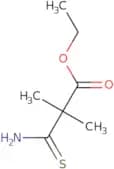
Ethyl 2-carbamothioyl-2,2-dimethylacetate
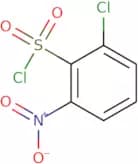
CAS:<p>Versatile small molecule scaffold</p>Formula:C7H13NO2SPurity:Min. 95%Molecular weight:175.25 g/mol2-Chloro-6-nitrobenzene-1-sulfonyl chloride
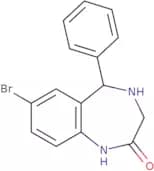
CAS:<p>Versatile small molecule scaffold</p>Formula:C6H3Cl2NO4SPurity:Min. 95%Molecular weight:256.06 g/mol7-Bromo-5-phenyl-2,3,4,5-tetrahydro-1H-1,4-benzodiazepin-2-one
CAS:Controlled Product<p>Versatile small molecule scaffold</p>Formula:C15H13BrN2OPurity:Min. 95%Molecular weight:317.18 g/mol7-Methyl-5-phenyl-1,3,4,5-tetrahydro-2H-1,4-benzodiazepin-2-one
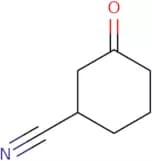
CAS:Controlled Product<p>Versatile small molecule scaffold</p>Formula:C16H16N2OPurity:Min. 95%Molecular weight:252.31 g/mol3-Oxocyclohexanecarbonitrile
CAS:<p>3-Oxocyclohexanecarbonitrile (3OHC) is a novel chemical compound with analgesic properties. 3OHC has been shown to be effective in reducing the inflammation of the human body. The mechanism of action has not yet been elucidated, but it may be due to its ability to inhibit prostaglandin synthesis and reduce the oxidative stress by forming reactive oxygen species. 3OHC is also an active antinociceptive agent that can be used in combination with other drugs to treat inflammatory diseases. 3OHC is able to reduce the pain caused by inflammatory diseases by reducing the production of prostaglandins, which are a group of chemicals that are responsible for causing pain and inflammation.</p>Formula:C7H9NOPurity:Min. 95%Molecular weight:123.15 g/mol2-[4-(Trimethylsilyl)phenyl]acetonitrile
CAS:<p>Versatile small molecule scaffold</p>Formula:C11H15NSiPurity:Min. 95%Molecular weight:189.33 g/mol2-Nitro-5H,6H,7H,8H,9H,10H-cyclohepta[b]indole
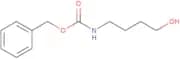
CAS:<p>Versatile small molecule scaffold</p>Formula:C13H14N2O2Purity:Min. 95%Molecular weight:230.26 g/mol4-(Z-Amino)-1-butanol
CAS:<p>4-(Z-Amino)-1-butanol is a synthetic chemokine that has been shown to be an effective vaccine adjuvant. It is believed that this drug works by enhancing the immune response to the vaccine and increasing the production of cytokines. 4-(Z-Amino)-1-butanol has been shown to be effective in treating damaged cells, such as those caused by cancer cells or viruses. This drug also prevents replication of HIV and other virus infections, which may be due to its ability to inhibit viral DNA polymerase. 4-(Z-Amino)-1-butanol binds with high affinity to the chemokine receptor CXCR3, which is expressed on activated T cells and macrophages. The binding induces chemotaxis, activation, and differentiation of T cells into effector cells.</p>Formula:C12H17NO3Purity:Min. 95%Molecular weight:223.27 g/mol7-Methyl-8-quinoxalinesulfonyl Chloride
CAS:<p>Versatile small molecule scaffold</p>Formula:C10H8ClNO2SPurity:Min. 95%Molecular weight:241.69 g/molN-Methyl-N-[(1-methyl-1H-imidazol-2-yl)methyl]amine
CAS:<p>Versatile small molecule scaffold</p>Formula:C6H11N3Purity:Min. 95%Molecular weight:125.17 g/mol4-(1-Phenylethyl)-4H-1,2,4-triazole-3-thiol
CAS:<p>Versatile small molecule scaffold</p>Formula:C10H11N3SPurity:Min. 95%Molecular weight:205.28 g/mol2-{4H,5H,6H,7H,8H-Cyclohepta[D][1,3]thiazol-2-yl}ethan-1-amine
CAS:<p>Versatile small molecule scaffold</p>Formula:C10H16N2SPurity:Min. 95%Molecular weight:196.31 g/mol2-[4-(Trifluoromethyl)-1,3-thiazol-2-yl]ethan-1-amine
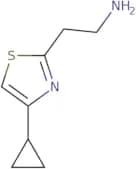
CAS:<p>Versatile small molecule scaffold</p>Formula:C6H7F3N2SPurity:Min. 95%Molecular weight:196.2 g/mol2-(4-Cyclopropyl-1,3-thiazol-2-yl)ethan-1-amine
CAS:<p>Versatile small molecule scaffold</p>Formula:C8H12N2SPurity:Min. 95%Molecular weight:168.26 g/mol2-[4-(Propan-2-yl)-1,3-thiazol-2-yl]ethan-1-amine
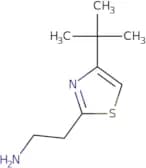
CAS:<p>Versatile small molecule scaffold</p>Formula:C8H14N2SPurity:Min. 95%Molecular weight:170.28 g/mol2-(4-tert-Butyl-1,3-thiazol-2-yl)ethan-1-amine
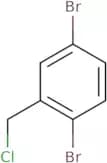
CAS:<p>Versatile small molecule scaffold</p>Formula:C9H16N2SPurity:Min. 95%Molecular weight:184.3 g/mol1,4-Dibromo-2-(chloromethyl)benzene
CAS:<p>1,4-Dibromo-2-(chloromethyl)benzene is a synthetic compound that has been used as an anti-hepatitis C virus (HCV) agent. It is effective against HCV genotype 1 and 2, but not 3. It has been shown to be active in inhibiting the replication of HCV RNA by binding to the viral enzyme RNA polymerase. This drug has also been found to inhibit the growth of Mycobacterium tuberculosis and is being investigated for use in treating tuberculosis. The drug is prepared by reacting bromobenzene with sodium hydroxide and chloromethyl chloride in aqueous solution at 0°C. Dibromoethane reacts with paraformaldehyde and cuprous cyanide to form 1,4-dibromo-2-(chloromethyl)benzene, which can then be treated with hydrochloric acid to form the desired product.</p>Formula:C7H5Br2ClPurity:Min. 95%Molecular weight:284.37 g/moltert-Butyl 3-[(2-chloroacetamido)methyl]piperidine-1-carboxylate
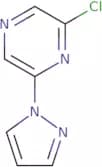
CAS:<p>Versatile small molecule scaffold</p>Formula:C13H23ClN2O3Purity:Min. 95%Molecular weight:290.78 g/mol2-Chloro-6-(pyrazol-1-yl)pyrazine
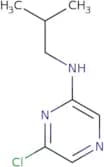
CAS:<p>Versatile small molecule scaffold</p>Formula:C7H5ClN4Purity:Min. 95%Molecular weight:180.6 g/mol6-chloro-N-(2-methylpropyl)pyrazin-2-amine
CAS:<p>Versatile small molecule scaffold</p>Formula:C8H12ClN3Purity:Min. 95%Molecular weight:185.7 g/mol


![2-[4-(Trimethylsilyl)phenyl]acetonitrile](/_next/image/?url=https%3A%2Fstatic.cymitquimica.com%2Fproducts%2F3D%2Fthumb-webp%2FSAA98341.webp&w=3840&q=75)
![2-Nitro-5H,6H,7H,8H,9H,10H-cyclohepta[b]indole](/_next/image/?url=https%3A%2Fstatic.cymitquimica.com%2Fproducts%2F3D%2Fthumb-webp%2FSAA99355.webp&w=3840&q=75)
![N-Methyl-N-[(1-methyl-1H-imidazol-2-yl)methyl]amine](/_next/image/?url=https%3A%2Fstatic.cymitquimica.com%2Fproducts%2F3D%2Fthumb-webp%2FSAB07519.webp&w=3840&q=75)

![2-{4H,5H,6H,7H,8H-Cyclohepta[D][1,3]thiazol-2-yl}ethan-1-amine](/_next/image/?url=https%3A%2Fstatic.cymitquimica.com%2Fproducts%2F3D%2Fthumb-webp%2FSAB07828.webp&w=3840&q=75)
![2-[4-(Trifluoromethyl)-1,3-thiazol-2-yl]ethan-1-amine](/_next/image/?url=https%3A%2Fstatic.cymitquimica.com%2Fproducts%2F3D%2Fthumb-webp%2FSAB08123.webp&w=3840&q=75)
![2-[4-(Propan-2-yl)-1,3-thiazol-2-yl]ethan-1-amine](/_next/image/?url=https%3A%2Fstatic.cymitquimica.com%2Fproducts%2F3D%2Fthumb-webp%2FSAB08125.webp&w=3840&q=75)
![tert-Butyl 3-[(2-chloroacetamido)methyl]piperidine-1-carboxylate](/_next/image/?url=https%3A%2Fstatic.cymitquimica.com%2Fproducts%2F3D%2Fthumb-webp%2FSAB44345.webp&w=3840&q=75)