


Building Blocks
This section contains fundamental products for the synthesis of organic and biological compounds. Building blocks are the essential starting materials used to construct complex molecules through various chemical reactions. They play a critical role in drug discovery, material science, and chemical research. At CymitQuimica, we offer a diverse range of high-quality building blocks to support your innovative research and industrial projects, ensuring you have the essential components for successful synthesis.
Subcategories of "Building Blocks"
- Boronic Acids & Boronic Acid Derivatives(5,756 products)
- Chiral Building Blocks(1,242 products)
- Hydrocarbon Building Blocks(6,095 products)
- Organic Building Blocks(61,037 products)
Found 196139 products of "Building Blocks"
Sort by
Purity (%)
0
100
|
0
|
50
|
90
|
95
|
100
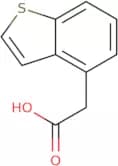
2-(1-Benzothiophen-4-yl)acetic acid
CAS:<p>2-(1-Benzothiophen-4-yl)acetic acid (2BA) is a phenoxy compound that has been isolated from a variety of plants. It is also found in coal tar and oil shale. 2BA has a high activity against bacteria, fungi and viruses, but its toxicity to humans is not well understood. 2BA has shown to have antibacterial properties which may be due to the inhibitory effects on bacterial DNA gyrase and topoisomerase IV. It also inhibits the production of nitric oxide by inhibiting the activation of inducible nitric oxide synthase (iNOS). This compound is also used as an intermediate for the synthesis of other chemicals such as salicylic acid or cinnamic acid. The chemical structure of 2BA consists of a benzene ring with two hydroxyl groups, a carboxylic acid group, and an ester linkage.<br>END></p>Formula:C10H8O2SPurity:Min. 95%Molecular weight:192.24 g/mol1-(4,5-Dihydro-1,3-thiazol-2-yl)hydrazine hydrobromide
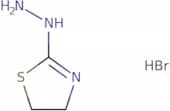
CAS:<p>Versatile small molecule scaffold</p>Formula:C3H8BrN3SPurity:Min. 95%Molecular weight:198.09 g/mol1-Benzyl-3,5-dimethyl-1H-pyrazole-4-carbaldehyde
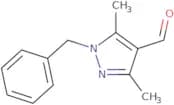
CAS:<p>Versatile small molecule scaffold</p>Formula:C13H14N2OPurity:Min. 95%Molecular weight:214.26 g/mol2-(N-Methyl4-methylbenzenesulfonamido)acetic acid
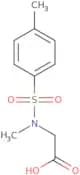
CAS:<p>2-(N-Methy4-methylbenzenesulfonamido)acetic acid is a chiral amide that can be used to prepare enantiomerically enriched olefins. It is used in the asymmetric acylation of olefins and has been shown to form cyclobutanones with high stereoselectivity. 2-(N-Methyl4-methylbenzenesulfonamido)acetic acid can also be used for the preparation of vicinal adducts and hydrolysis products of this compound.</p>Formula:C10H13NO4SPurity:Min. 95%Molecular weight:243.28 g/molPR-619
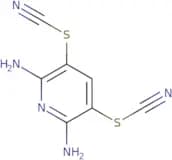
CAS:<p>PR-619 is a small molecule that inhibits the ubiquitin ligases Nedd4 and HECTD1, leading to the activation of autophagy. PR-619 also inhibits protease activity in cancer cells. It has been shown to specifically target microbial infections such as tuberculosis and malaria. PR-619 has shown promise for treating urothelial carcinoma, heparin-induced thrombocytopenia, mesenchymal markers, and body formation.</p>Formula:C7H5N5S2Purity:Min. 95%Molecular weight:223.28 g/mol3-Amino-1-(4-bromophenyl)urea
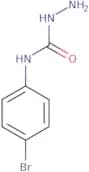
CAS:<p>3-Amino-1-(4-bromophenyl)urea (3ABPU) is a phenylurea compound that has been shown to have broad-spectrum pharmacological properties. 3ABPU is a potent inhibitor of tetrazole, which is involved in the synthesis of DNA and RNA. This inhibition results in an increase in the number of cells with chromosomal aberrations. 3ABPU also inhibits isatin, which is involved in the synthesis of protein and nucleic acid. It has been shown to be effective against carbamazepine and phenobarbital, two drugs used for the treatment of epilepsy and seizures. 3ABPU has also been shown to have anticonvulsant effects when administered intraperitoneally or orally. 3ABPU has been shown to cause neurotoxicity when given intraperitoneally, but not orally. Pharmacokinetic studies have indicated that it can be detected in cerebrospinal fluid following intraperitone</p>Formula:C7H8N3OBrPurity:Min. 95%Molecular weight:230.06 g/mol3-Bromo-3-methyl-2-butanone
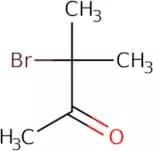
CAS:<p>3-Bromo-3-methyl-2-butanone is a carbocyanine dye with a low molecular weight. It has been shown to be an effective ligand for technetium and can be used to synthesize this radionuclide in the presence of acid catalysts. The synthesis of 3-bromo-3-methyl-2-butanone is achieved by reacting 3,5,5'-trimethylcyclohexyl isopropyl ether with bromine in the presence of an acid catalyst. The reaction time required for complete conversion may vary from 1 to 24 hours depending on the concentration and type of catalyst used. 3-Bromo-3-methyl-2-butanone is reversibly protonated and exhibits an enolate tautomeric structure. It also reacts with alkyl halides to form 2,4,6,8,10,12,-pentamethylcyclopentadien</p>Formula:C5H9BrOPurity:Min. 95%Molecular weight:165.03 g/mol3-Ethoxy-4-methoxybenzoic acid
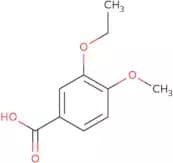
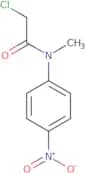
CAS:<p>Versatile small molecule scaffold</p>Formula:C10H12O4Purity:Min. 95%Molecular weight:196.2 g/mol2-Chloro-N-methyl-N-(4-nitrophenyl)acetamide
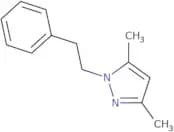
CAS:<p>2-Chloro-N-methyl-N-(4-nitrophenyl)acetamide is used as a reagent in the synthesis of Nintedanib. It is a chlorinated compound that can be produced by chlorination in the presence of acylating agents. The target product of this reaction is acetamide, which is formed when the reagent reacts with an amine. This reaction can take place at room temperature and the condition for this reaction is a nonpolar solvent.</p>Formula:C9H9ClN2O3Purity:Min. 95%Molecular weight:228.63 g/mol3,5-Dimethyl-1-(2-phenylethyl)-1H-pyrazole
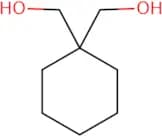
CAS:Controlled Product<p>Versatile small molecule scaffold</p>Formula:C13H16N2Purity:Min. 95%Molecular weight:200.28 g/mol1,1-Cyclohexanedimethanol
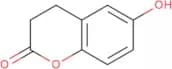
CAS:<p>1,1-Cyclohexanedimethanol is a preservative that is used in polyurethane coatings. 1,1-Cyclohexanedimethanol is an antimicrobial agent and can be used as an additive to inhibit microbial growth. It also has the ability to react with epoxy resins to form a protective coating that resists corrosion. This chemical has been shown to be effective against many microbes including fungi and bacteria. The antimicrobial properties of 1,1-cyclohexanedimethanol are due to its acidic nature which inhibits microbial growth by disrupting microbial membranes.</p>Formula:C8H16O2Purity:Min. 95%Molecular weight:144.21 g/mol6-Hydroxy-3,4-dihydro-2H-1-benzopyran-2-one
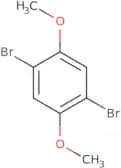
CAS:<p>Versatile small molecule scaffold</p>Formula:C9H8O3Purity:Min. 95%Molecular weight:164.16 g/mol1,4-Dibromo-2,5-dimethoxybenzene
CAS:<p>1,4-Dibromo-2,5-dimethoxybenzene is a gas sensor that has been shown to have high sensitivity for hydrogen peroxide and chlorine. It is also a good candidate for the detection of amines. The polymer film has been demonstrated to be sensitive to frequencies in the ultraviolet region. This compound was synthesized by the cross-coupling reaction between 1,4-dibromo-2,5-dimethoxybenzene and aniline using palladium catalyst. It can be used as a chiral building block for natural compounds and can be used in synthetic applications due to its morphology.</p>Formula:C8H8Br2O2Purity:Min. 95%Molecular weight:295.96 g/molChloroneb
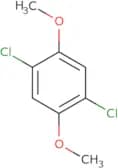
CAS:<p>Chloroneb is a fungicide that belongs to the benzimidazole derivative class of chemical substances. Chloroneb is used to control diseases caused by fungi in animals, plants, and humans. Chloroneb has been shown to be effective against resistant mutants of the bacteria Ureaplasma urealyticum. The mechanism of action for chloroneb is not well understood but it may involve inhibition of mitochondrial cytochrome C oxidase. This drug also has an effect on wild-type strains of bacteria such as Staphylococcus aureus and Bacillus cereus. Chloroneb is rapidly excreted in urine samples and can be detected in blood plasma for up to 12 hours after administration.</p>Formula:C8H8Cl2O2Purity:Min. 95%Molecular weight:207.05 g/mol2-Benzoylfuran
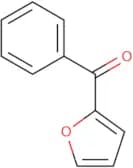
CAS:<p>2-Benzoylfuran is a heterocycle with the formula C8H6O. It is an aromatic hydrocarbon that can be found in coal tar. 2-Benzoylfuran is used as a starting material for the synthesis of other compounds, including pharmaceuticals and pesticides. The molecule has been shown to have anti-apoptotic effects in cells, which may be due to its ability to inhibit reactive oxygen species (ROS) production or activation of caspases. 2-Benzoylfuran also has kinetic properties that are dependent on temperature and pH, which means it will react differently at different conditions.<br>2-Benzoylfuran is often used as an intermediate in cross-coupling reactions, which are chemical reaction where two nucleophiles are brought together by a metal catalyst to form new bonds.</p>Formula:C11H8O2Purity:Min. 95%Molecular weight:172.18 g/mol3-(Cyclopentyloxy)propanenitrile
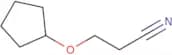
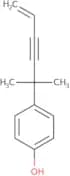
CAS:<p>Versatile small molecule scaffold</p>Formula:C8H13NOPurity:Min. 95%Molecular weight:139.19 g/mol4-(2-Methylhex-5-en-3-yn-2-yl)phenol
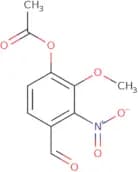
CAS:<p>Versatile small molecule scaffold</p>Formula:C13H14OPurity:Min. 95%Molecular weight:186.25 g/mol4-formyl-2-methoxy-3-nitrophenyl acetate
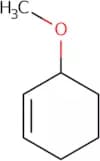
CAS:<p>Versatile small molecule scaffold</p>Formula:C10H9NO6Purity:Min. 95%Molecular weight:239.18 g/mol3-Methoxycyclohexene
CAS:<p>3-Methoxycyclohexene is a magnetic resonance spectroscopy probe that reacts with peroxides, hydrogen chloride, and hydrogen fluoride. It has been shown to react with nucleophilic groups such as amides and methoxy groups. 3-Methoxycyclohexene has been used as a reactive intermediate in the synthesis of polymers and other organic compounds. 3-Methoxycyclohexene also reacts with boron nitride to form the compound 3-methoxycyclohexenyl boron nitride. This reaction proceeds through an initial nucleophilic attack on the boron nitride molecule followed by a substitution reaction that leads to formation of the desired product.<br>3-Methoxycyclohexene is a colorless liquid with a boiling point of 98°C and a melting point of -78°C. The molecular formula is C8H12O2 and its molecular weight is 136.17 g/</p>Formula:C7H12OPurity:Min. 95%Molecular weight:112.17 g/mol2-[(4-Nitrophenyl)methylene]malononitrile
CAS:<p>2-[(4-Nitrophenyl)methylene]malononitrile (NPM) is an aldehyde that has been shown to be cytotoxic against hepg2 cells and induce apoptosis in these cells. NPM also inhibits the production of urea nitrogen and aldehydes by intestinal tissues. It has been shown to inhibit the growth of cisplatin-induced nephrotoxicity in rats, which may be due to its ability to reduce serum levels of hydrogen bond and inhibitory potency. NPM has also been found to have anti-cancer activity against different types of cancer cells in vitro. In particular, it inhibits the growth of ovarian cancer cells by inducing apoptosis and inhibiting the proliferation of these cells.</p>Formula:C10H5N3O2Purity:Min. 95%Molecular weight:199.17 g/mol

![2-[(4-Nitrophenyl)methylene]malononitrile](/_next/image/?url=https%3A%2Fstatic.cymitquimica.com%2Fproducts%2F3D%2Fthumb-webp%2FCAA70023.webp&w=3840&q=75)