


Building Blocks
This section contains fundamental products for the synthesis of organic and biological compounds. Building blocks are the essential starting materials used to construct complex molecules through various chemical reactions. They play a critical role in drug discovery, material science, and chemical research. At CymitQuimica, we offer a diverse range of high-quality building blocks to support your innovative research and industrial projects, ensuring you have the essential components for successful synthesis.
Subcategories of "Building Blocks"
- Boronic Acids & Boronic Acid Derivatives(5,756 products)
- Chiral Building Blocks(1,242 products)
- Hydrocarbon Building Blocks(6,095 products)
- Organic Building Blocks(61,055 products)
Found 199650 products of "Building Blocks"
Sort by
Purity (%)
0
100
|
0
|
50
|
90
|
95
|
100
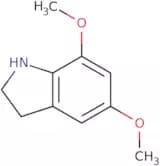
5,7-Dimethoxy-2,3-dihydro-1H-indole
CAS:<p>Versatile small molecule scaffold</p>Formula:C10H13NO2Purity:Min. 95%Molecular weight:179.22 g/mol2-(Carbamoylamino)-2-phenylacetic acid
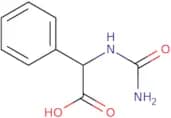
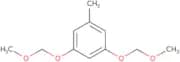
CAS:<p>2-Carbamoylamino-2-phenylacetic acid is a basic chemical that is used as a reagent in organic synthesis. It can be synthesized by the reaction of lithium aluminum hydride with phenylglycinol, and it can be purified by recrystallization from water. The compound is also used to reduce aluminium to aluminium hydride. 2-Carbamoylamino-2-phenylacetic acid has been shown to react with lithium or aluminium hydride, forming a lithium or aluminum salt respectively.</p>Formula:C9H10N2O3Purity:Min. 95%Molecular weight:194.19 g/mol1,3-Bis(methoxymethoxy)-5-methylbenzene
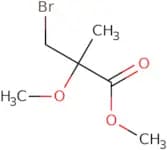
CAS:<p>Versatile small molecule scaffold</p>Formula:C11H16O4Purity:Min. 95%Molecular weight:212.24 g/molMethyl 3-bromo-2-methoxy-2-methylpropanoate
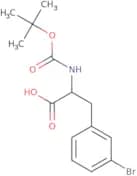
CAS:<p>Versatile small molecule scaffold</p>Formula:C6H11BrO3Purity:Min. 95%Molecular weight:211.05 g/molN-Boc-3-bromo-DL-phenylalanine
CAS:<p>Versatile small molecule scaffold</p>Formula:C14H18BrNO4Purity:Min. 95%Molecular weight:344.2 g/mol2-{[(tert-Butoxy)carbonyl]amino}-3-(3-methoxyphenyl)propanoic acid
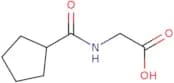
CAS:<p>Versatile small molecule scaffold</p>Formula:C15H21NO5Purity:Min. 95%Molecular weight:295.33 g/mol2-(Cyclopentylformamido)acetic acid
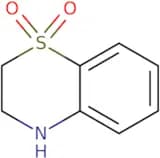
CAS:<p>Versatile small molecule scaffold</p>Formula:C8H13NO3Purity:Min. 95%Molecular weight:171.19 g/mol3,4-Dihydro-2H-1,4-benzothiazine-1,1-dione
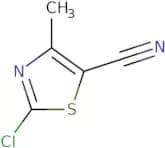
CAS:<p>Versatile small molecule scaffold</p>Formula:C8H9NO2SPurity:Min. 95%Molecular weight:183.23 g/mol2-Chloro-4-methyl-1,3-thiazole-5-carbonitrile
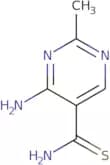
CAS:<p>Versatile small molecule scaffold</p>Formula:C5H3ClN2SPurity:Min. 95%Molecular weight:158.61 g/mol4-Amino-2-methylpyrimidine-5-carbothioamide
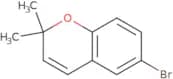
CAS:<p>Versatile small molecule scaffold</p>Formula:C6H8N4SPurity:Min. 95%Molecular weight:168.22 g/mol6-Bromo-2,2-dimethyl-2H-chromene
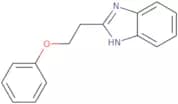
CAS:<p>Versatile small molecule scaffold</p>Formula:C11H11BrOPurity:Min. 95%Molecular weight:239.11 g/mol2-(2-Phenoxyethyl)-1H-1,3-benzodiazole
CAS:<p>Versatile small molecule scaffold</p>Formula:C15H14N2OPurity:Min. 95%Molecular weight:238.28 g/mol5-Benzoyl-1H-1,3-benzodiazole
CAS:<p>Benzodiazole is a heterocyclic organic compound. Benzodiazoles are widely used in industry, and as pharmaceuticals, biologicals, and pesticides. They are also important for their use as chemical intermediates. Benzodiazole derivatives have been prepared from hydrogen chloride and benzoyl chloride.</p>Formula:C14H10N2OPurity:Min. 95%Molecular weight:222.25 g/mol2-[(1,3-Dimethyl-2,6-dioxo-2,3,6,9-tetrahydro-1H-purin-8-yl)sulfanyl]acetic acid
CAS:<p>Versatile small molecule scaffold</p>Formula:C9H10N4O4SPurity:Min. 95%Molecular weight:270.27 g/mol2-[(1,3-Dimethyl-2,6-dioxo-2,3,6,7-tetrahydro-1H-purin-8-yl)sulfanyl]propanoic acid
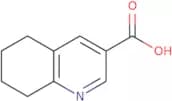
CAS:<p>Versatile small molecule scaffold</p>Formula:C10H12N4O4SPurity:Min. 95%Molecular weight:284.29 g/mol5,6,7,8-Tetrahydroquinoline-3-carboxylic acid
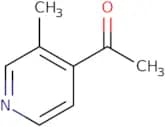
CAS:<p>5,6,7,8-Tetrahydroquinoline-3-carboxylic acid is a quinoline derivative that has been shown to have bacteriostatic activity against Staphylococcus aureus. It binds to the hydroxyl groups of the bacterial cell membrane and inhibits the production of enzymes necessary for protein synthesis. The interaction between the 5,6,7,8-tetrahydroquinoline-3-carboxylic acid and the hydroxyl group is reversible. 5,6,7,8-Tetrahydroquinoline-3-carboxylic acid also has bacteriostatic activity against other bacteria such as Mycobacterium tuberculosis and Mycobacterium avium complex.</p>Formula:C10H11NO2Purity:Min. 95%Molecular weight:177.2 g/mol1-(3-Methylpyridin-4-yl)ethan-1-one
CAS:<p>Versatile small molecule scaffold</p>Formula:C8H9NOPurity:Min. 95%Molecular weight:135.16 g/moltert-butyl N-[(2R)-1-oxopropan-2-yl]carbamate
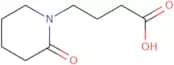
CAS:<p>Versatile small molecule scaffold</p>Formula:C8H15NO3Purity:Min. 95%Molecular weight:173.2 g/mol4-(2-Oxopiperidin-1-yl)butanoic acid
CAS:<p>Versatile small molecule scaffold</p>Formula:C9H15NO3Purity:Min. 95%Molecular weight:185.22 g/mol1-[(3-Methylphenyl)methyl]piperidin-4-amine
CAS:<p>Versatile small molecule scaffold</p>Formula:C13H20N2Purity:Min. 95%Molecular weight:204.31 g/mol

![2-{[(tert-Butoxy)carbonyl]amino}-3-(3-methoxyphenyl)propanoic acid](/_next/image/?url=https%3A%2Fstatic.cymitquimica.com%2Fproducts%2F3D%2Fthumb-webp%2FHDA27899.webp&w=3840&q=75)

![2-[(1,3-Dimethyl-2,6-dioxo-2,3,6,9-tetrahydro-1H-purin-8-yl)sulfanyl]acetic acid](/_next/image/?url=https%3A%2Fstatic.cymitquimica.com%2Fproducts%2F3D%2Fthumb-webp%2FHDA33112.webp&w=3840&q=75)
![2-[(1,3-Dimethyl-2,6-dioxo-2,3,6,7-tetrahydro-1H-purin-8-yl)sulfanyl]propanoic acid](/_next/image/?url=https%3A%2Fstatic.cymitquimica.com%2Fproducts%2F3D%2Fthumb-webp%2FHDA33113.webp&w=3840&q=75)
![tert-butyl N-[(2R)-1-oxopropan-2-yl]carbamate](/_next/image/?url=https%3A%2Fstatic.cymitquimica.com%2Fproducts%2F3D%2Fthumb-webp%2FHDA35356.webp&w=3840&q=75)
![1-[(3-Methylphenyl)methyl]piperidin-4-amine](/_next/image/?url=https%3A%2Fstatic.cymitquimica.com%2Fproducts%2F3D%2Fthumb-webp%2FHDA37882.webp&w=3840&q=75)