Building Blocks
This section contains fundamental products for the synthesis of organic and biological compounds. Building blocks are the essential starting materials used to construct complex molecules through various chemical reactions. They play a critical role in drug discovery, material science, and chemical research. At CymitQuimica, we offer a diverse range of high-quality building blocks to support your innovative research and industrial projects, ensuring you have the essential components for successful synthesis.
Subcategories of "Building Blocks"
- Boronic Acids & Boronic Acid Derivatives(5,756 products)
- Chiral Building Blocks(1,242 products)
- Hydrocarbon Building Blocks(6,095 products)
- Organic Building Blocks(61,038 products)
Found 196817 products of "Building Blocks"
Sort by
Purity (%)
0
100
|
0
|
50
|
90
|
95
|
100
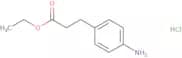
Ethyl 3-(4-aminophenyl)propanoate hydrochloride
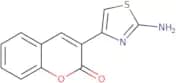
CAS:<p>Versatile small molecule scaffold</p>Formula:C11H16ClNO2Purity:Min. 95%Molecular weight:229.7 g/mol3-(2-Amino-thiazol-4-yl)-chromen-2-one
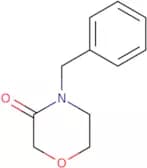
CAS:<p>3-(2-Amino-thiazol-4-yl)-chromen-2-one is a synthetic compound that exhibits cytotoxic activity in vitro. It has been shown to have antibacterial, antiviral, and antifungal activities. 3-(2-Amino-thiazol-4-yl)-chromen-2-one inhibits the growth of bacteria by binding to DNA. The mechanism of action of this compound is similar to cisplatin, a widely used anticancer drug. 3-(2-Amino-thiazol-4-yl)-chromen-2-one binds to the minor groove of DNA, forming an interstrand crosslink between two adjacent base pairs that prevents DNA replication and transcription. This compound also has potential as a cancer therapeutic due to its ability to inhibit the growth of tumour cells without affecting noncancerous cells.</p>Formula:C12H8N2O2SPurity:Min. 95%Molecular weight:244.27 g/molN-Benzyl-morpholin-3-one
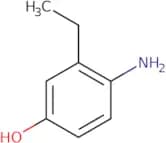
CAS:<p>N-Benzylmorpholin-3-one is a chiral, exocyclic amine oxidation agent that is used in organic synthesis. The compound has been shown to be effective in the chemoselective oxidation of imines and lactams, which are important reaction intermediates. It has been shown to be effective in controlling the regioselectivity of the reaction, with a high degree of chemoselectivity. N-Benzylmorpholin-3-one is also capable of oxidising cations such as quaternary ammonium salts and tertiary amines.</p>Formula:C11H13NO2Purity:Min. 95%Molecular weight:191.23 g/mol4-Amino-3-ethylphenol
CAS:<p>Versatile small molecule scaffold</p>Formula:C8H11NOPurity:Min. 95%Molecular weight:137.18 g/mol1-Ethynyl-4-methoxynaphthalene
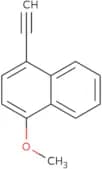
CAS:<p>1-Ethynyl-4-methoxynaphthalene is a synthetic estrogen that can be used as an analogue of estrone. It is also a formylation product of anisole, which is synthesized from formaldehyde and phenol. This compound has been shown to act as an agonist for the estrogen receptor, in addition to having the ability to induce bromination. The Corey-Fuchs reaction yields 1-ethynyl-4-methoxynaphthalene by reacting 4-methoxybenzaldehyde with ethyne.</p>Formula:C13H10OPurity:Min. 95%Molecular weight:182.22 g/mol1-tert-Butyl-1H-imidazole-2-thiol
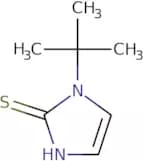
CAS:<p>1-tert-Butyl-1H-imidazole-2-thiol is a halogenated aromatic compound that is used as a solvent, a ligand in organometallic chemistry, and as an intermediate in the synthesis of other organic compounds. This chemical has been shown to undergo halide exchange reactions with metal ions such as magnesium chloride, aluminum chloride, and zinc chloride. It also has been shown to react with carboxylates to form 1-tert-butyl-1H-imidazole-2-carboxylate. The bond cleavage of the thiol group can be induced by reaction with iodosobenzene diacetate or hydrochloric acid. 1-tert-Butyl-1H-imidazole-2-thiol is soluble in ethers and benzene. The molecule has two thiol groups that can undergo disulfide bond formation, which may be catalyzed by copper(</p>Formula:C7H12N2SPurity:Min. 95%Molecular weight:156.25 g/mol2-Hydrazinoquinoxaline
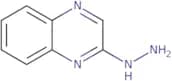
CAS:<p>2-Hydrazinoquinoxaline is a potent cytotoxic agent that inhibits methionine aminopeptidase, an enzyme that regulates the synthesis of proteins. 2-Hydrazinoquinoxaline has been shown to be active against cancer cells in culture and to produce cytostatic effects in vivo. The IC50 value for 2-hydrazinoquinoxaline was found to be less than 1 μM with an ED50 of approximately 10 μM, which indicates that this drug is more potent than some other quinoxalines. 2-Hydrazinoquinoxaline is not active against bacteria, but it has been shown to inhibit the growth of P. aeruginosa in vitro.</p>Formula:C8H8N4Purity:Min. 95%Molecular weight:160.18 g/mol2-Chloro-6-(trifluoromethyl)pyrazine
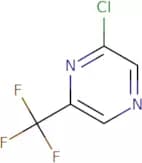
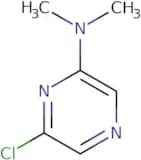
CAS:<p>Versatile small molecule scaffold</p>Formula:C5H2ClF3N2Purity:Min. 95%Molecular weight:182.53 g/mol6-Chloro-N,N-dimethylpyrazin-2-amine
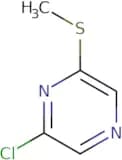
CAS:<p>Versatile small molecule scaffold</p>Formula:C6H8ClN3Purity:Min. 95%Molecular weight:157.6 g/mol2-Chloro-6-(methylsulfanyl)pyrazine
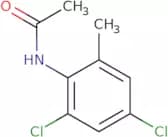
CAS:<p>Versatile small molecule scaffold</p>Formula:C5H5ClN2SPurity:Min. 95%Molecular weight:160.63 g/mol2,4-Dichloro-6-methylacetanilide
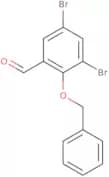
CAS:<p>Versatile small molecule scaffold</p>Formula:C9H9Cl2NOPurity:Min. 95%Molecular weight:218.08 g/mol2-(benzyloxy)-3,5-dibromobenzaldehyde
CAS:<p>2-(Benzyloxy)-3,5-dibromobenzaldehyde (2BDBA) is a carbonyl group with synthons. It is also known as a potential drug candidate for the treatment of cancer and other diseases. The interaction between 2BDBA and the carbonyl group has been investigated with advances in nature, analyses, energies, crystallographic, supramolecular and isomorphous studies. The fingerprint of the compound was found to be different from those of the other similar compounds. The interactions between 2BDBA and other molecules have been studied with advanced analytical techniques such as FTIR spectroscopy, which has given an insight into how these interactions take place.</p>Formula:C14H10Br2O2Purity:Min. 95%Molecular weight:370.04 g/mol3,5-Dibromo-2-methoxybenzaldehyde
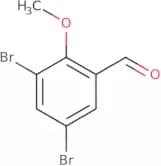
CAS:<p>3,5-Dibromo-2-methoxybenzaldehyde (3,5-DMB) is a x-ray crystal structure of a molecule. It is an organic compound that has the chemical formula of C10H8O4Br. 3,5-DMB is an intermediate in the synthesis of 6-methoxy-2-naphthol and has been crystallized from ethanolic solutions. 3,5-DMB can be efficiently synthesized by reacting malononitrile with piperidine in microwave irradiation. A reaction mechanism for this synthesis was proposed which involves the formation of a nitrile oxide intermediate followed by a one electron oxidation to form 3,5-DMB. This method can be used to generate high yields of 3,5-DMB in minutes and hours with good purity.</p>Formula:C8H6Br2O2Purity:Min. 95%Molecular weight:293.94 g/mol3,5-Dibromo-2-ethoxybenzaldehyde
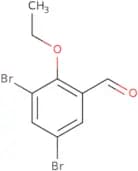
CAS:<p>Versatile small molecule scaffold</p>Formula:C9H8Br2O2Purity:Min. 95%Molecular weight:307.97 g/mol3-Hydroxy-N,N,3-trimethylbutanamide
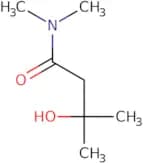
CAS:<p>3-Hydroxy-N,N,3-trimethylbutanamide is a liquid at room temperature. It is an additive that can be used in the production of nitrocellulose and as a preservative for nitrate film. 3-Hydroxy-N,N,3-trimethylbutanamide decomposes on exposure to UV light to form nitric oxide. It is also used as a photoinitiator in the synthesis of polymers by free radical polymerization reactions. The liquid composition can be thermally treated to produce stable silver nanoparticles.</p>Formula:C7H15NO2Purity:Min. 95%Molecular weight:145.2 g/mol6-(Benzylamino)pyrimidin-4-ol
CAS:<p>Versatile small molecule scaffold</p>Formula:C11H11N3OPurity:Min. 95%Molecular weight:201.22 g/mol1-(4-Fluorophenyl)but-3-en-1-one
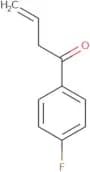
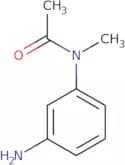
CAS:<p>Versatile small molecule scaffold</p>Formula:C10H9FOPurity:Min. 95%Molecular weight:164.18 g/molN-(3-Aminophenyl)-N-methylacetamide
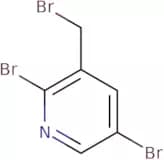
CAS:<p>Versatile small molecule scaffold</p>Formula:C9H12N2OPurity:Min. 95%Molecular weight:164.21 g/mol2,5-Dibromo-3-(bromomethyl)pyridine
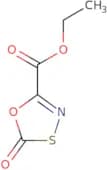
CAS:<p>Versatile small molecule scaffold</p>Formula:C6H4Br3NPurity:Min. 95%Molecular weight:329.81 g/molEthyl 2-oxo-2H-1,3,4-oxathiazole-5-carboxylate
CAS:<p>Versatile small molecule scaffold</p>Formula:C5H5NO4SPurity:Min. 95%Molecular weight:175.16 g/mol