Building Blocks
This section contains fundamental products for the synthesis of organic and biological compounds. Building blocks are the essential starting materials used to construct complex molecules through various chemical reactions. They play a critical role in drug discovery, material science, and chemical research. At CymitQuimica, we offer a diverse range of high-quality building blocks to support your innovative research and industrial projects, ensuring you have the essential components for successful synthesis.
Subcategories of "Building Blocks"
- Boronic Acids & Boronic Acid Derivatives(5,778 products)
- Chiral Building Blocks(1,242 products)
- Hydrocarbon Building Blocks(6,098 products)
- Organic Building Blocks(61,092 products)
Found 199296 products of "Building Blocks"
Sort by
Purity (%)
0
100
|
0
|
50
|
90
|
95
|
100
2-(Piperidin-4-yloxy)quinoxaline
CAS:<p>Versatile small molecule scaffold</p>Formula:C13H15N3OPurity:Min. 95%Molecular weight:229.28 g/mol1-[1-(1,3-Thiazol-2-yl)ethyl]piperazine
CAS:<p>Versatile small molecule scaffold</p>Formula:C9H15N3SPurity:Min. 95%Molecular weight:197.3 g/mol(1,5-Dimethyl-1H-pyrazol-3-yl)methanamine hydrochloride
CAS:<p>Versatile small molecule scaffold</p>Formula:C6H12ClN3Purity:Min. 95%Molecular weight:161.63 g/mol5-Fluoro-2-(2-pyrrolidinyl)-1h-benzimidazole dihydrochloride
CAS:<p>Versatile small molecule scaffold</p>Formula:C11H14Cl2FN3Purity:Min. 95%Molecular weight:278.15 g/mol6-Methyl-2-(2-pyrrolidinyl)-1H-benzimidazole dihydrochloride
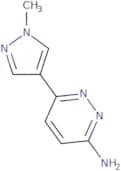
CAS:<p>Versatile small molecule scaffold</p>Formula:C12H17Cl2N3Purity:Min. 95%Molecular weight:274.19 g/mol6-(1-Methyl-1H-pyrazol-4-yl)pyridazin-3-amine
CAS:<p>Versatile small molecule scaffold</p>Formula:C8H9N5Purity:Min. 95%Molecular weight:175.19 g/mol5-Fluoroquinoline-6-carbaldehyde
CAS:<p>Versatile small molecule scaffold</p>Formula:C10H6FNOPurity:Min. 95%Molecular weight:175.16 g/moltert-Butyl N-{2-[2-(methylamino)ethoxy]ethyl}carbamate
CAS:<p>Versatile small molecule scaffold</p>Formula:C10H22N2O3Purity:Min. 95%Molecular weight:218.29 g/molEthyl 5-{[(tert-butoxy)carbonyl]amino}pent-3-ynoate
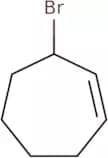
CAS:<p>Versatile small molecule scaffold</p>Formula:C12H19NO4Purity:Min. 95%Molecular weight:241.28 g/mol3-Bromocyclohept-1-ene
CAS:<p>3-Bromocyclohept-1-ene is an electrophile that reacts with nucleophiles, such as halides and hexacarbonyl. When heated, 3-bromocyclohept-1-ene undergoes a thermally induced ring opening to produce cyclopentenones and cyclic ketones. It also reacts with molybdenum to form a sodium salt. The product of the reaction with sodium is stereoselective, producing only the (E)-stereoisomer. 3-Bromocyclohept-1-ene also reacts with anions to form ligands.</p>Formula:C7H11BrPurity:Min. 95%Molecular weight:175.07 g/mol2-Chloro-N-[(1R)-1-phenylethyl]acetamide
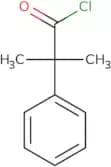
CAS:<p>Versatile small molecule scaffold</p>Formula:C10H12ClNOPurity:Min. 95%Molecular weight:197.66 g/mol2-Methyl-2-phenylpropanoyl chloride
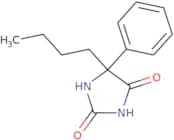
CAS:<p>2-Methyl-2-phenylpropanoyl chloride is a halogenated organic compound that can be used as a precursor to other organic compounds. It can be used in the synthesis of phenylacetic acid, which is an important chemical intermediate for the production of pharmaceuticals and dyes. The reactivity of this compound has been studied by diffraction, yielding information on its interaction with halides, transition metals and elemental analysis. 2-Methyl-2-phenylpropanoyl chloride undergoes decarbonylation to form phenylacetaldehyde and carbon monoxide. This reaction is non-selective and produces multinuclear products when catalyzed by trityl compounds.</p>Formula:C10H11ClOPurity:Min. 95%Molecular weight:182.65 g/mol5-Butyl-5-phenylimidazolidine-2,4-dione
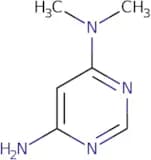
CAS:<p>Versatile small molecule scaffold</p>Formula:C13H16N2O2Purity:Min. 95%Molecular weight:232.28 g/molN4,N4-dimethylpyrimidine-4,6-diamine
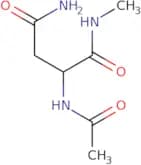
CAS:<p>Versatile small molecule scaffold</p>Formula:C6H10N4Purity:Min. 95%Molecular weight:138.17 g/mol2-Acetamido-N-methylbutanediamide
CAS:<p>Versatile small molecule scaffold</p>Formula:C7H13N3O3Purity:Min. 95%Molecular weight:187.2 g/molN-(3-Chloro-2-methylphenyl)-4,5-dihydro-1,3-thiazol-2-amine
CAS:<p>Versatile small molecule scaffold</p>Formula:C10H11ClN2SPurity:Min. 95%Molecular weight:226.73 g/mol3-[(2-Nitrophenyl)amino]propanamide
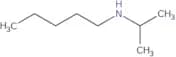
CAS:<p>Versatile small molecule scaffold</p>Formula:C9H11N3O3Purity:Min. 95%Molecular weight:209.2 g/molPentyl(propan-2-yl)amine
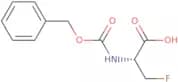
CAS:<p>Pentyl(propan-2-yl)amine is an aminocarboxylic acid that has been shown to have a high yield and purity. It can be used as a building block for the synthesis of aminocarboxylic acids, which are unsubstituted, branched-chain alkyl groups. The aminocarboxylic acid is also an intermediate in the production of pharmaceuticals and other chemicals.</p>Formula:C8H19NPurity:Min. 95%Molecular weight:129.24 g/mol(R)-2-(((Benzyloxy)carbonyl)amino)-3-fluoropropanoic acid
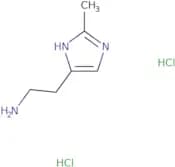
CAS:<p>Versatile small molecule scaffold</p>Formula:C11H12FNO4Purity:Min. 95%Molecular weight:241.22 g/mol2-(2-Methyl-1H-imidazol-4-yl)ethan-1-amine dihydrochloride
CAS:<p>Famotidine is a histamine H2 receptor antagonist that inhibits the secretion of stomach acid by blocking the histamine H2 receptors in the parietal cells of the stomach. Famotidine is a competitive inhibitor of histamine at these receptors, which causes a dose-dependent decrease in gastric acid secretion. The affinity of famotidine for the receptor is dependent on pH and increases with decreasing pH. With deuteration to produce 2-(2-methyl-1H-imidazol-4-yl)ethan-1-amine dihydrochloride, the binding affinity for the receptor is increased. This drug has been shown to be effective in reducing hyperthermia in animals, as well as suppressing symptoms associated with autoimmune diseases such as rheumatoid arthritis and insulin dependent diabetes mellitus. It also has biphasic effects on h2 receptors, with high doses producing an increase in acid secretion and low doses producing inhibition.</p>Formula:C6H13Cl2N3Purity:Min. 95%Molecular weight:198.09 g/mol


![1-[1-(1,3-Thiazol-2-yl)ethyl]piperazine](/_next/image/?url=https%3A%2Fstatic.cymitquimica.com%2Fproducts%2F3D%2Fthumb-webp%2FKXB53923.webp&w=3840&q=75)



![tert-Butyl N-{2-[2-(methylamino)ethoxy]ethyl}carbamate](/_next/image/?url=https%3A%2Fstatic.cymitquimica.com%2Fproducts%2F3D%2Fthumb-webp%2FKXB77228.webp&w=3840&q=75)
![Ethyl 5-{[(tert-butoxy)carbonyl]amino}pent-3-ynoate](/_next/image/?url=https%3A%2Fstatic.cymitquimica.com%2Fproducts%2F3D%2Fthumb-webp%2FKXB88499.webp&w=3840&q=75)
![2-Chloro-N-[(1R)-1-phenylethyl]acetamide](/_next/image/?url=https%3A%2Fstatic.cymitquimica.com%2Fproducts%2F3D%2Fthumb-webp%2FLBA29300.webp&w=3840&q=75)

![3-[(2-Nitrophenyl)amino]propanamide](/_next/image/?url=https%3A%2Fstatic.cymitquimica.com%2Fproducts%2F3D%2Fthumb-webp%2FLBA33243.webp&w=3840&q=75)