Building Blocks
This section contains fundamental products for the synthesis of organic and biological compounds. Building blocks are the essential starting materials used to construct complex molecules through various chemical reactions. They play a critical role in drug discovery, material science, and chemical research. At CymitQuimica, we offer a diverse range of high-quality building blocks to support your innovative research and industrial projects, ensuring you have the essential components for successful synthesis.
Subcategories of "Building Blocks"
- Boronic Acids & Boronic Acid Derivatives(5,756 products)
- Chiral Building Blocks(1,242 products)
- Hydrocarbon Building Blocks(6,095 products)
- Organic Building Blocks(61,037 products)
Found 196139 products of "Building Blocks"
Sort by
Purity (%)
0
100
|
0
|
50
|
90
|
95
|
100
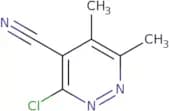
3-chloro-5,6-dimethylpyridazine-4-carbonitrile
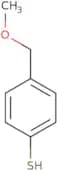
CAS:<p>Versatile small molecule scaffold</p>Formula:C7H6N3ClPurity:Min. 95%Molecular weight:167.59 g/mol4-(Methoxymethyl)benzene-1-thiol
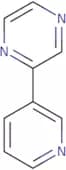
CAS:<p>Versatile small molecule scaffold</p>Formula:C8H10OSPurity:Min. 95%Molecular weight:154.23 g/mol2-(Pyridin-3-yl)pyrazine
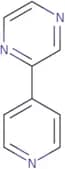
CAS:<p>Versatile small molecule scaffold</p>Formula:C9H7N3Purity:Min. 95%Molecular weight:157.17 g/mol2-(Pyridin-4-yl)pyrazine
CAS:<p>Versatile small molecule scaffold</p>Formula:C9H7N3Purity:Min. 95%Molecular weight:157.17 g/molMethyl 4,5,6,7-tetrahydrothieno[3,2-c]pyridine-4-carboxylate hydrochloride
CAS:<p>Versatile small molecule scaffold</p>Formula:C9H12ClNO2SPurity:Min. 95%Molecular weight:233.72 g/mol2-[(3-Methylphenyl)amino]-1-(piperidin-1-yl)ethan-1-one
CAS:<p>Versatile small molecule scaffold</p>Formula:C14H20N2OPurity:Min. 95%Molecular weight:232.32 g/mol2-[(2-Methylphenyl)amino]-1-(piperidin-1-yl)ethan-1-one
CAS:<p>Versatile small molecule scaffold</p>Formula:C14H20N2OPurity:Min. 95%Molecular weight:232.32 g/mol2-[(4-Methylphenyl)amino]-1-(piperidin-1-yl)ethan-1-one
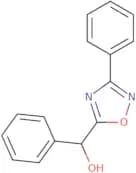
CAS:<p>Versatile small molecule scaffold</p>Formula:C14H20N2OPurity:Min. 95%Molecular weight:232.32 g/molPhenyl(3-phenyl-1,2,4-oxadiazol-5-yl)methanol
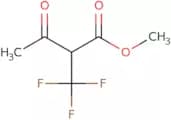
CAS:<p>Versatile small molecule scaffold</p>Formula:C15H12N2O2Purity:Min. 95%Molecular weight:252.27 g/molMethyl 3-oxo-2-(trifluoromethyl)butanoate
CAS:<p>Versatile small molecule scaffold</p>Formula:C6H7F3O3Purity:Min. 95%Molecular weight:184.11 g/mol5-Methoxy-2,3-dihydrobenzofuran-2-carboxylic acid
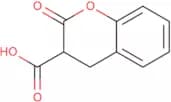
CAS:<p>Versatile small molecule scaffold</p>Formula:C10H10O4Purity:Min. 95%Molecular weight:194.19 g/mol2-Oxo-3,4-dihydro-2H-1-benzopyran-3-carboxylic acid
CAS:<p>Versatile small molecule scaffold</p>Formula:C10H8O4Purity:Min. 95%Molecular weight:192.17 g/molEthyl 8-hydroxyoctanoate
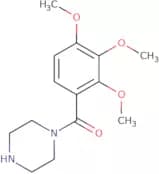
CAS:<p>Versatile small molecule scaffold</p>Formula:C10H20O3Purity:Min. 95%Molecular weight:188.26 g/mol1-(2,3,4-Trimethoxybenzoyl)piperazine
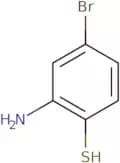
CAS:<p>Versatile small molecule scaffold</p>Formula:C14H20N2O4Purity:Min. 95%Molecular weight:280.32 g/mol2-amino-4-bromobenzene-1-thiol
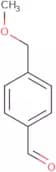
CAS:<p>2-Amino-4-bromobenzene-1-thiol is a semiconducting polymer that can be used in devices such as solar cells, transistors, and sensors. It has electron deficient properties and is therefore able to form the backbone of a polymer. 2-Amino-4-bromobenzene-1-thiol is an electron donor that can be used for polymerization reactions with electron acceptors such as indigoid compounds. This compound has been shown to have optical absorption bands in the near infrared region, which are suitable for solar energy conversion applications.</p>Formula:C6H6BrNSPurity:Min. 95%Molecular weight:204.1 g/mol4-(Methoxymethyl)benzaldehyde
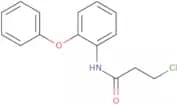
CAS:<p>4-(Methoxymethyl)benzaldehyde is an organic chemical compound that has the molecular formula CHO. It can be obtained by catalytic cleavage of 4-hydroxybenzaldehyde with hydrogen chloride in the presence of a nickel catalyst, followed by chlorination and reduction. This chemical is used in pharmaceuticals as a catalyst for reductive cleavage and cyclization reactions. The acidity of 4-(methoxymethyl)benzaldehyde is due to its nitrogen substituents, which are capable of deprotonating the carbon atom adjacent to the carbonyl group. This allows for selective synthesis at the benzylic position.<br>4-(Methoxymethyl)benzaldehyde is also able to catalyze lithiation reactions because it contains a reactive chlorine atom.</p>Formula:C9H10O2Purity:Min. 95%Molecular weight:150.17 g/mol3-Chloro-N-(2-phenoxyphenyl)propanamide
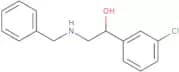
CAS:<p>Versatile small molecule scaffold</p>Formula:C15H14ClNO2Purity:Min. 95%Molecular weight:275.73 g/mol2-(Benzylamino)-1-(3-chlorophenyl)ethan-1-ol
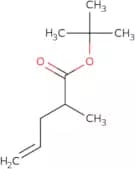
CAS:<p>Versatile small molecule scaffold</p>Formula:C15H16ClNOPurity:Min. 95%Molecular weight:261.74 g/moltert-Butyl 2-methylpent-4-enoate
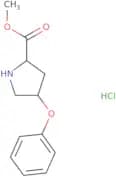
CAS:<p>Versatile small molecule scaffold</p>Formula:C10H18O2Purity:Min. 95%Molecular weight:170.25 g/molMethyl (2S,4S)-4-phenoxypyrrolidine-2-carboxylate hydrochloride
CAS:<p>Versatile small molecule scaffold</p>Formula:C12H16ClNO3Purity:Min. 95%Molecular weight:257.71 g/mol

![Methyl 4,5,6,7-tetrahydrothieno[3,2-c]pyridine-4-carboxylate hydrochloride](/_next/image/?url=https%3A%2Fstatic.cymitquimica.com%2Fproducts%2F3D%2Fthumb-webp%2FTDA85119.webp&w=3840&q=75)
![2-[(3-Methylphenyl)amino]-1-(piperidin-1-yl)ethan-1-one](/_next/image/?url=https%3A%2Fstatic.cymitquimica.com%2Fproducts%2F3D%2Fthumb-webp%2FTDA86538.webp&w=3840&q=75)
![2-[(2-Methylphenyl)amino]-1-(piperidin-1-yl)ethan-1-one](/_next/image/?url=https%3A%2Fstatic.cymitquimica.com%2Fproducts%2F3D%2Fthumb-webp%2FTDA86541.webp&w=3840&q=75)
![2-[(4-Methylphenyl)amino]-1-(piperidin-1-yl)ethan-1-one](/_next/image/?url=https%3A%2Fstatic.cymitquimica.com%2Fproducts%2F3D%2Fthumb-webp%2FTDA86542.webp&w=3840&q=75)