


Building Blocks
This section contains fundamental products for the synthesis of organic and biological compounds. Building blocks are the essential starting materials used to construct complex molecules through various chemical reactions. They play a critical role in drug discovery, material science, and chemical research. At CymitQuimica, we offer a diverse range of high-quality building blocks to support your innovative research and industrial projects, ensuring you have the essential components for successful synthesis.
Subcategories of "Building Blocks"
- Boronic Acids & Boronic Acid Derivatives(5,756 products)
- Chiral Building Blocks(1,242 products)
- Hydrocarbon Building Blocks(6,095 products)
- Organic Building Blocks(61,051 products)
Found 199813 products of "Building Blocks"
Sort by
Purity (%)
0
100
|
0
|
50
|
90
|
95
|
100
3,3-Dimethyl-1-phenylbutan-2-amine
CAS:Controlled Product<p>Versatile small molecule scaffold</p>Formula:C12H19NPurity:Min. 95%Molecular weight:177.29 g/molPropan-2-yl 2-(methylamino)propanoate
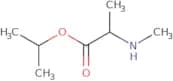
CAS:<p>Versatile small molecule scaffold</p>Formula:C7H15NO2Purity:Min. 95%Molecular weight:145.2 g/molEthyl 2-(2-ethoxy-2-oxoacetamido)-4,5-dimethylthiophene-3-carboxylate
CAS:<p>Versatile small molecule scaffold</p>Formula:C13H17NO5SPurity:Min. 95%Molecular weight:299.34 g/molEthyl 5-aminothiophene-2-carboxylate
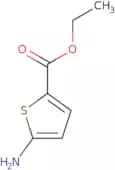
CAS:<p>Ethyl 5-aminothiophene-2-carboxylate is a hydrazine derivative that can be synthesized in two steps from ethyl 2-chloroacetate, ethyl chloroformate and sodium hydroxide. It has been shown to react with the trimethylsilyl chloride and trifluoroacetic anhydride in the presence of trifluoroacetic acid to form the corresponding 4-hydroxycoumarin derivative. The regioselective synthesis of ethyl 5-aminothiophene-2-carboxylate is achieved by using x-ray crystallography to identify the most reactive positions on the molecule for nucleophilic attack. This compound is efficient for generating 4-hydroxycoumarin derivatives, which are used as pharmaceuticals or as precursors for organic synthesis.</p>Formula:C7H9NO2SPurity:Min. 95%Molecular weight:171.22 g/molBenzyl N-[3-(2,5-dioxoimidazolidin-4-yl)propyl]carbamate
CAS:Versatile small molecule scaffoldFormula:C14H17N3O4Purity:Min. 95%Molecular weight:291.3 g/mol2-Amino-4-methyl-1,3-thiazole-5-carbonitrile
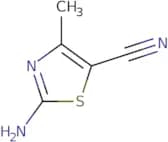
CAS:<p>Versatile small molecule scaffold</p>Formula:C5H5N3SPurity:Min. 95%Molecular weight:139.18 g/mol2-Amino-3-methyl-1-phenylbutan-1-ol
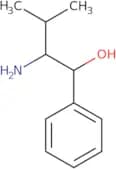
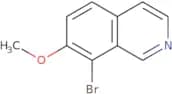
CAS:Controlled Product<p>Versatile small molecule scaffold</p>Formula:C11H17NOPurity:Min. 95%Molecular weight:179.26 g/mol8-Bromo-7-methoxyisoquinoline
CAS:<p>Versatile small molecule scaffold</p>Formula:C10H8BrNOPurity:Min. 95%Molecular weight:238.08 g/mol5-(Hydroxymethyl)imidazolidine-2,4-dione
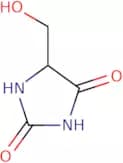
CAS:<p>5-(Hydroxymethyl)imidazolidine-2,4-dione (HMI) is a synthetic compound that has been shown to be effective for the treatment of tuberculosis. HMI is an analog of d-serine and is immobilized on activated carbon to produce filtration media. It was found to be more efficient than other immobilization methods in terms of yield, operational time, and filtration capacity. The affinity and chiral properties of HMI make it a good candidate for use as a drug delivery system.</p>Formula:C4H6N2O3Purity:Min. 95%Molecular weight:130.1 g/mol1-{[(Cyclopent-3-en-1-yl)methyl]sulfanyl}ethan-1-one
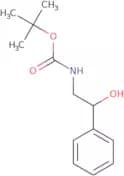
CAS:<p>Versatile small molecule scaffold</p>Formula:C8H12OSPurity:Min. 95%Molecular weight:156.2 g/molN-(tert-Butoxycarbonyl)-DL-2-phenylglycinol
CAS:<p>Versatile small molecule scaffold</p>Formula:C13H19NO3Purity:Min. 95%Molecular weight:237.3 g/molN-Boc-2-hydroxy-2-phenylethylamine
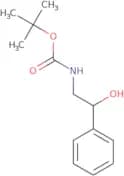
CAS:<p>N-Boc-2-hydroxy-2-phenylethylamine is a chemical that inhibits the reuptake of serotonin, which is a monoamine neurotransmitter. It is classified as a reuptake inhibitor. N-Boc-2-hydroxy-2-phenylethylamine competitively binds to the transporter that removes serotonin from the synapse, which leads to increased concentrations of serotonin in the synapse. This drug has shown efficacy in treating depression and could be used as an antidepressant.</p>Formula:C13H19NO3Purity:Min. 95%Molecular weight:237.3 g/molethyl 3-oxododecanoate
CAS:<p>Ethyl 3-oxododecanoate is a molecule that was synthesized by the bioassay-guided synthesis of flavonoids. It has antimicrobial activity against Pseudomonas aeruginosa and can be used for inhibiting bacterial growth in culture supernatant. Ethyl 3-oxododecanoate is an effective inhibitor of fatty acid biosynthesis, which makes it a potential therapeutic agent for infections caused by P. aeruginosa. This molecule has been modified to inhibit the production of lipopolysaccharide in P. aeruginosa, which inhibits its ability to stimulate immune responses and activate the complement system.</p>Formula:C14H26O3Purity:Min. 95%Molecular weight:242.36 g/mol3-Ethynylpyridin-2-amine
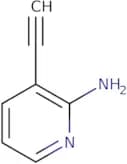
CAS:<p>3-Ethynylpyridin-2-amine is a nucleophilic amine that has been synthesized as an intermediate for the synthesis of other compounds. It is a molecule that can be scavenged by electron deficiency and introduce water molecules to optimize biomolecular reactions. 3-Ethynylpyridin-2-amine is synthesized by reacting pyrrole with trifluoroacetic acid in the presence of ammonium hydroxide. The product can be isolated by removing the solvent and drying with magnesium sulfate. 3-Ethynylpyridin-2-amine has been shown to scavenge reactive oxygen species, such as hydrogen peroxide, which are produced during oxidative stress and have been implicated in many diseases, including cancer and cardiovascular disease.</p>Purity:Min. 95%N-Hydroxy-3-(4-methoxyphenyl)propanamide
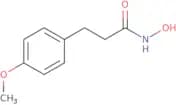
CAS:<p>Versatile small molecule scaffold</p>Formula:C10H13NO3Purity:Min. 95%Molecular weight:195.21 g/molPyrazine-2,3-dicarboxylic Acid Monoamide
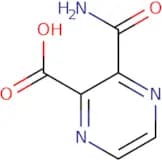
CAS:<p>Pyrazine-2,3-dicarboxylic Acid Monoamide is a ligand that regulates the activity of metal ions. It has been shown to bind to alkali metal ions, such as potassium ion, and form coordination complexes with them. Pyrazine-2,3-dicarboxylic Acid Monoamide has also been shown to bind with other metals such as copper and zinc. The structural properties of these complexes have been determined by elemental analysis and X-ray crystallography. The coordination complexes have been found to have physicochemical properties similar to those of metal compounds.</p>Formula:C6H5N3O3Purity:Min. 95%Molecular weight:167.12 g/mol4-Methyl-2-(4-methylbenzenesulfonamido)pentanoic acid
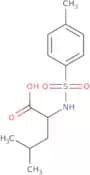
CAS:<p>4-Methyl-2-(4-methylbenzenesulfonamido)pentanoic acid (MBSA) is a synthetic histidine molecule that exhibits specificities for the pancreas. MBSA is converted to chloromethyl ketone when subjected to photooxidation. The mechanism of action of MBSA is postulated to be related to its chemical composition and kinetic properties, which are different from other histidines. Chemical analyses have shown that it has a tryptic pattern and an amino acid composition that is different from other histidines. It has been found that MBSA inactivates spermatozoa in vitro, which may be due to the presence of chloromethylketone on its molecular structure.</p>Formula:C13H19NO4SPurity:Min. 95%Molecular weight:285.36 g/mol2-Hydroxy-3-isopropylbenzaldehyde
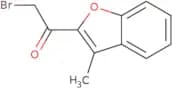
CAS:<p>2-Hydroxy-3-isopropylbenzaldehyde is an aldehyde with the chemical formula C9H10O4. It is synthesized from 2,3-dihydroxybenzaldehyde by cyanosilylation and has an enantiomeric purity of 99%. The conformation of 2-hydroxy-3-isopropylbenzaldehyde can be determined by 2D NMR techniques as well as x-ray diffraction. The x-ray structure indicates that the molecule has a chair conformation, with a dihedral angle of 60°.<br>2-Hydroxy-3-isopropylbenzaldehyde can be used in the synthesis of heteroaromatic compounds, such as indole derivatives, through catalytic hydrogenation. This compound also reacts with sodium nitrite to form salicylaldehydes and alicyclic compounds.</p>Formula:C10H12O2Purity:Min. 95%Molecular weight:164.2 g/mol2-Bromo-1-(3-methyl-1-benzofuran-2-yl)ethan-1-one
CAS:<p>Versatile small molecule scaffold</p>Formula:C11H9BrO2Purity:Min. 95%Molecular weight:253.09 g/molN-[2-(Morpholin-4-yl)ethyl]pyridin-2-amine
CAS:<p>Versatile small molecule scaffold</p>Formula:C11H17N3OPurity:Min. 95%Molecular weight:207.27 g/mol



![Benzyl N-[3-(2,5-dioxoimidazolidin-4-yl)propyl]carbamate](/_next/image/?url=https%3A%2Fstatic.cymitquimica.com%2Fproducts%2F3D%2Fthumb-webp%2FSCA32077.webp&w=3840&q=75)
![1-{[(Cyclopent-3-en-1-yl)methyl]sulfanyl}ethan-1-one](/_next/image/?url=https%3A%2Fstatic.cymitquimica.com%2Fproducts%2F3D%2Fthumb-webp%2FSCA33831.webp&w=3840&q=75)


![N-[2-(Morpholin-4-yl)ethyl]pyridin-2-amine](/_next/image/?url=https%3A%2Fstatic.cymitquimica.com%2Fproducts%2F3D%2Fthumb-webp%2FSCA38533.webp&w=3840&q=75)