Building Blocks
This section contains fundamental products for the synthesis of organic and biological compounds. Building blocks are the essential starting materials used to construct complex molecules through various chemical reactions. They play a critical role in drug discovery, material science, and chemical research. At CymitQuimica, we offer a diverse range of high-quality building blocks to support your innovative research and industrial projects, ensuring you have the essential components for successful synthesis.
Subcategories of "Building Blocks"
- Boronic Acids & Boronic Acid Derivatives(5,778 products)
- Chiral Building Blocks(1,242 products)
- Hydrocarbon Building Blocks(6,098 products)
- Organic Building Blocks(61,092 products)
Found 199296 products of "Building Blocks"
Sort by
Purity (%)
0
100
|
0
|
50
|
90
|
95
|
100
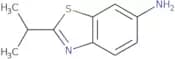
2-Isopropyl-benzothiazol-6-ylamine
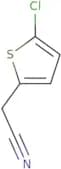
CAS:<p>Versatile small molecule scaffold</p>Formula:C10H12N2SPurity:Min. 95%Molecular weight:192.28 g/mol2-(5-Chlorothiophen-2-yl)acetonitrile
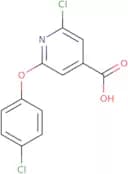
CAS:<p>Versatile small molecule scaffold</p>Formula:C6H4ClNSPurity:Min. 95%Molecular weight:157.62 g/mol2-Chloro-6-(4-chlorophenoxy)pyridine-4-carboxylic acid
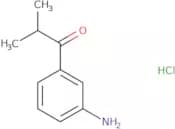
CAS:Versatile small molecule scaffoldFormula:C12H7Cl2NO3Purity:Min. 95%Molecular weight:284.09 g/mol1-(3-Aminophenyl)-2-methylpropan-1-one hydrochloride
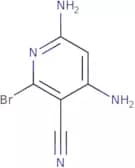
CAS:<p>Versatile small molecule scaffold</p>Formula:C10H14ClNOPurity:Min. 95%Molecular weight:199.68 g/mol4,6-Diamino-2-bromonicotinonitrile
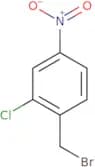
CAS:<p>4,6-Diamino-2-bromonicotinonitrile (DAB) is a chemical compound that inhibits phosphodiesterase enzymes. It has been shown to inhibit cyclic nucleotide phosphodiesterases, including PDE5, which is found in tissues and bronchial passages. DAB also inhibits the activity of phosphodiesterases in cells. The inhibition is reversible and uses hydrogenated fatty acids as substrates. This compound has been used as a cross-linking agent to induce antigenicity in proteins.</p>Formula:C6H5BrN4Purity:Min. 95%Molecular weight:213.04 g/mol2-Chloro-4-nitrobenzyl bromide
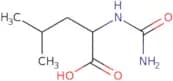
CAS:<p>Versatile small molecule scaffold</p>Formula:C7H5NO2ClBrPurity:Min. 95%Molecular weight:250.48 g/mol2-(Carbamoylamino)-4-methylpentanoic acid
CAS:<p>2-(Carbamoylamino)-4-methylpentanoic acid is an enzyme that catalyzes the hydrolysis of l-amino acids. It has a broad substrate specificity and is able to hydrolyze branched-chain and n-substituted l-amino acids, as well as D-amino acids. The active site of this enzyme includes a zinc ion coordinated by four amino acid residues, which are important for the stereoselective catalysis of these reactions. This enzyme also displays stereoselectivity in its reactions with L-amino acids over D-amino acids. The crystal structure of 2-(carbamoylamino)-4-methylpentanoic acid reveals that it belongs to the family of dipeptidases, whose members have a beta barrel fold common to many enzymes in this class.</p>Formula:C7H14N2O3Purity:Min. 95%Molecular weight:174.2 g/molN-[1-(Methoxymethyl)cyclopropyl]aniline
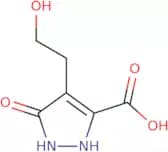
CAS:<p>Versatile small molecule scaffold</p>Formula:C11H15NOPurity:Min. 95%Molecular weight:177.24 g/mol3-Hydroxy-4-(2-hydroxyethyl)-1H-pyrazole-5-carboxylic acid
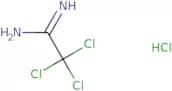
CAS:<p>Versatile small molecule scaffold</p>Formula:C6H8N2O4Purity:Min. 95%Molecular weight:172.14 g/molTrichloroethanimidamide hydrochloride
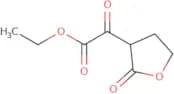
CAS:Trichloroethanimidamide hydrochloride is a metal hydroxide with herbicidal activity. It is used as an intermediate for the production of herbicides and fungicides. The chemical composition of trichloroethanimidamide hydrochloride includes ammonium chloride, sodium chloride, potassium chloride, magnesium chloride, calcium chloride and iron chloride. This reagent can be used to isolate amines from other organic compounds. Trichloroethanimidamide hydrochloride has a boiling point of 161°C, which makes it useful as a solvent in organic synthesis reactions. Trichloroethanimidamide hydrochloride also reacts with toluenesulfonate to form an alkali metal salt, which can be isolated by vacuum distillation.Formula:C2H4Cl4N2Purity:Min. 95%Molecular weight:197.9 g/molEthyl 2-Oxo-2-(2-oxotetrahydrofuran-3-yl)acetate
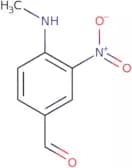
CAS:<p>Versatile small molecule scaffold</p>Formula:C8H10O5Purity:Min. 95%Molecular weight:186.16 g/mol4-Methylamino-3-nitrobenzaldehyde
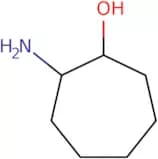
CAS:<p>4-Methylamino-3-nitrobenzaldehyde is a luminescent compound that can be used in the detection of oxidative metabolites. It is a mediator oxidation product of 4-methylaminobenzaldehyde and has been shown to be aerobic and phosphotungstic. This compound is recycled and does not interfere with other analytical methods. It can also be immobilized on a surface, such as silica gel or magnesium oxide, or immobilized in an acidic environment. The phosphotungstic acid used for this immobilization process is a biomimetic metal ion complex that has been modified to react with the triazole derivative.</p>Formula:C8H8N2O3Purity:Min. 95%Molecular weight:180.16 g/molrac-(1R,2R)-2-Aminocycloheptan-1-ol
CAS:<p>Racemic 2-aminocycloheptanol is an organic compound with a molecular formula of C7H14Cl2NO and a molecular weight of 206.24 g/mol. It is classified as a substituted cycloheptane and has the IUPAC name rac-(1R,2R)-2-aminocycloheptan-1-ol. Racemic 2-aminocycloheptanol can be synthesized by the substitution of chlorine atoms for hydrogen atoms on the benzyl group in benzoic acid. This reaction requires catalytic amounts of sodium hydroxide to hydrolyze the benzoic acid, forming sodium chloride and racemic 2-aminocycloheptanol. Racemic 2-aminocycloheptanol is used in the synthesis of antidepressants such as amitriptyline and nortriptyline. These drugs are believed to have their therapeutic effects through inhibition of norepinephrine reupt</p>Formula:C7H15NOPurity:Min. 95%Molecular weight:129.2 g/mol2-[(4-Hydroxyphenyl)sulfanyl]acetic acid
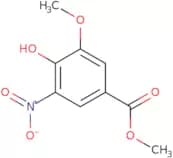
CAS:Versatile small molecule scaffoldFormula:C8H8O3SPurity:Min. 95%Molecular weight:184.21 g/molMethyl 4-hydroxy-3-methoxy-5-nitrobenzenecarboxylate
CAS:<p>Versatile small molecule scaffold</p>Formula:C9H9NO6Purity:Min. 95%Molecular weight:227.17 g/mol2-[(1S)-1-Hydroxyethyl]-1,4-dihydroquinazolin-4-one
CAS:<p>2-[(1S)-1-Hydroxyethyl]-1,4-dihydroquinazolin-4-one is a quinazoline type compound that has been found to be an inhibitor of the type II fatty acid synthase (FAS II). The FAS II enzyme catalyzes the production of fatty acids and their derivatives by converting acetyl-CoA into malonyl CoA. The inhibition of FAS II leads to a decrease in the production of lipids, which are important components of bacterial cell membranes. This compound also inhibits the growth of fungi such as Monascus purpureus, Fusarium sporotrichioides, and Fusarium avenaceum at high concentrations. 2-[(1S)-1-Hydroxyethyl]-1,4-dihydroquinazolin-4-one was found to inhibit the growth of these fungi by binding to their elongation factor 1 alpha (EF-1α) and preventing</p>Formula:C10H10N2O2Purity:Min. 95%Molecular weight:190.2 g/molN-(3-Thienyl)acetamide
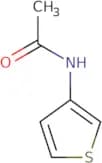
CAS:<p>N-(3-Thienyl)acetamide is an aromatic aldehyde that is used in the synthesis of carbamates. It has been shown to be brominated, acetylated, and aminated. N-(3-Thienyl)acetamide can undergo dehydrogenation and heterocyclic amine formation during cooking. It also has electrophilic properties, which allow it to react with nucleophiles such as amines or thiols to form diazonium salts. This compound is a substrate for transamination and dihydropyridines.</p>Formula:C6H7NOSPurity:Min. 95%Molecular weight:141.19 g/mol8-Nitroquinolin-5-amine
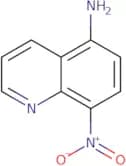
CAS:<p>8-Nitroquinolin-5-amine is a quinoline derivative that undergoes electrophilic substitution reactions with nucleophiles. This drug reacts with hydrogen chloride to give the corresponding 8-nitroquinolinium chloride. Reaction of this compound with imines gives the corresponding imine derivatives. Reaction of this compound with chlorides gives the corresponding 8-nitroquinolinium salts. The reactivity of this compound is similar to that of quinones, but it does not have a conjugated system and is not redox active.</p>Formula:C9H7N3O2Purity:Min. 95%Molecular weight:189.17 g/mol2-Methyl-1,3-dioxo-2,3-dihydro-1 H -isoindole-5-carboxylic acid
CAS:<p>Versatile small molecule scaffold</p>Formula:C10H7NO4Purity:Min. 95%Molecular weight:205.17 g/mol2-Aminoquinolin-4-ol
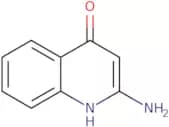
CAS:<p>2-Aminoquinolin-4-ol is a reactive nitrogen molecule that can be transformed into quinoline derivatives by reaction with methylene, amines, and primary amines. 2-Aminoquinolin-4-ol can also react with paraformaldehyde to form pyrimido compounds. These reactions are thermally induced. 2-Aminoquinolin-4-ol is nucleophilic and undergoes conjugation with aminoquinolines.</p>Formula:C9H8N2OPurity:Min. 95%Molecular weight:160.17 g/mol

![N-[1-(Methoxymethyl)cyclopropyl]aniline](/_next/image/?url=https%3A%2Fstatic.cymitquimica.com%2Fproducts%2F3D%2Fthumb-webp%2FSBA54070.webp&w=3840&q=75)
![2-[(4-Hydroxyphenyl)sulfanyl]acetic acid](/_next/image/?url=https%3A%2Fstatic.cymitquimica.com%2Fproducts%2F3D%2Fthumb-webp%2FSBA58038.webp&w=3840&q=75)
![2-[(1S)-1-Hydroxyethyl]-1,4-dihydroquinazolin-4-one](/_next/image/?url=https%3A%2Fstatic.cymitquimica.com%2Fproducts%2F3D%2Fthumb-webp%2FSBA59989.webp&w=3840&q=75)