Building Blocks
This section contains fundamental products for the synthesis of organic and biological compounds. Building blocks are the essential starting materials used to construct complex molecules through various chemical reactions. They play a critical role in drug discovery, material science, and chemical research. At CymitQuimica, we offer a diverse range of high-quality building blocks to support your innovative research and industrial projects, ensuring you have the essential components for successful synthesis.
Subcategories of "Building Blocks"
- Boronic Acids & Boronic Acid Derivatives(5,756 products)
- Chiral Building Blocks(1,242 products)
- Hydrocarbon Building Blocks(6,095 products)
- Organic Building Blocks(61,055 products)
Found 199650 products of "Building Blocks"
Sort by
Purity (%)
0
100
|
0
|
50
|
90
|
95
|
100
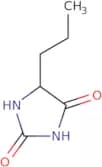
5-Propylhydantoin
CAS:<p>5-Propylhydantoin is a halogenated hydantoin that is used in the preparation of solid compositions. It can be brominated or iodinated to form 5-propyliodo- or 5-propylbromo-hydantoin, respectively. The addition of propylene oxide to 5-propanilhydantoin leads to the formation of a granular product.</p>Formula:C6H10N2O2Purity:Min. 95%Molecular weight:142.16 g/mol4-Amino-5-methyl-3-nitropyridine
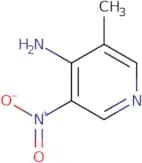
CAS:<p>Versatile small molecule scaffold</p>Formula:C6H7N3O2Purity:Min. 95%Molecular weight:153.14 g/mol2,6-Dimethyl-3-nitropyridin-4-amine
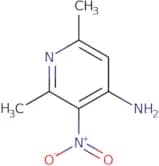
CAS:<p>Versatile small molecule scaffold</p>Formula:C7H9N3O2Purity:Min. 95%Molecular weight:167.17 g/mol5-Bromo-1-phenyl-1H-1,2,3,4-tetrazole
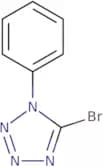
CAS:<p>Versatile small molecule scaffold</p>Formula:C7H5BrN4Purity:Min. 95%Molecular weight:225.05 g/mol4-(1H-Indol-3-yl)butan-1-amine hydrochloride
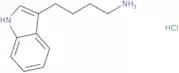
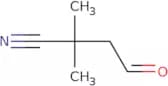
CAS:<p>Versatile small molecule scaffold</p>Formula:C12H17ClN2Purity:Min. 95%Molecular weight:224.73 g/mol2,2-Dimethyl-4-oxobutanenitrile
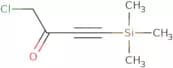
CAS:<p>2,2-Dimethyl-4-oxobutanenitrile is an alkaloid that is extracted from the bark of the Cinchona tree. The extraction process is done by mixing the bark with ethanol and then boiling it in a solution of sodium carbonate (soda ash) and water. The resulting mixture contains many different alkaloids, including 2,2-dimethyl-4-oxobutanenitrile. Tetramethyluric acid, one of the other alkaloids present in this mixture, can be used to prepare a purple dye called Tyrian purple. Purines are also present in this mixture and are precursors for nucleic acids such as DNA or RNA.</p>Purity:Min. 95%1-Chloro-4-(trimethylsilyl)but-3-yn-2-one
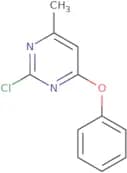
CAS:<p>Versatile small molecule scaffold</p>Formula:C7H11ClOSiPurity:Min. 95%Molecular weight:174.7 g/mol2-Chloro-4-methyl-6-phenoxypyrimidine
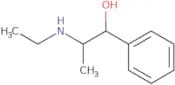
CAS:<p>Versatile small molecule scaffold</p>Formula:C11H9ClN2OPurity:Min. 95%Molecular weight:220.65 g/mol2-(Ethylamino)-1-phenylpropan-1-ol
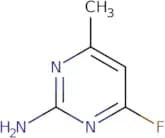
CAS:Controlled Product<p>2-(Ethylamino)-1-phenylpropan-1-ol (ephedrine) is a sympathomimetic drug that is used to relieve congestion associated with the common cold, rhinitis, and asthma. It has been shown to have both optical and chiral properties. The pseudoephedrine in this product is an optically active compound that can be purified by chromatography. Ephedrine has two optical isomers: S and R. The S isomer of ephedrine has a higher affinity for alpha-adrenergic receptors than the R isomer, which may account for its greater stimulatory effect on the central nervous system. This product also contains aliphatic alcohols, which are primary amines that are metabolized into secondary amines such as amphetamine or methamphetamine.</p>Formula:C11H17NOPurity:Min. 95%Molecular weight:179.26 g/mol4-Fluoro-6-methylpyrimidin-2-amine
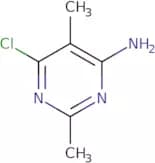
CAS:<p>Versatile small molecule scaffold</p>Formula:C5H6FN3Purity:Min. 95%Molecular weight:127.12 g/mol6-chloro-2,5-dimethylpyrimidin-4-amine
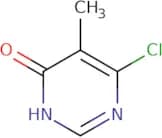
CAS:<p>Versatile small molecule scaffold</p>Formula:C6H8ClN3Purity:Min. 95%Molecular weight:157.6 g/mol6-Chloro-5-methylpyrimidin-4-ol
CAS:<p>Versatile small molecule scaffold</p>Formula:C5H5ClN2OPurity:Min. 95%Molecular weight:144.56 g/mol2-[(Chloromethyl)sulfanyl]propane
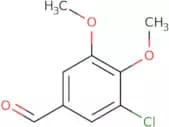
CAS:<p>Versatile small molecule scaffold</p>Formula:C4H9ClSPurity:Min. 95%Molecular weight:124.63 g/mol3-Chloro-4,5-dimethoxybenzaldehyde
CAS:<p>3-Chloro-4,5-dimethoxybenzaldehyde is a coniferous organic compound that has been shown to have antibacterial activity. 3-Chloro-4,5-dimethoxybenzaldehyde is an analog of the etoposide drug, which is used in the treatment of cancer. It binds to the bacterial cell membrane and prevents replication of DNA. 3-Chloro-4,5-dimethoxybenzaldehyde also inhibits the growth of cancer cells by disrupting their protein synthesis. This agent also has a gaseous form and can be used as an insecticide.</p>Formula:C9H9ClO3Purity:Min. 95%Molecular weight:200.62 g/mol2-Chloro-4-hydroxy-5-methoxy-benzaldehyde
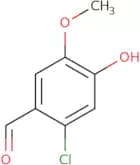
CAS:<p>2-Chloro-4-hydroxy-5-methoxybenzaldehyde is an organic compound with the chemical formula C6H3ClO2. It is a member of the aldehyde family and has an oxidation potential of 1.8 V. The compound is soluble in water and alcohols but insoluble in ethers. 2-Chloro-4-hydroxy-5-methoxybenzaldehyde can be prepared by reduction of o,p′-dichlorobenzaldehyde with lithium aluminum hydride or sodium borohydride at 0°C. The compound can also be synthesized by heating o,p′-dichlorobenzaldehyde to 170°C in the presence of sulfuric acid and then treating the reaction product with potassium hydroxide at room temperature to yield 2,4,5,6,-tetrachloroquinone which then undergoes demethylation to form 2,4,</p>Formula:C8H7ClO3Purity:Min. 95%Color and Shape:PowderMolecular weight:186.59 g/molN-(Naphthalen-2-yl)benzamide
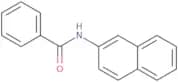
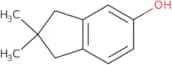
CAS:<p>N-(Naphthalen-2-yl)benzamide is an organic compound with a molecular formula of C14H11NO and a molecular weight of 218.27 g/mol. It belongs to the heterocyclic compounds, benzamides class, and has two functional groups: alkylation and diaryliodonium. The compound is synthesized by the reaction of 8-aminoquinoline with naphthalene-2-carboxaldehyde in presence of catalysts such as sodium methoxide or potassium tert-butoxide. The synthesis requires unactivated aromatic rings, which are halides or methylene groups. N-(Naphthalen-2-yl)benzamide can be used as a starting material for other synthetic reactions, such as aliphatic or arylation reactions.</p>Formula:C17H13NOPurity:Min. 95%Molecular weight:247.29 g/mol2,2-Dimethyl-2,3-dihydro-1H-inden-5-ol
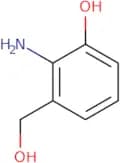
CAS:<p>Versatile small molecule scaffold</p>Formula:C11H14OPurity:Min. 95%Molecular weight:162.2 g/mol2-Amino-3-(hydroxymethyl)phenol
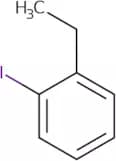
CAS:<p>Versatile small molecule scaffold</p>Formula:C7H9NO2Purity:Min. 95%Molecular weight:139.15 g/mol2-Ethyliodobenzene
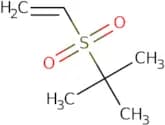
CAS:<p>2-Ethyliodobenzene is a versatile reagent that can be used to synthesize a wide range of complex organic molecules. It is an iodinated aromatic compound with two ethyl groups. 2-Ethyliodobenzene is easily prepared by the reaction of iodine and acetylene in the presence of aluminium chloride or copper chloride.</p>Formula:C8H9IPurity:Min. 95%Molecular weight:232.06 g/mol2-(Ethenesulfonyl)-2-methylpropane
CAS:<p>Versatile small molecule scaffold</p>Formula:C6H12O2SPurity:Min. 95%Molecular weight:148.23 g/mol

![2-[(Chloromethyl)sulfanyl]propane](/_next/image/?url=https%3A%2Fstatic.cymitquimica.com%2Fproducts%2F3D%2Fthumb-webp%2FTAA26719.webp&w=3840&q=75)