Building Blocks
This section contains fundamental products for the synthesis of organic and biological compounds. Building blocks are the essential starting materials used to construct complex molecules through various chemical reactions. They play a critical role in drug discovery, material science, and chemical research. At CymitQuimica, we offer a diverse range of high-quality building blocks to support your innovative research and industrial projects, ensuring you have the essential components for successful synthesis.
Subcategories of "Building Blocks"
- Boronic Acids & Boronic Acid Derivatives(5,756 products)
- Chiral Building Blocks(1,242 products)
- Hydrocarbon Building Blocks(6,095 products)
- Organic Building Blocks(61,038 products)
Found 196817 products of "Building Blocks"
Sort by
Purity (%)
0
100
|
0
|
50
|
90
|
95
|
100
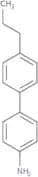
4-(4-Propylphenyl)aniline
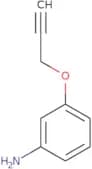
CAS:<p>Versatile small molecule scaffold</p>Formula:C15H17NPurity:Min. 95%Molecular weight:211.3 g/mol3-(Prop-2-yn-1-yloxy)aniline
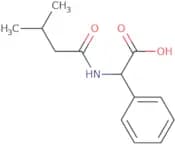
CAS:<p>Versatile small molecule scaffold</p>Formula:C9H9NOPurity:Min. 95%Molecular weight:147.17 g/mol2-(3-Methylbutanamido)-2-phenylacetic acid
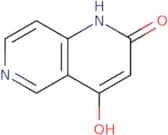
CAS:<p>Versatile small molecule scaffold</p>Formula:C13H17NO3Purity:Min. 95%Molecular weight:235.28 g/mol1,6-Naphthyridine-2,4-diol
CAS:<p>1,6-Naphthyridine-2,4-diol is a trifluoromethyl carboxylic acid that is used in the synthesis of pharmaceuticals. The compound is a carboxylic acid type cation with an integer number of 2 and 4 carbon atoms. 1,6-Naphthyridine-2,4-diol is also known to produce symptoms such as sensitivity and prophylactically for allergy.<br>!-- More --></p>Formula:C8H6N2O2Purity:Min. 95%Molecular weight:162.15 g/mol4-Bromo-5-propyl-1H-pyrazole
CAS:<p>Versatile small molecule scaffold</p>Formula:C6H9BrN2Purity:Min. 95%Molecular weight:189.05 g/mol3-Cyclohexyl-1H-pyrazole
CAS:<p>Versatile small molecule scaffold</p>Formula:C9H14N2Purity:Min. 95%Molecular weight:150.22 g/mol4-Bromo-3,5-diethyl-1H-pyrazole
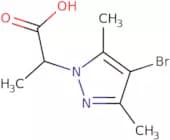
CAS:<p>Versatile small molecule scaffold</p>Formula:C7H11BrN2Purity:Min. 95%Molecular weight:203.08 g/mol2-(4-Bromo-3,5-dimethyl-1H-pyrazol-1-yl)propanoic acid
CAS:<p>Versatile small molecule scaffold</p>Formula:C8H11BrN2O2Purity:Min. 95%Molecular weight:247.09 g/mol6-(2-Aminoethoxy)-1,2,3,4-tetrahydroquinolin-2-one hydrochloride
CAS:<p>Versatile small molecule scaffold</p>Formula:C11H15ClN2O2Purity:Min. 95%Molecular weight:242.7 g/mol4-[(5-Chloropyridin-2-yl)oxy]phenol
CAS:<p>Versatile small molecule scaffold</p>Formula:C11H8ClNO2Purity:Min. 95%Molecular weight:221.64 g/mol1-Methylindoline-5-carbaldehyde
CAS:<p>1-Methylindoline-5-carbaldehyde is a chemical compound that has been used in cellular biology to study the effects of membrane potential on conformational changes. It has also been used to measure anilines, which are compounds with a dihedral angle between their two substituents. The molecule fluoresces and can be detected using microscope and analytical chemistry techniques such as monitoring. 1-Methylindoline-5-carbaldehyde has been shown to have photophysical properties, where it can emit light when excited by a photon. This chemical compound can also be used in conformational analysis, due to its ability to change shape in response to physical or chemical stimuli.</p>Formula:C10H11NOPurity:Min. 95%Molecular weight:161.2 g/molMethyl 4-amino-2-(methylthio)thiazole-5-carboxylate
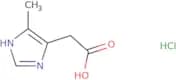
CAS:<p>Versatile small molecule scaffold</p>Formula:C6H8N2O2S2Purity:Min. 95%Molecular weight:204.27 g/mol2-(5-Methyl-1H-imidazol-4-yl)acetic acid hydrochloride
CAS:<p>Versatile small molecule scaffold</p>Formula:C6H9ClN2O2Purity:Min. 95%Molecular weight:176.6 g/mol2-(Benzylsulfanyl)propan-1-amine
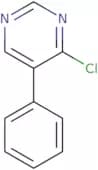
CAS:<p>Versatile small molecule scaffold</p>Formula:C10H15NSPurity:Min. 95%Molecular weight:181.3 g/mol4-Chloro-5-phenylpyrimidine
CAS:<p>4-Chloro-5-phenylpyrimidine is a copper(I) complex with the chemical formula [CuCl(PY)]. It is synthesized by reacting an equimolar mixture of 4-chloro-5-phenylpyrimidine and CuCl. The thermodynamic, kinetic, and stereochemical properties of this compound have been extensively studied. This compound belongs to the class of amidines and has been shown to interact with transition metals, such as copper. 4-Chloro-5-phenylpyrimidine can be used in organic synthesis reactions because it readily undergoes nucleophilic substitution reactions. The reaction between this compound and nucleophiles leads to the formation of stereoisomers that are chiral at the carbon atom in the pyrimidinone ring.</p>Formula:C10H7ClN2Purity:Min. 95%Molecular weight:190.63 g/mol3-Cyclopropyl-2-methylpropanoic acid
CAS:<p>Versatile small molecule scaffold</p>Formula:C7H12O2Purity:Min. 95%Molecular weight:128.17 g/mol3-Cyclopropylbutanoic acid
CAS:<p>3-Cyclopropylbutanoic acid is a natural substance that is extracted from the amanita mushroom. It has antibacterial and bactericidal effects, and can be used in the chemical synthesis of other chemicals. 3-Cyclopropylbutanoic acid's chemical synthesis method involves a four-step process: (i) converting cyclopropane to a mixture of cis and trans isomers, (ii) reacting the mixture with butanol in an esterification reaction, (iii) hydrolyzing the esterified product to produce butyric acid, and (iv) converting the butyric acid to 3-cyclopropylbutanoic acid by reacting it with phosphorus pentoxide.</p>Formula:C7H12O2Purity:Min. 95%Molecular weight:128.17 g/mol5-(3,4-Dimethoxyphenyl)-1,3,4-oxadiazol-2-amine
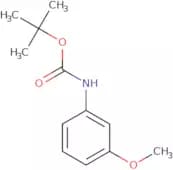
CAS:<p>Versatile small molecule scaffold</p>Formula:C10H11N3O3Purity:Min. 95%Molecular weight:221.21 g/molN-Boc-3-methoxyaniline
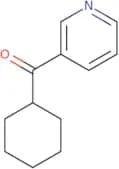
CAS:<p>N-Boc-3-methoxyaniline is a chemical compound that belongs to the class of nitroreductase inhibitors. It has been shown to inhibit tumour growth by targeting the tumor microenvironment and inhibiting the production of reactive oxygen species. N-Boc-3-methoxyaniline also has anti-angiogenic properties, which may be due to its ability to suppress the production of nitric oxide. This agent can be used for monitoring and controlling cancer stem cells in vitro and in vivo. The fluorescent probes are suitable for imaging, measuring, and quantifying this type of cell.</p>Formula:C12H17NO3Purity:Min. 95%Molecular weight:223.27 g/mol3-Cyclohexanecarbonylpyridine
CAS:<p>3-Cyclohexanecarbonylpyridine is a triazole with a nitrogen atom in the ring. It has a pyridine and two substituents, one of which is positioned on the 3-position and the other on the 6-position. This compound has strong antifungal activity, as demonstrated by screening in vitro studies. 3-Cyclohexanecarbonylpyridine also had high activity against phytopathogenic fungi such as Fusarium oxysporum, Rhizoctonia solani, Botrytis cinerea, and Alternaria brassicae. The fungicidal activity of this compound may be due to its inhibitory effect on protein synthesis.</p>Formula:C12H15NOPurity:Min. 95%Molecular weight:189.25 g/mol




![4-[(5-Chloropyridin-2-yl)oxy]phenol](/_next/image/?url=https%3A%2Fstatic.cymitquimica.com%2Fproducts%2F3D%2Fthumb-webp%2FKCA07501.webp&w=3840&q=75)