Building Blocks
This section contains fundamental products for the synthesis of organic and biological compounds. Building blocks are the essential starting materials used to construct complex molecules through various chemical reactions. They play a critical role in drug discovery, material science, and chemical research. At CymitQuimica, we offer a diverse range of high-quality building blocks to support your innovative research and industrial projects, ensuring you have the essential components for successful synthesis.
Subcategories of "Building Blocks"
- Boronic Acids & Boronic Acid Derivatives(5,756 products)
- Chiral Building Blocks(1,242 products)
- Hydrocarbon Building Blocks(6,095 products)
- Organic Building Blocks(61,038 products)
Found 196817 products of "Building Blocks"
Sort by
Purity (%)
0
100
|
0
|
50
|
90
|
95
|
100
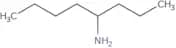
Octan-4-amine
CAS:<p>Octan-4-amine is a metastable cation that has been used as a label for deuterium in various studies. The labeling of octan-4-amine with deuterium has been shown to produce stable, nonradioactive isotopes for use in various studies. It has also been shown to be an effective radical cations and cleavage agent. As a result, it can be used to generate molecular ions and isomers from larger molecules. Octan-4-amine is also capable of isomerizing other compounds and generating radical cations when heated. This chemical may be used as a precursor to create other compounds through the process of isomerization, such as the production of isomers by the addition of hydrogen atoms or removal of hydrogens from their molecular structure.</p>Formula:C8H19NPurity:Min. 95%Molecular weight:129.24 g/molN-Cyano-N'-(2-methylbutan-2-yl)guanidine
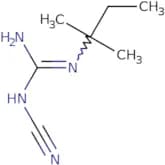
CAS:<p>N-Cyano-N'-(2-methylbutan-2-yl)guanidine is an antihypertensive drug that inhibits the activity of enzymes involved in the synthesis of fatty acids. It has been shown to be effective against cardiac hypertrophy, as it reduces the activity of phospholipase A2, which is required for the formation of arachidonic acid, a precursor to prostaglandins and thromboxanes. This drug also has a depressant effect on fatty acid metabolism and decreases the production of fatty alcohols by inhibiting their synthesis. N-Cyano-N'-(2-methylbutan-2-yl)guanidine is used as a pharmaceutical dosage for treatment of hypertension and depressive disorders.</p>Formula:C7H14N4Purity:Min. 95%Molecular weight:154.21 g/mol(2S)-3-Carbamoyl-2-[5-(dimethylamino)naphthalene-1-sulfonamido]propanoic acid
CAS:<p>(2S)-3-Carbamoyl-2-[5-(dimethylamino)naphthalene-1-sulfonamido]propanoic acid is a fluorescent probe that binds to human serum albumin. It has been used as an inhibitor of the enzyme α1-acid glycoprotein, which is involved in the degradation of fatty acids and glycopeptides. The binding constants have been determined by fluorescence titration and are site specific. (2S)-3-Carbamoyl-2-[5-(dimethylamino)naphthalene-1-sulfonamido]propanoic acid is a molecule that can be used for metal chelation, which has been demonstrated by its ability to inhibit the activity of enzymes such as α1-acid glycoprotein. This compound also has a role in endogenous substances such as fatty acids and tryptophan fluorescence.</p>Formula:C16H19N3O5SPurity:Min. 95%Molecular weight:365.4 g/molBenzyl(1-phenylpropan-2-yl)amine
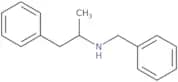
CAS:Controlled Product<p>Benzyl(1-phenylpropan-2-yl)amine is a piperidine derivative that acts as an inhibitor of cytochrome P450 enzymes. It binds to the CYP2D6 enzyme and has been shown to have an inhibitory effect on the activity of this enzyme in rat liver microsomes. The binding constants for benzyl(1-phenylpropan-2-yl)amine with the CYP2D6 enzyme were determined by competitive inhibition studies and it was found that this compound has a high binding affinity with the CYP2D6 enzyme. Studies also demonstrated that benzyl(1-phenylpropan-2-yl)amine inhibits the activity of CYP3A4 and CYP3A5 enzymes. This drug may be useful in treating some individuals who are taking drugs metabolized by these two enzymes, but will not be effective in people who are not taking any drugs metabolized by these two enzymes.</p>Formula:C16H19NPurity:Min. 95%Molecular weight:225.33 g/mol3-(2′,5′-Dimethoxybenzoyl)propionic acid
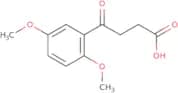
CAS:<p>Versatile small molecule scaffold</p>Formula:C12H14O5Purity:Min. 95%Molecular weight:238.24 g/molDiethyl (2-oxocyclohexyl)phosphonate
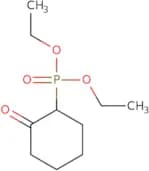
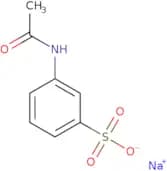
CAS:<p>Versatile small molecule scaffold</p>Formula:C10H19O4PPurity:Min. 95%Molecular weight:234.23 g/molSodium 3-acetamidobenzene-1-sulfonate
CAS:<p>Versatile small molecule scaffold</p>Formula:C8H8NNaO4SPurity:Min. 95%Molecular weight:237.21 g/mol3-Azaspiro[5.6]dodecane-2,4-dione
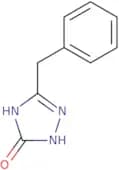
CAS:<p>Versatile small molecule scaffold</p>Formula:C11H17NO2Purity:Min. 95%Molecular weight:195.26 g/mol3-benzyl-4,5-dihydro-1H-1,2,4-triazol-5-one
CAS:<p>Versatile small molecule scaffold</p>Formula:C9H9N3OPurity:Min. 95%Molecular weight:175.19 g/mol6-Methoxyquinaldine
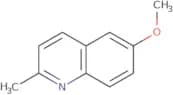
CAS:<p>6-Methoxyquinaldine is a fluorescent chemical that is used to study the structural changes of proteins. 6-Methoxyquinaldine is oxidized by various reagents, such as anilines and sulphates, to produce fluorescent products. The fluorescence intensity of the product can be quantified using fluorimetric analysis or microscopy techniques. The fluorescent products can be visualized using UV irradiation (365 nm) or by fluorescence microscopy. 6-Methoxyquinaldine can also be used in calibrating imaging techniques, such as confocal laser scanning microscopy.</p>Formula:C11H11NOPurity:Min. 95%Molecular weight:173.21 g/mol2,6-Dimethyl-3H,4H,5H,6H,7H,8H-pyrido[4,3-d]pyrimidin-4-one
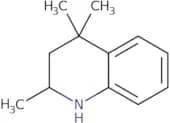
CAS:<p>Versatile small molecule scaffold</p>Formula:C9H13N3OPurity:Min. 95%Molecular weight:179.22 g/mol2,4,4-Trimethyl-1,2,3,4-tetrahydroquinoline
CAS:<p>Versatile small molecule scaffold</p>Formula:C12H17NPurity:Min. 95%Molecular weight:175.27 g/mol3-[(4-Methylphenyl)amino]propanenitrile
CAS:<p>Versatile small molecule scaffold</p>Formula:C10H12N2Purity:Min. 95%Molecular weight:160.22 g/molHexylbenzene
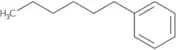
CAS:<p>Hexylbenzene is a colorless liquid that is soluble in alcohol, ether, and benzene. Hexylbenzene has been shown to undergo a suzuki coupling reaction with aniline and phenylboronic acid. The yield of chloride was site specific, as the reaction occurred more readily at the ortho-positions than the para-positions. Hexylbenzene has been used as a model system for studying transfer reactions in proteins. In this system, hexylbenzene reacts with peroxidase to form hydrogen peroxide, which then reacts with p-nitroaniline to produce p-aminophenol and nitrite ions. The detection sensitivity of light emission from hexylbenzene was significantly higher than that of other compounds such as tetracycline or ampicillin.</p>Formula:C12H18Purity:Min. 95%Molecular weight:162.28 g/mol3-(Prop-2-en-1-yl)benzoic acid
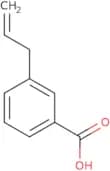
CAS:<p>Versatile small molecule scaffold</p>Formula:C10H10O2Purity:Min. 95%Molecular weight:162.18 g/mol4-(Prop-2-en-1-yl)benzoic acid
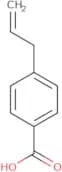
CAS:<p>Glycinamide ribonucleotide (GAR) is a glycinamide that is used as an inhibitor of formyltransferase. It forms a reversible covalent bond with the active site cysteine residue of the enzyme, thereby inhibiting its activity. GAR has been shown to inhibit both eukaryotic and prokaryotic formyltransferases, and also inhibits the related enzyme ribonucleotide reductase. This compound may have potential for use in treating cancer due to its ability to inhibit tumor growth by interfering with DNA synthesis.</p>Formula:C10H10O2Purity:Min. 95%Molecular weight:162.18 g/mol1-Phenyl-1H-pyrazol-4-ol
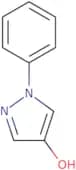
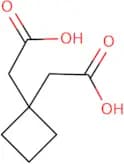
CAS:<p>1-Phenyl-1H-pyrazol-4-ol is an organic compound that is a white crystalline solid with a strong odor. It is used in the manufacture of pyrazoles and as a reagent for the synthesis of other compounds. 1-Phenyl-1H-pyrazol-4-ol can be used to synthesize pyrazoles, which are important in the production of several pharmaceuticals.</p>Formula:C9H8N2OPurity:Min. 95%Molecular weight:160.17 g/mol2,2'-(Cyclobutane-1,1-diyl)diacetic acid
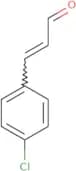
CAS:<p>Ammonium 2,2'-(cyclobutane-1,1-diyl)diacetate (ACDA) is a salt of ACDA and ammonium. It is an analogue of barbiturates that has been used in medicine to relieve neuralgia and sciatica. ACDA is injected intravenously or intramuscularly as the ammonium salt. The toxic effects of ACDA are similar to those of other barbiturates. These are due to its depressant effect on the central nervous system and include narcosis, respiratory depression, and death from respiratory arrest.</p>Formula:C8H12O4Purity:Min. 95%Molecular weight:172.18 g/mol3-(4-Chlorophenyl)acrylaldehyde
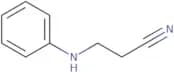
CAS:<p>Acrylaldehyde is a reactive compound that can bind to the enzyme tyrosinase, inhibiting its activity. 3-(4-Chlorophenyl)acrylaldehyde (3-CA) is a small molecule that has shown an inhibitory effect on the proliferation of leukemia cells in vitro and in vivo. It also has broad-spectrum antimicrobial activity against Gram-positive and Gram-negative bacteria, including methicillin-resistant Staphylococcus aureus (MRSA). Tyrosine kinases are enzymes that catalyze the transfer of phosphate groups from ATP to tyrosine residues in proteins, leading to cellular signaling and cell division. 3-(4-Chlorophenyl)acrylaldehyde binds to tyrosine kinases and inhibits their function, which may be responsible for its cytotoxic effects.</p>Formula:C9H7ClOPurity:Min. 95%Molecular weight:166.6 g/mol3-(Phenylamino)propanenitrile
CAS:<p>3-(Phenylamino)propanenitrile (N-phenylglycine, PAG) is an amine that belongs to the class of compounds known as thermodynamic reaction intermediates. It is a chiral compound that can be used for the synthesis of β-unsaturated ketones and bichloride. The synthesis of PAG begins with the addition of phosphorus pentachloride and acrylonitrile to a solution containing thiamine pyrophosphate in an inorganic acid, such as hydrochloric acid. The reaction produces a mixture of amino acids and amides, including PAG. This process has been scaled up and shown to be selective for PAG.</p>Formula:C9H10N2Purity:Min. 95%Molecular weight:146.19 g/mol

![(2S)-3-Carbamoyl-2-[5-(dimethylamino)naphthalene-1-sulfonamido]propanoic acid](/_next/image/?url=https%3A%2Fstatic.cymitquimica.com%2Fproducts%2F3D%2Fthumb-webp%2FBAA10023.webp&w=3840&q=75)
![3-Azaspiro[5.6]dodecane-2,4-dione](/_next/image/?url=https%3A%2Fstatic.cymitquimica.com%2Fproducts%2F3D%2Fthumb-webp%2FBAA07889.webp&w=3840&q=75)
![2,6-Dimethyl-3H,4H,5H,6H,7H,8H-pyrido[4,3-d]pyrimidin-4-one](/_next/image/?url=https%3A%2Fstatic.cymitquimica.com%2Fproducts%2F3D%2Fthumb-webp%2FBAA07816.webp&w=3840&q=75)
![3-[(4-Methylphenyl)amino]propanenitrile](/_next/image/?url=https%3A%2Fstatic.cymitquimica.com%2Fproducts%2F3D%2Fthumb-webp%2FBAA07724.webp&w=3840&q=75)