Building Blocks
This section contains fundamental products for the synthesis of organic and biological compounds. Building blocks are the essential starting materials used to construct complex molecules through various chemical reactions. They play a critical role in drug discovery, material science, and chemical research. At CymitQuimica, we offer a diverse range of high-quality building blocks to support your innovative research and industrial projects, ensuring you have the essential components for successful synthesis.
Subcategories of "Building Blocks"
- Boronic Acids & Boronic Acid Derivatives(5,756 products)
- Chiral Building Blocks(1,242 products)
- Hydrocarbon Building Blocks(6,095 products)
- Organic Building Blocks(61,037 products)
Found 196200 products of "Building Blocks"
Sort by
Purity (%)
0
100
|
0
|
50
|
90
|
95
|
100
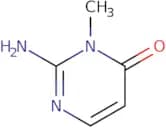
2-Amino-3-methyl-3,4-dihydropyrimidin-4-one
CAS:<p>2-Amino-3-methyl-3,4-dihydropyrimidin-4-one is a compound that belongs to the group of imines. It can exist as two isomers: an enamine and a ketimine. The enamine of 2-amino-3,4-dihydropyrimidin-4-one has been found to be a transition state analogue for ammonolysis reactions. The ketimine form of this compound has been shown to have tautomeric properties that are analogous to those of acetaldehyde. Chemists use spectroscopy to study the magnetic properties, dichroism, and spectra of the compound in order to learn more about its structure and reactivity.</p>Formula:C5H7N3OPurity:Min. 95%Molecular weight:125.13 g/mol1-Isopropyl-1H-benzo[d]imidazole-2-thiol
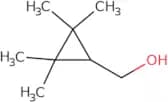
CAS:<p>Versatile small molecule scaffold</p>Formula:C10H12N2SPurity:Min. 95%Molecular weight:192.28 g/mol(2,2,3,3-Tetramethylcyclopropyl)methanol
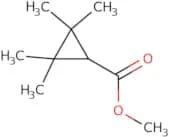
CAS:<p>2,2,3,3-Tetramethylcyclopropyl)methanol is a reagent that is used in the synthesis of insecticides and in the preparation of other organic compounds. It is prepared by reacting phosphorus with chlorinating agents such as thionyl chloride or phosphoryl chloride. This chemical can also be synthesized from halogenated alkanes by catalytic chlorination. 2,2,3,3-Tetramethylcyclopropyl)methanol has been employed as a Grignard reagent and Wittig reaction catalyst.</p>Formula:C8H16OPurity:Min. 95%Molecular weight:128.21 g/molMethyl 2,2,3,3-tetramethylcyclopropane-1-carboxylate
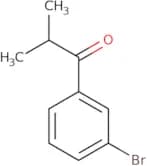
CAS:<p>Versatile small molecule scaffold</p>Formula:C9H16O2Purity:Min. 95%Molecular weight:156.22 g/mol1-(3-Bromophenyl)-2-methylpropan-1-one
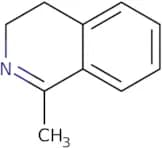
CAS:<p>Versatile small molecule scaffold</p>Formula:C10H11BrOPurity:Min. 95%Molecular weight:227.1 g/mol1-Methyl-3,4-dihydroisoquinoline
CAS:<p>1-Methyl-3,4-dihydroisoquinoline is a chemical compound that is used in the synthesis of 1-methyl-3,4-dihydroisoquinoline N-oxide. 1,2-Dihydroisoquinolines are amine derivatives that are important for their physiological properties. The asymmetric synthesis of 1,2-dihydroisoquinolines is important for the development of new drugs and pharmaceuticals. This reaction scheme includes two steps: the first step involves the condensation of an imine with a catecholamine to form an imine; the second step involves cyclization of this imine to form a 1,2 dihydroisoquinoline. The use of additives such as sodium methoxide or dimethylsulfate can increase selectivity and yield by stabilizing one enantiomer over another. The products from this reaction are methylated with methyl iodide in the presence of potassium</p>Formula:C10H11NPurity:Min. 95%Molecular weight:145.2 g/molN-Methyl-N-[2-(methylamino)ethyl]aniline
CAS:<p>Versatile small molecule scaffold</p>Formula:C10H16N2Purity:Min. 95%Molecular weight:164.25 g/molN-[(4-Butoxy-3-methoxyphenyl)methylidene]hydroxylamine
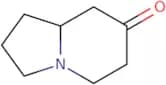
CAS:<p>Versatile small molecule scaffold</p>Formula:C12H17NO3Purity:Min. 95%Molecular weight:223.27 g/molOctahydroindolizin-7-one
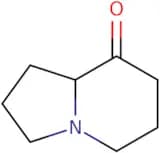
CAS:<p>Octahydroindolizin-7-one is a heterocyclic compound that has been isolated from the fungus Ganoderma lucidum and the bacterium Streptomyces griseus. It has an enamine structure, which can be converted to an amine by reduction with lithium aluminum hydride. Octahydroindolizin-7-one has been shown to inhibit bacterial growth through the inhibition of protein synthesis.</p>Formula:C8H13NOPurity:Min. 95%Molecular weight:139.19 g/molOctahydroindolizin-8-one
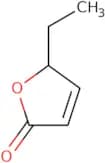
CAS:<p>Versatile small molecule scaffold</p>Formula:C8H13NOPurity:Min. 95%Molecular weight:139.19 g/mol5-Ethyl-2,5-dihydrofuran-2-one
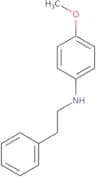
CAS:<p>Versatile small molecule scaffold</p>Formula:C6H8O2Purity:Min. 95%Molecular weight:112.13 g/mol4-Methoxy-N-(2-phenylethyl)aniline
CAS:<p>Versatile small molecule scaffold</p>Formula:C15H17NOPurity:Min. 95%Molecular weight:227.3 g/molBromocycloheptane
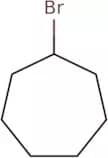
CAS:<p>Bromocycloheptane is a c6 alkyl that functions as an uptake inhibitor. It is used in the synthesis of other organic compounds, such as imidazole derivatives. Bromocycloheptane has been shown to inhibit uptake in the brain and consequently reduce infarctions in animal models of Alzheimer's disease. Bromocycloheptane inhibits uptake by blocking the function of the carrier protein, which carries neurotransmitters from synapses to axons and dendrites. Bromocycloheptane binds to magnesium ions, which are necessary for hydrolysis of ATP and therefore for uptake into cells. The magnesium ion is found in many enzymes involved in cellular processes, including those that produce ATP, so bromocycloheptane may interfere with cell function by interfering with these enzymes. This drug also blocks the production of lactam, a precursor molecule to GABA, which can be synthesized by glutamic acid decarboxyl</p>Formula:C7H13BrPurity:Min. 95%Molecular weight:177.09 g/mol2-(4-Nitrophenyl)-1,3-dioxolane
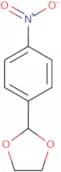
CAS:<p>Versatile small molecule scaffold</p>Formula:C9H9NO4Purity:Min. 95%Molecular weight:195.17 g/mol1-Bromopropan-2-amine hydrobromide
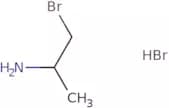
CAS:<p>Versatile small molecule scaffold</p>Formula:C3H9Br2NPurity:Min. 95%Molecular weight:218.92 g/mol2-(4-Bromophenyl)-1,1,1,3,3,3-hexafluoropropan-2-ol
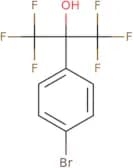
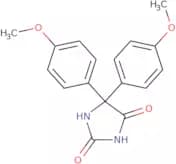
CAS:<p>Versatile small molecule scaffold</p>Formula:C9H5BrF6OPurity:Min. 95%Molecular weight:323.03 g/mol5,5-Bis(4-methoxyphenyl)imidazolidine-2,4-dione
CAS:<p>Versatile small molecule scaffold</p>Formula:C17H16N2O4Purity:Min. 95%Molecular weight:312.32 g/mol4-Chloro-3-iodoanisole
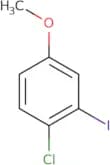
CAS:<p>4-Chloro-3-iodoanisole is a tetracyclic organic compound. It is an intermediate in the synthesis of arynes and dienes by dehalogenation of substituted benzenes with organolithium reagents. 4CI has been shown to react with dienophiles, such as 1,2-dichlorobenzene, to give the corresponding ethylenic products. The yield of this reaction is dependent on steric factors, such as the electronic nature of substituents on the benzene ring and their orientation relative to one another.</p>Formula:C7H6ClIOPurity:Min. 95%Molecular weight:268.48 g/mol6-Methoxy-3-methyl-1H-indole
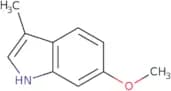
CAS:<p>Versatile small molecule scaffold</p>Formula:C10H11NOPurity:Min. 95%Molecular weight:161.2 g/molCis-methyl-3-(hydroxymethyl)cyclobutane-1-carboxylate
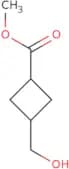
CAS:<p>Versatile small molecule scaffold</p>Formula:C7H12O3Purity:Min. 95%Molecular weight:144.17 g/mol

![1-Isopropyl-1H-benzo[d]imidazole-2-thiol](/_next/image/?url=https%3A%2Fstatic.cymitquimica.com%2Fproducts%2F3D%2Fthumb-webp%2FCAA41665.webp&w=3840&q=75)
![N-Methyl-N-[2-(methylamino)ethyl]aniline](/_next/image/?url=https%3A%2Fstatic.cymitquimica.com%2Fproducts%2F3D%2Fthumb-webp%2FCAA41249.webp&w=3840&q=75)
![N-[(4-Butoxy-3-methoxyphenyl)methylidene]hydroxylamine](/_next/image/?url=https%3A%2Fstatic.cymitquimica.com%2Fproducts%2F3D%2Fthumb-webp%2FCAA41134.webp&w=3840&q=75)