Building Blocks
This section contains fundamental products for the synthesis of organic and biological compounds. Building blocks are the essential starting materials used to construct complex molecules through various chemical reactions. They play a critical role in drug discovery, material science, and chemical research. At CymitQuimica, we offer a diverse range of high-quality building blocks to support your innovative research and industrial projects, ensuring you have the essential components for successful synthesis.
Subcategories of "Building Blocks"
- Boronic Acids & Boronic Acid Derivatives(5,756 products)
- Chiral Building Blocks(1,242 products)
- Hydrocarbon Building Blocks(6,095 products)
- Organic Building Blocks(61,038 products)
Found 196817 products of "Building Blocks"
Sort by
Purity (%)
0
100
|
0
|
50
|
90
|
95
|
100
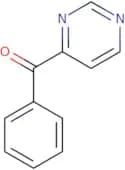
4-Benzoylpyrimidine
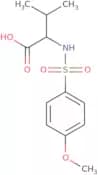
CAS:<p>Versatile small molecule scaffold</p>Formula:C11H8N2OPurity:Min. 95%Molecular weight:184.19 g/mol(2S)-2-(4-Methoxybenzenesulfonamido)-3-methylbutanoic acid
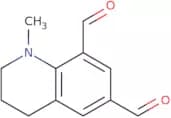
CAS:<p>Versatile small molecule scaffold</p>Formula:C12H17NO5SPurity:Min. 95%Molecular weight:287.33 g/mol1-Methyl-1,2,3,4-tetrahydroquinoline-6,8-dicarbaldehyde
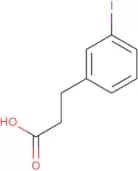
CAS:<p>Versatile small molecule scaffold</p>Formula:C12H13NO2Purity:Min. 95%Molecular weight:203.24 g/mol3-(3-Iodophenyl)propanoic acid
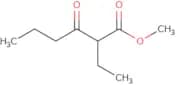
CAS:<p>3-(3-Iodophenyl)propanoic acid is a molecule that has been shown to accumulate in the brain and muscle. It is an unlabeled analog of fluoroacetate, a compound that is used as a diagnostic agent for cancer. Fluoroacetate has been shown to be effective against brain tumors, although it cannot be used as a therapeutic agent due to its severe side effects. 3-(3-Iodophenyl)propanoic acid has not been studied in detail yet, but it has been found to accumulate in tumor tissue and may be useful for the diagnosis of cancer.</p>Formula:C9H9IO2Purity:Min. 95%Molecular weight:276.07 g/molMethyl 2-ethyl-3-oxohexanoate
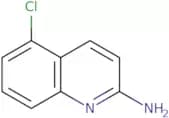
CAS:<p>Versatile small molecule scaffold</p>Formula:C9H16O3Purity:Min. 95%Molecular weight:172.22 g/mol5-Chloroquinolin-2-amine
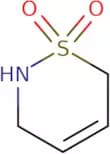
CAS:<p>Versatile small molecule scaffold</p>Formula:C9H7N2ClPurity:Min. 95%Molecular weight:178.61 g/mol3,6-Dihydro-2H-1λ⁶,2-thiazine-1,1-dione
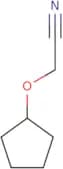
CAS:<p>Versatile small molecule scaffold</p>Formula:C4H7NO2SPurity:Min. 95%Molecular weight:133.2 g/mol2-(Cyclopentyloxy)acetonitrile
CAS:<p>Versatile small molecule scaffold</p>Formula:C7H11NOPurity:Min. 95%Molecular weight:125.17 g/mol3-(Propan-2-yl)-3-azabicyclo[3.3.1]nonan-9-one
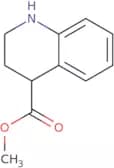
CAS:<p>Versatile small molecule scaffold</p>Formula:C11H19NOPurity:Min. 95%Molecular weight:181.27 g/molMethyl 1,2,3,4-tetrahydroquinoline-4-carboxylate
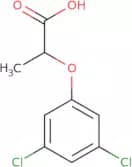
CAS:<p>Versatile small molecule scaffold</p>Formula:C11H13NO2Purity:Min. 95%Molecular weight:191.23 g/mol2-(3,5-Dichlorophenoxy)propanoic acid
CAS:<p>Versatile small molecule scaffold</p>Formula:C9H8Cl2O3Purity:Min. 95%Molecular weight:235.06 g/mol1H-Imidazo[4,5-c]pyridin-2-amine
CAS:<p>Imidazo[4,5-c]pyridin-2-amines are a class of compounds that have shown anticancer activity in vitro and in vivo. They are structurally related to the azepines and can be synthesized from 1H-imidazo[4,5-c]pyridine-2-carboxylic acid. Imidazo[4,5-c]pyridin-2-amines may inhibit cancer cell proliferation by inhibiting the activity of matrix metalloproteinases (MMPs) and may also inhibit the synthesis of DNA and RNA. Several members of this class of compounds have been shown to be potent inhibitors of human cancer cells in vitro and in vivo.</p>Formula:C6H6N4Purity:Min. 95%Molecular weight:134.14 g/mol1H,2H,3H-Thieno[2,3-b][1,4]thiazin-2-one
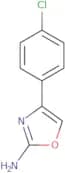
CAS:<p>Versatile small molecule scaffold</p>Formula:C6H5NOS2Purity:Min. 95%Molecular weight:171.2 g/mol4-(4-Chlorophenyl)-1,3-oxazol-2-amine
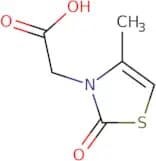
CAS:<p>Versatile small molecule scaffold</p>Formula:C9H7ClN2OPurity:Min. 95%Molecular weight:194.62 g/mol2-(4-Methyl-2-oxo-2,3-dihydro-1,3-thiazol-3-yl)acetic acid
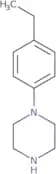
CAS:<p>Versatile small molecule scaffold</p>Formula:C6H7NO3SPurity:Min. 95%Molecular weight:173.19 g/mol1-(4-Ethylphenyl)piperazine
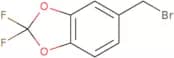
CAS:Controlled Product<p>Versatile small molecule scaffold</p>Formula:C12H18N2Purity:Min. 95%Molecular weight:190.28 g/mol5-(Bromomethyl)-2,2-difluoro-2H-1,3-benzodioxole
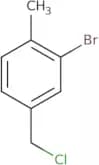
CAS:<p>Versatile small molecule scaffold</p>Formula:C8H5BrF2O2Purity:Min. 95%Molecular weight:251.02 g/mol2-Bromo-4-(chloromethyl)-1-methylbenzene
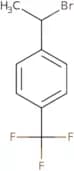
CAS:<p>Versatile small molecule scaffold</p>Formula:C8H8BrClPurity:Min. 95%Molecular weight:219.5 g/mol1-(1-Bromoethyl)-4-(trifluoromethyl)benzene
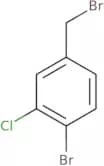
CAS:<p>Versatile small molecule scaffold</p>Formula:C9H8F3BrPurity:Min. 95%Molecular weight:253.05 g/mol1-Bromo-4-(bromomethyl)-2-chlorobenzene
CAS:<p>1-Bromo-4-(bromomethyl)-2-chlorobenzene is a brominating agent that can be used for the preparation of alkyl halides. It reacts with sodium hydride to give the corresponding sodium alkoxide, which can be hydrolyzed to give an alcohol. The reaction product is then treated with methoxy or chloro groups, giving a 1-bromo-3-methoxy-2-chlorobenzene or 1-bromo-3-chloro-2-chlorobenzene respectively. This compound can also be used as an inhibitor in organic synthesis reactions involving hydrolysis and reductive dehalogenation.</p>Formula:C7H5Br2ClPurity:Min. 95%Molecular weight:284.38 g/mol

![3-(Propan-2-yl)-3-azabicyclo[3.3.1]nonan-9-one](/_next/image/?url=https%3A%2Fstatic.cymitquimica.com%2Fproducts%2F3D%2Fthumb-webp%2FTCA06655.webp&w=3840&q=75)
![1H-Imidazo[4,5-c]pyridin-2-amine](/_next/image/?url=https%3A%2Fstatic.cymitquimica.com%2Fproducts%2F3D%2Fthumb-webp%2FTCA07463.webp&w=3840&q=75)
![1H,2H,3H-Thieno[2,3-b][1,4]thiazin-2-one](/_next/image/?url=https%3A%2Fstatic.cymitquimica.com%2Fproducts%2F3D%2Fthumb-webp%2FTCA09433.webp&w=3840&q=75)