Building Blocks
This section contains fundamental products for the synthesis of organic and biological compounds. Building blocks are the essential starting materials used to construct complex molecules through various chemical reactions. They play a critical role in drug discovery, material science, and chemical research. At CymitQuimica, we offer a diverse range of high-quality building blocks to support your innovative research and industrial projects, ensuring you have the essential components for successful synthesis.
Subcategories of "Building Blocks"
- Boronic Acids & Boronic Acid Derivatives(5,778 products)
- Chiral Building Blocks(1,242 products)
- Hydrocarbon Building Blocks(6,098 products)
- Organic Building Blocks(61,098 products)
Found 199594 products of "Building Blocks"
Sort by
Purity (%)
0
100
|
0
|
50
|
90
|
95
|
100
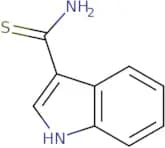
1H-Indole-3-carbothioic acid amide
CAS:<p>1H-Indole-3-carbothioic acid amide is a synthetic anticancer agent that has been shown to be active against cancer cells. It inhibits the growth of cancer cells by inducing apoptosis and inhibiting the production of proteins necessary for cell division. 1H-Indole-3-carbothioic acid amide is a chlorine atom that is obtained by reacting an indole with phosgene in the presence of a base to form the corresponding chloroindole. The diacetate of 1H-indole-3-carbothioic acid amide can also be used as an anticancer agent, which inhibits protein synthesis and induces apoptosis.</p>Formula:C9H8N2SPurity:Min. 95%Molecular weight:176.24 g/mol(1-Phenylcyclopentyl)methanol
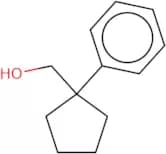
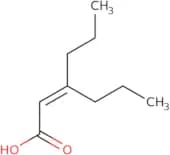
CAS:<p>Versatile small molecule scaffold</p>Formula:C12H16OPurity:Min. 95%Molecular weight:176.26 g/mol3-Propylhex-2-enoic acid
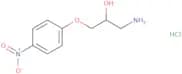
CAS:<p>Versatile small molecule scaffold</p>Formula:C9H16O2Purity:Min. 95%Molecular weight:156.22 g/mol1-Amino-3-(4-nitrophenoxy)propan-2-ol hydrochloride
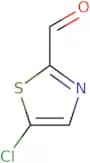
CAS:<p>Versatile small molecule scaffold</p>Formula:C9H13ClN2O4Purity:Min. 95%Molecular weight:248.66 g/mol5-Chlorothiazole-2-carbaldehyde
CAS:<p>Versatile small molecule scaffold</p>Formula:C4H2ClNOSPurity:Min. 95%Molecular weight:147.59 g/mol2-Cyclopentyl-1-phenylethan-1-ol
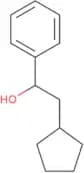
CAS:<p>Versatile small molecule scaffold</p>Formula:C13H18OPurity:Min. 95%Molecular weight:190.28 g/mol1-Bromo-3-ethoxycyclobutane
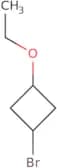
CAS:<p>Versatile small molecule scaffold</p>Formula:C6H11BrOPurity:Min. 95%Molecular weight:179.05 g/mol2-(1-Oxoisoquinolin-2(1H)-yl)acetic acid
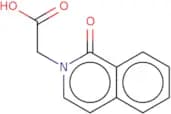
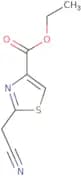
CAS:<p>Versatile small molecule scaffold</p>Formula:C11H9NO3Purity:Min. 95%Molecular weight:203.19 g/molEthyl 2-(cyanomethyl)-1,3-thiazole-4-carboxylate
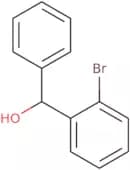
CAS:<p>Versatile small molecule scaffold</p>Formula:C8H8N2O2SPurity:Min. 95%Molecular weight:196.23 g/mol(2-Bromophenyl)(phenyl)methanol
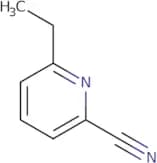
CAS:The synthesis of (2-bromophenyl)(phenyl)methanol is accomplished by the reaction of an aldehyde with bromine followed by an alkylation with magnesium. The product is obtained as a racemic mixture of enantiomers with a chiral center, which can be resolved by fractional crystallization or other separation methods. This method has been shown to be efficient for the synthesis of alcohols and carbinols, and stereogenic reactions.Formula:C13H11OBrPurity:Min. 95%Molecular weight:263.12 g/mol6-Ethylpyridine-2-carbonitrile
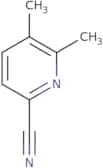
CAS:Versatile small molecule scaffoldFormula:C8H8N2Purity:Min. 95%Molecular weight:132.16 g/mol5,6-Dimethylpicolinonitrile
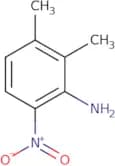
CAS:<p>Versatile small molecule scaffold</p>Formula:C8H8N2Purity:Min. 95%Molecular weight:132.16 g/mol6-Nitro-2,3-xylidine
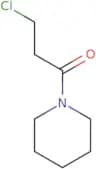
CAS:<p>6-Nitro-2,3-xylidine is a molecule that has been synthesized using organocatalytic methods. This compound is an electron acceptor and a strong nucleophile, which can be used for the synthesis of chiral derivatives. As an organocatalyst, 6-nitro-2,3-xylidine can be used to sulfonate aldehydes with high stereoselectivity. The molecular orbital diagram shows that the antibonding interaction is stronger than the bonding interaction between this compound and chloride.</p>Formula:C8H10N2O2Purity:Min. 95%Molecular weight:166.18 g/mol3-Chloro-1-(piperidin-1-yl)propan-1-one
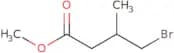
CAS:<p>Versatile small molecule scaffold</p>Formula:C8H14ClNOPurity:Min. 95%Molecular weight:175.65 g/molMethyl 4-bromo-3-methylbutanoate
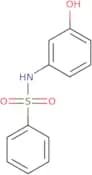
CAS:<p>Versatile small molecule scaffold</p>Formula:C6H11BrO2Purity:Min. 95%Molecular weight:195.05 g/molN-(3-Hydroxyphenyl)benzenesulfonamide
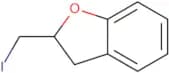
CAS:<p>Versatile small molecule scaffold</p>Formula:C12H11NO3SPurity:Min. 95%Molecular weight:249.29 g/mol2-(Iodomethyl)-2,3-dihydro-1-benzofuran
CAS:<p>2-(Iodomethyl)-2,3-dihydro-1-benzofuran is an efficient synthesis of 2-iodo-1,3-benzofuran. It is an intermediate in the synthesis of organic compounds that contain a benzene ring with two adjacent hydrogens substituted by iodine atoms. This process is called "aromatization."</p>Formula:C9H9IOPurity:Min. 95%Molecular weight:260.07 g/molEthyl 3-bromo-2-methylpropanoate
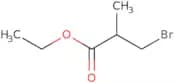
CAS:<p>Ethyl 3-bromo-2-methylpropanoate is a test compound that belongs to the chemical class of esters. It is used in the study of biological properties. Ethyl 3-bromo-2-methylpropanoate may inhibit cancer by blocking DNA replication, which can lead to cell death and tumor shrinkage. This drug also has anti-inflammatory effects and can be used as a treatment for cancer in women, as well as animals, such as mice. Ethyl 3-bromo-2-methylpropanoate binds to lysine residues on proteins that are important for tumor growth, including histones and chloride channels.</p>Formula:C6H11BrO2Purity:Min. 95%Molecular weight:195.05 g/mol3-Hydroxy-2,2-dimethylcyclopentan-1-one
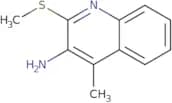
CAS:<p>Versatile small molecule scaffold</p>Formula:C7H12O2Purity:Min. 95%Molecular weight:128.17 g/mol4-Methyl-2-(methylsulfanyl)quinolin-3-amine
CAS:<p>Versatile small molecule scaffold</p>Formula:C11H12N2SPurity:Min. 95%Molecular weight:204.29 g/mol