Building Blocks
This section contains fundamental products for the synthesis of organic and biological compounds. Building blocks are the essential starting materials used to construct complex molecules through various chemical reactions. They play a critical role in drug discovery, material science, and chemical research. At CymitQuimica, we offer a diverse range of high-quality building blocks to support your innovative research and industrial projects, ensuring you have the essential components for successful synthesis.
Subcategories of "Building Blocks"
- Boronic Acids & Boronic Acid Derivatives(5,756 products)
- Chiral Building Blocks(1,242 products)
- Hydrocarbon Building Blocks(6,095 products)
- Organic Building Blocks(61,051 products)
Found 199813 products of "Building Blocks"
Sort by
Purity (%)
0
100
|
0
|
50
|
90
|
95
|
100
4-(1,3-Dioxolan-2-yl)-4-methylpentan-1-amine
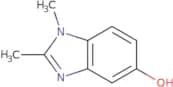
CAS:<p>Versatile small molecule scaffold</p>Formula:C9H19NO2Purity:Min. 95%Molecular weight:173.25 g/mol1,2-Dimethyl-1H-1,3-benzodiazol-5-ol
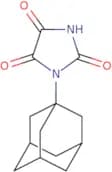
CAS:<p>Versatile small molecule scaffold</p>Formula:C9H10N2OPurity:Min. 95%Molecular weight:162.19 g/mol1-(Adamantan-1-yl)imidazolidine-2,4,5-trione
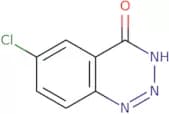
CAS:<p>Versatile small molecule scaffold</p>Formula:C13H16N2O3Purity:Min. 95%Molecular weight:248.28 g/mol6-Chloro-3,4-dihydro-1,2,3-benzotriazin-4-one
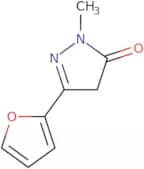
CAS:6-Chloro-3,4-dihydro-1,2,3-benzotriazin-4-one is a potent anti-inflammatory agent that belongs to the group of organic compounds. It has been shown to be more effective in inhibiting inflammation than other classes of drugs such as nonsteroidal anti-inflammatory agents. 6-Chloro-3,4-dihydro-1,2,3-benzotriazin-4-one also blocks the production of prostaglandins by inhibiting cyclooxygenase and lipoxygenases. This drug is not a nitrite but is converted into one by sodium nitrite in a reaction that releases nitric oxide. Nitric oxide causes vasodilation and inhibits platelet aggregation, which reduces blood clot formation.Formula:C7H4ClN3OPurity:Min. 95%Molecular weight:181.58 g/mol3-(Furan-2-yl)-1-methyl-4,5-dihydro-1H-pyrazol-5-one
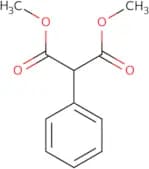
CAS:<p>Versatile small molecule scaffold</p>Formula:C8H8N2O2Purity:Min. 95%Molecular weight:164.16 g/mol1,3-Dimethyl 2-phenylpropanedioate
CAS:<p>1,3-Dimethyl 2-phenylpropanedioate is a molecule that is used in the production of malonic acid. The reaction mechanism involves an enzymatic homogenization of the reactants, which leads to the formation of carbonyl oxygens and reaction intermediates. The carbonyl oxygens are then protonated by ethyl diazoacetate to form allyl carbonates. This process occurs in the presence of immobilized enzymes and chemical reactions.</p>Formula:C11H12O4Purity:Min. 95%Molecular weight:208.21 g/molMethyl 2-[(1R,3S)-rel-3-hydroxycyclopentyl]acetate
CAS:<p>Versatile small molecule scaffold</p>Formula:C8H14O3Purity:Min. 95%Molecular weight:158.19 g/mol3H-Imidazo[4,5-b]pyridine-5,7-diamine dihydrochloride
CAS:Versatile small molecule scaffoldFormula:C6H8ClN5Purity:Min. 95%Molecular weight:185.61 g/molN-[3-(Prop-2-en-1-yloxy)phenyl]acetamide
CAS:<p>Versatile small molecule scaffold</p>Formula:C11H13NO2Purity:Min. 95%Molecular weight:191.23 g/mol2-Isocyanato-1-methoxy-2-methylpropane
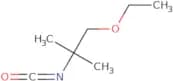
CAS:Versatile small molecule scaffoldFormula:C6H11NO2Purity:Min. 95%Molecular weight:129.2 g/mol1-Ethoxy-2-isocyanato-2-methylpropane
CAS:<p>Versatile small molecule scaffold</p>Formula:C7H13NO2Purity:Min. 95%Molecular weight:143.2 g/mol2-Isocyanato-1-methoxybutane
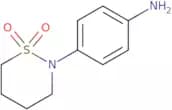
CAS:Versatile small molecule scaffoldFormula:C6H11NO2Purity:Min. 95%Molecular weight:129.2 g/mol4-(Tetrahydro-1,1-dioxido-2H-1,2-thiazin-2-yl)-benzenamine
CAS:<p>Versatile small molecule scaffold</p>Formula:C10H14N2O2SPurity:Min. 95%Molecular weight:226.3 g/mol1lambda6,2-thiazinane-1,1-dione
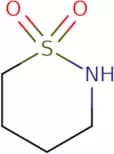
CAS:<p>1,2-Thiazinane-1,1-dione is a short-chain alkylating agent that has been shown to have neuropathic and inflammatory pain relief. It binds to a number of halides and inhibits their action, including the inhibition of angiotensin I-converting enzyme (ACE), which is an antihypertensive agent. 1,2-Thiazinane-1,1-dione also inhibits the production of epoxides in c1-4 alkyl groups. This drug also has antibacterial properties and can be used as a chemical probe for ligand binding studies.</p>Formula:C4H9NO2SPurity:Min. 95%Molecular weight:135.2 g/mol4a-Methyl-decahydroquinoline
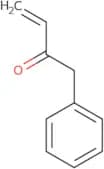
CAS:<p>Versatile small molecule scaffold</p>Formula:C10H19NPurity:Min. 95%Molecular weight:153.26 g/mol1-Phenylbut-3-en-2-one
CAS:<p>1-Phenylbut-3-en-2-one is an n-oxide that is the product of the reaction between 2,4,6-trinitrobenzenesulfonic acid and phenylacetic acid. It has been used as a horticultural agent for controlling mildew on plants. It has also been shown to have a potent inhibitory effect against cell growth in vitro at doses of 50 μmol/L. 1-Phenylbut-3-en-2-one will react with chlorine atoms in the environment to form chlorinated derivatives that may be more toxic than the parent compound. 1Phenylbut-3-en-2-one has neuroprotective properties and has been shown to reduce the incidence of cancer in rats by inhibiting carcinogenesis studies. This drug also exhibits antiangiogenic properties, which may be due to its inhibition of DNA synthesis and protein synthesis.</p>Formula:C10H10OPurity:Min. 95%Molecular weight:146.19 g/mol2,2-Dimethoxycyclobutane-1-carbonitrile
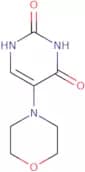
CAS:Versatile small molecule scaffoldFormula:C7H11NO2Purity:Min. 95%Molecular weight:141.2 g/mol5-(Morpholin-4-yl)-1,2,3,4-tetrahydropyrimidine-2,4-dione
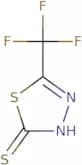
CAS:<p>Versatile small molecule scaffold</p>Formula:C8H11N3O3Purity:Min. 95%Molecular weight:197.19 g/mol5-(Trifluoromethyl)-1,3,4-thiadiazole-2-thiol
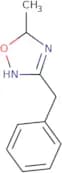
CAS:<p>Versatile small molecule scaffold</p>Formula:C3HF3N2S2Purity:Min. 95%Molecular weight:186.18 g/mol3-Benzyl-5-methyl-4,5-dihydro-1,2,4-oxadiazole
CAS:<p>Versatile small molecule scaffold</p>Formula:C10H12N2OPurity:Min. 95%Molecular weight:176.21 g/mol

![Methyl 2-[(1R,3S)-rel-3-hydroxycyclopentyl]acetate](/_next/image/?url=https%3A%2Fstatic.cymitquimica.com%2Fproducts%2F3D%2Fthumb-webp%2FMBA43580.webp&w=3840&q=75)
![3H-Imidazo[4,5-b]pyridine-5,7-diamine dihydrochloride](/_next/image/?url=https%3A%2Fstatic.cymitquimica.com%2Fproducts%2F3D%2Fthumb-webp%2FMBA43703.webp&w=3840&q=75)
![N-[3-(Prop-2-en-1-yloxy)phenyl]acetamide](/_next/image/?url=https%3A%2Fstatic.cymitquimica.com%2Fproducts%2F3D%2Fthumb-webp%2FMBA43978.webp&w=3840&q=75)