Building Blocks
This section contains fundamental products for the synthesis of organic and biological compounds. Building blocks are the essential starting materials used to construct complex molecules through various chemical reactions. They play a critical role in drug discovery, material science, and chemical research. At CymitQuimica, we offer a diverse range of high-quality building blocks to support your innovative research and industrial projects, ensuring you have the essential components for successful synthesis.
Subcategories of "Building Blocks"
- Boronic Acids & Boronic Acid Derivatives(5,756 products)
- Chiral Building Blocks(1,242 products)
- Hydrocarbon Building Blocks(6,095 products)
- Organic Building Blocks(61,051 products)
Found 199813 products of "Building Blocks"
Sort by
Purity (%)
0
100
|
0
|
50
|
90
|
95
|
100
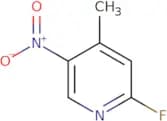
2-Fluoro-4-Methyl-5-Nitropyridine
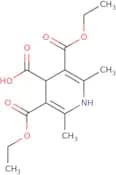
CAS:<p>Versatile small molecule scaffold</p>Formula:C6H5FN2O2Purity:Min. 95%Molecular weight:156.11 g/molAV-153 free base
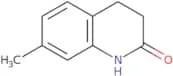
CAS:<p>AV-153 is an organic compound with a carboxylic acid group and an ethyl acetoacetate chain. The crystal structure of this compound is not determined, but it has been found that the molecule is stabilized by hydrogen bonds. It is also known to form dimers and carboxyl groups within its molecular structure. AV-153 has been shown to have antioxidant and glyoxylic acid inhibitory properties, as well as antibacterial activity against methicillin-resistant Staphylococcus aureus (MRSA).</p>Formula:C14H19NO6Purity:Min. 95%Molecular weight:297.3 g/mol7-Methyl-1,2,3,4-tetrahydroquinolin-2-one
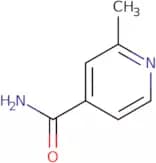
CAS:Versatile small molecule scaffoldFormula:C10H11NOPurity:Min. 95%Molecular weight:161.2 g/mol2-Methylisonicotinamide
CAS:<p>2-Methylisonicotinamide is a scalable, functional group with a wide range of oxidative reactions. It has been shown to be selective for the oxidation of heteroarenes. It efficiently oxidizes in a one-pot process, and can be used as an efficient and economical oxidant. 2-Methylisonicotinamide is used in biomolecular chemistry for coupling reactions, including the oxidation of heterocyclic compounds. The compound is also employed as an oxidant in organic synthesis.</p>Formula:C7H8N2OPurity:Min. 95%Molecular weight:136.15 g/mol2-[(Pyridin-2-yl)carbamoyl]benzoic acid
CAS:<p>2-[(Pyridin-2-yl)carbamoyl]benzoic acid is an organic compound that contains a benzamide and amide functional group. It is paramagnetic, which means that it has the ability to be attracted by a magnetic field. It also has intramolecular nucleophilic attack properties. 2-[(Pyridin-2-yl)carbamoyl]benzoic acid can be used in elemental analyses and as a catalyst for chemical reactions, such as the conversion of thiocyanate to cyanide. 2-[(Pyridin-2-yl)carbamoyl]benzoic acid is used in the production of dyes and pharmaceuticals, including antihistamines and analgesics.</p>Formula:C13H10N2O3Purity:Min. 95%Molecular weight:242.23 g/mol2,2-Dichloro-N-(4-chlorophenyl)-3-oxo-3-phenylpropanamide
CAS:<p>Versatile small molecule scaffold</p>Formula:C15H10Cl3NO2Purity:Min. 95%Molecular weight:342.6 g/mol2-[Hydroxy(phenyl)methyl]prop-2-enenitrile
CAS:<p>2-[Hydroxy(phenyl)methyl]prop-2-enenitrile (2HMPE) is a crystalline compound that has been shown to inhibit the growth of Botrytis cinerea. It does so by binding in an antibonding fashion to the hydrogen atoms on the phenyl ring. This interaction results in a stereoselective interaction with the hydrogen and hydroxyl groups, which leads to a decrease in the rate of dna synthesis. 2HMPE has also been shown to have an antibonding interaction with the C4-C5 double bond of the fluoroquinolone nucleus, which is responsible for its potent antibacterial activity against Mycobacterium tuberculosis. 2HMPE has also been shown to be useful as a fingerprinting reagent. The compound can be used as a standard for x-ray crystallography and molecular orbital theory, because it is soluble and non-toxic.</p>Formula:C10H9NOPurity:Min. 95%Molecular weight:159.18 g/mol3-Iodo-pyrazolo[1,5-a]pyridine
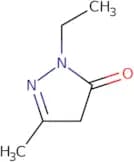
CAS:<p>3-Iodo-pyrazolo[1,5-a]pyridine is a boronic acid that has been optimized for medicinal use. It is chemically synthesized by coupling with a boronic ester. 3-Iodo-pyrazolo[1,5-a]pyridine has shown potent anti-inflammatory properties in mice models.</p>Formula:C7H5IN2Purity:Min. 95%Molecular weight:244.03 g/mol1-Ethyl-3-methyl-4,5-dihydro-1H-pyrazol-5-one
CAS:<p>Versatile small molecule scaffold</p>Formula:C6H10N2OPurity:Min. 95%Molecular weight:126.16 g/mol3-{[4-(Trifluoromethyl)phenyl]sulfanyl}propanoic acid
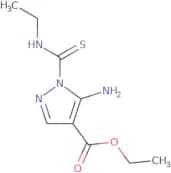
CAS:<p>Versatile small molecule scaffold</p>Formula:C10H9F3O2SPurity:Min. 95%Molecular weight:250.24 g/molEthyl 5-amino-1-(ethylcarbamothioyl)-1H-pyrazole-4-carboxylate
CAS:<p>Versatile small molecule scaffold</p>Formula:C9H14N4O2SPurity:Min. 95%Molecular weight:242.3 g/mol3-(2-Aminoethyl)-1,3-thiazolidine-2,4-dione hydrochloride
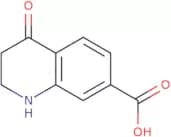
CAS:<p>Versatile small molecule scaffold</p>Formula:C5H9ClN2O2SPurity:Min. 95%Molecular weight:196.66 g/mol4-Oxo-1,2,3,4-tetrahydroquinoline-7-carboxylic acid
CAS:<p>4-Oxo-1,2,3,4-tetrahydroquinoline-7-carboxylic acid is a synthetic compound. It was first synthesized in 1965 and has been used as an analog of quinoline to study the electron transfer mechanism of aromatic aldehyde dehydrogenase. This analog is also used in the condensation reaction of aldehydes.</p>Formula:C10H9NO3Purity:Min. 95%Molecular weight:191.18 g/mol3,4-Dimethyl-6H,7H-[1,2]oxazolo[5,4-b]pyridin-6-one
CAS:<p>Versatile small molecule scaffold</p>Formula:C8H8N2O2Purity:Min. 95%Molecular weight:164.16 g/mol3,6-Dimethyl-[1,2]oxazolo[5,4-b]pyridin-4-ol
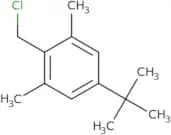
CAS:Versatile small molecule scaffoldFormula:C8H8N2O2Purity:Min. 95%Molecular weight:164.16 g/mol4-Tert-butyl-2,6-dimethylbenzylchloroide
CAS:<p>Versatile small molecule scaffold</p>Formula:C13H19ClPurity:Min. 95%Molecular weight:210.74 g/molBicyclo[3.3.1]nonan-3-amine hydrochloride
CAS:<p>Versatile small molecule scaffold</p>Formula:C9H18ClNPurity:Min. 95%Molecular weight:175.7 g/molBicyclo[3.3.1]nonan-9-amine hydrochloride
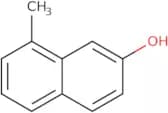
CAS:<p>Versatile small molecule scaffold</p>Formula:C9H18ClNPurity:Min. 95%Molecular weight:175.7 g/mol8-Methylnaphthalen-2-ol
CAS:8-Methylnaphthalen-2-ol is a hydrocarbon with the molecular formula CH3. It is a colorless liquid with an almond odor. It is used in the synthesis of aromatic compounds, including amines and pharmaceuticals. 8-Methylnaphthalen-2-ol is found in marine bacteria and has been shown to be a substrate for bioconversion to benzyl alcohol or benzaldehyde. Recombinant E. coli cells have been used to produce high yields of 8-methylnaphthalen-2-ol from inexpensive starting materials such as glycerol, formaldehyde, and ammonia.Formula:C11H10OPurity:Min. 95%Molecular weight:158.2 g/molCedrelopsin
CAS:<p>Cedrelopsin is a coumarin derivative that is used as a pesticide. It inhibits the growth of cancer cells by binding to the cell membrane, which prevents the entry of many substances into the cell. Cedrelopsin also has an inhibitory effect on mammalian monoamine oxidase (MAO) enzymes, which are important for neurotransmitter metabolism. This compound is active in a variety of different types of cancer cells, including breast cancer and prostate cancer cells. Cedrelopsin shows pesticidal activity against many insects and mites, although it has no effect on mammals. Cedrelopsin has been shown to have a significant effect on blood pressure and heart rate in rats, with moderate hypotensive effects in humans. This compound is not considered toxic to humans or animals, because it does not bind to proteins in high concentrations and does not accumulate in tissues.</p>Formula:C15H16O4Purity:Min. 95%Molecular weight:260.28 g/mol

![2-[(Pyridin-2-yl)carbamoyl]benzoic acid](/_next/image/?url=https%3A%2Fstatic.cymitquimica.com%2Fproducts%2F3D%2Fthumb-webp%2FUAA35710.webp&w=3840&q=75)

![2-[Hydroxy(phenyl)methyl]prop-2-enenitrile](/_next/image/?url=https%3A%2Fstatic.cymitquimica.com%2Fproducts%2F3D%2Fthumb-webp%2FUAA36296.webp&w=3840&q=75)
![3-Iodo-pyrazolo[1,5-a]pyridine](/_next/image/?url=https%3A%2Fstatic.cymitquimica.com%2Fproducts%2F3D%2Fthumb-webp%2FUAA36399.webp&w=3840&q=75)
![3-{[4-(Trifluoromethyl)phenyl]sulfanyl}propanoic acid](/_next/image/?url=https%3A%2Fstatic.cymitquimica.com%2Fproducts%2F3D%2Fthumb-webp%2FUAA37288.webp&w=3840&q=75)
![3,4-Dimethyl-6H,7H-[1,2]oxazolo[5,4-b]pyridin-6-one](/_next/image/?url=https%3A%2Fstatic.cymitquimica.com%2Fproducts%2F3D%2Fthumb-webp%2FUAA38556.webp&w=3840&q=75)
![3,6-Dimethyl-[1,2]oxazolo[5,4-b]pyridin-4-ol](/_next/image/?url=https%3A%2Fstatic.cymitquimica.com%2Fproducts%2F3D%2Fthumb-webp%2FUAA38559.webp&w=3840&q=75)
![Bicyclo[3.3.1]nonan-3-amine hydrochloride](/_next/image/?url=https%3A%2Fstatic.cymitquimica.com%2Fproducts%2F3D%2Fthumb-webp%2FUAA38864.webp&w=3840&q=75)
![Bicyclo[3.3.1]nonan-9-amine hydrochloride](/_next/image/?url=https%3A%2Fstatic.cymitquimica.com%2Fproducts%2F3D%2Fthumb-webp%2FUAA38867.webp&w=3840&q=75)